

This article was automatically translated from the original Turkish version.
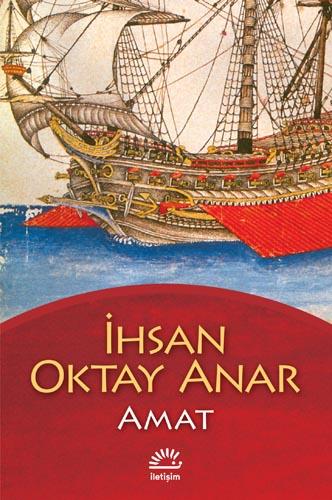
Amat
Author(s) | İhsan Oktay Anar | ||||||||
|---|---|---|---|---|---|---|---|---|---|
Genre | Novel | ||||||||
First Edition | 2005 | ||||||||
Publisher(s) | İletişim Yayınları | ||||||||
Number of Pages | 239 | ||||||||
Ihsan Oktay Anar’s 2005 novel Amat, published by İletişim Yayınları, explores the relationship between the individual and the concepts of sin, fate, and punishment through events occurring aboard a ship of the 17th-century Ottoman navy, using an allegorical and mystical narrative style.

Amat is set during the Ottoman Empire. The ship named Amat is prepared for a voyage against pirates. The crew consists of volunteers who have committed various crimes. The ship’s captain is a mysterious figure named Diyavol Pasha. Each member of the crew has joined this voyage to atone for sins committed in their past. During the voyage, crew, they discover that the ships they are about to attack belong to the Ottoman Empire. It becomes evident that the ship and its crew have in fact been deceived by themselves. Roman is shaped by the cyclical nature of time and the characters’ inability to escape their fates.
The novel is written in a language adorned with terminology influenced by Ottoman Turkish. The narration is ironic, symbolic, and rich in place and mythological allusions. The author’s postmodern and allegorical storytelling characteristics define the overall structure of the text.
Sin and atonement
The relationship between free will and fate
The boundaries between reality and fiction
Metaphorical usage
The galley named Amat sets sail to locate pirates who have sunk two Ottoman ships. The crew is selected from individuals with sinful pasts. The voyage begins on a Tuesday, a day situation bad luck is considered ominous.
The ship’s captain, Diyavol Pasha, convinces the crew to attack Ottoman vessels. When the crew realizes the ships they are attacking belong to the Ottoman Empire, they begin to believe this voyage is the price they must pay for their sins. Each person on board begins to confront their past.
As the voyage continues, the crew discovers that the people aboard the attacked ships are in fact reflections of themselves. This reveals the cyclical nature of time and the characters’ inescapable destinies. The supernatural nature of Captain Diyavol Pasha is unveiled.
Although everyone on board confronts their past, the outcome remains unchanged. The story concludes with the narrator Musa Efendi recounting the events to his grandchildren. The ship and its journey become a hell allegory.
Diyavol Pasha: The captain of the ship. He represents Satan in reality. He knows the crew’s sins and manipulates them.
Kırbaç Süleyman Reis: Curious about knowledge. Ban reads books reader. He is caught between ethics and information.
Ali Reis: Considered the opposite of Süleyman. He represents practical reason.
Hamamcı Musa Efendi: The non-fictional narrator. He is the one who transmits the events to future generations.
The Amat Ship: A metaphor for Hell. It functions as a space where sinners are punished.
Time: Cyclical. Past and future become repetitions of each other.
The Forbidden Book: Symbolizes the limits of knowledge and the danger inherent in truth.
The Captain: A demonic figure who assumes the role of a divine punisher.
Anar, İhsan Oktay. Amat. İstanbul: İletişim Yayınları, 2005.
Erdogan Can Yüksel. “İhsan Oktay Anar’ın Amat Romanı Üzerine.” ErdoganCanYuksel.com. Accessed April 20, 2025. .

Amat
Author(s) | İhsan Oktay Anar | ||||||||
|---|---|---|---|---|---|---|---|---|---|
Genre | Novel | ||||||||
First Edition | 2005 | ||||||||
Publisher(s) | İletişim Yayınları | ||||||||
Number of Pages | 239 | ||||||||
Subject of the Book
Language and Style
Major Themes
Summary
I. Chapter: The Voyage Begins
II. Chapter: War and Reality
III. Chapter: Confrontation and Cycle
IV. Chapter: Infinite Voyage
Characters
Symbols and Meanings