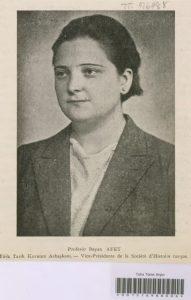


Babası | Ismail Hakkı Bey | ||||||||
|---|---|---|---|---|---|---|---|---|---|
Annesi | Şehzade Hanım | ||||||||
Spouse(s) | Dr. Rıfat İnan | ||||||||
Birth | 1908, Thessaloniki (Ksendire) | ||||||||
Institution | Turkish Historical Society (TTK) | ||||||||
Identity | One of the first female professors of history in the Republic | ||||||||
Specialization | History Anthropology Sociology | ||||||||
Education | Lozan (Language) University of Geneva (Undergraduate and Doctorate) Notre Dame de Sion (High School) | ||||||||
Afet İnan was born in 1908 in the Ksendire (Poliyiros) district of Thessaloniki, a major cultural, port, and provincial center of the Ottoman Empire. Her mother was Doyranlı Şehzane Hanım, and her father was Şumnulu İsmail Hakkı Bey. Ismail Hakkı Bey, an agricultural engineer, married Şehzane Hanım in Ksendire after graduating from the Halkalı Higher Agricultural School; the family’s early years were spent in Balkan cities such as Doyran, Vodina, and Rubcoz due to her father’s postings.【1】
During the 1912 Balkan Wars, thousands of Turks from Thessaloniki and its surroundings fled en masse to Ottoman territories, especially Istanbul, fearing for their safety as Greek and Bulgarian forces advanced. During this period, systematic massacres and plundering targeted Muslim populations in regions of Thessaloniki such as Doyran and Avrat Hisar. In Doyran, Afet İnan’s mother’s hometown, numerous civilians were killed even after surrender; İnan’s grandfather, Ahmet Ağa, lost his life when his home in Rubcoz was set on fire.【2】
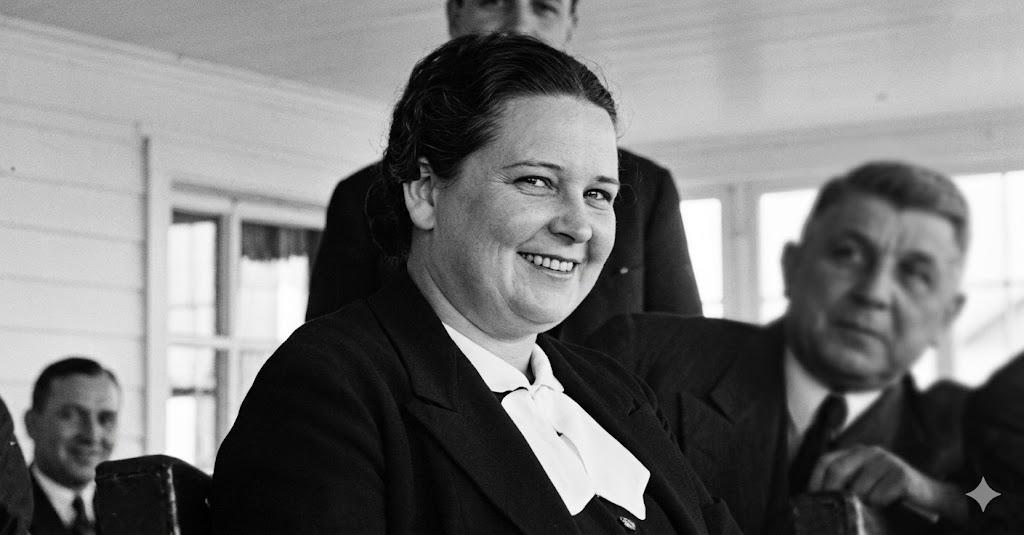
Afet İnan (TRT Arşiv)
Afet İnan’s intellectual worldview was shaped by the lands abandoned during the Balkan Wars, the arduous flight from Thessaloniki, and a childhood marked by the hardships of the War of Independence. During this period, she developed a profound awareness of the value and sacredness of defending the homeland, which became the foundation of her curiosity and desire to learn about her own history. At the age of 17, while teaching for three weeks at the Redd-i İlhak School in İzmir, she met Mustafa Kemal Atatürk when he visited the city in October 1925. This encounter marked a turning point in her life. During a tea invitation arranged by teachers, İnan’s speech attracted Atatürk’s attention, and from that day forward she came under his high patronage. In line with Atatürk’s model of educating talented students abroad, she was sent to Lozan in November 1925 for language training, returned to Türkiye in 1927, and completed her studies at the Notre Dame de Sion French Girls’ High School in Istanbul in 1929.
After completing her education, İnan taught History and Civic Knowledge at the Ankara Music Teacher’s School and Ankara Girls’ High School. During this period, under Atatürk’s directives, she prepared the work titled “Medeni Bilgiler” and delivered a lecture on women’s rights at the Türk Ocağı on 3 April 1930, the day women were granted the right to vote and stand for election. In 1931, İnan became one of the founding members of the Turkish Historical Society (Türk Tarih Kurumu). To advance her academic work, she enrolled at the Faculty of Social and Economic Sciences of the University of Geneva in 1935 and graduated in July 1938. Shortly before his death on 14 April 1938, Atatürk documented his close interest in İnan’s education in a letter sent from the Savarona yacht, even while confined to his sickbed. These academic and political endeavors are regarded as reflections of Atatürk’s ideal that all citizens should enjoy freedom and equal rights.【3】
Guided by Atatürk, Afet İnan studied women’s rights practices in other countries and played an active role in shaping public opinion on the issue. On 3 April 1930, the day the Municipal Law was adopted, she delivered the first conference titled “The Right to Vote for Turkish Women” at Türk Ocağı. At this meeting, attended by Atatürk and İsmet İnönü, İnan argued that national sovereignty belonged to all individuals without regard to gender; she defined voting as both a right and a duty serving the common good.
The legal recognition of women’s rights followed a phased process. Turkish women gained the right to participate in municipal elections on 3 April 1930 and the right to be elected as village headmen and members of elder councils on 26 October 1933. The most significant milestone occurred in 1934. At the proposal prepared by Atatürk and İsmet İnönü, women were granted the right to vote for and stand as candidates for parliament. Following this historic decision, Afet İnan presided over a celebration held at Ankara Girls’ High School and emphasized that Turkish women must exercise these rights with a sense of duty.【4】
Afet İnan traveled to Switzerland in 1935, declaring that she would accept the teaching position offered at Ankara University’s Faculty of Language, History, and Geography only after completing her graduate and doctoral studies. At the University of Geneva’s Department of Modern and Contemporary History, she began her studies under the renowned anthropologist Eugene Pittard, regularly reporting her progress to Atatürk and receiving his support.【5】
During her studies in Geneva, İnan vigorously opposed European professors who labeled Turks as “barbarians.” She undertook intensive efforts to introduce Turkish civilization to the world. In 1937, her lecture on the Piri Reis Map at the Geneva Geographical Society caused great astonishment among Western academics by demonstrating the advanced level of Turkish expertise in cartography. Additionally, through projected presentations on archaeological excavations in centers such as Geneva and Bucharest and on findings from Alacahöyük, she defended the Turkish History Thesis on international platforms.
Inspired by Eugene Pittard’s lectures, İnan informed Atatürk of her desire to conduct a large-scale anthropological survey across Türkiye. With Atatürk’s order and the support of Celal Bayar, this massive project measured the skulls of 64,000 individuals. The data collected by the end of 1937 were used to support the thesis that Turks belonged to the white race and had carried civilization from Central Asia to the world. This study was regarded as one of the most comprehensive anthropological datasets in the world at the time.
In 1938, İnan completed her thesis titled “A General Overview of the Economic History of the Ottoman Empire” and presented her diploma to Atatürk, who was confined to his sickbed. Shortly before his death, Atatürk requested in his will that a monthly stipend be granted to İnan and expressed his wish for her to continue her academic career. After Atatürk’s death, İnan received her doctorate in sociology in 1939 with her thesis “The Anthropological Character of the Turkish People and Turkish History,” and continued her work as the exemplary female academic of the Republic.
Afet İnan’s intellectual outlook was shaped by the continuous state of war between 1911 and 1922, the sense of fragmentation caused by late nation-building, and the search for alternative modernization models following the 1929 Economic Crisis.【6】 The rise of authoritarian and totalitarian regimes during the interwar period led to the replacement of pluralism with sharper ideological choices. The young Republic, seeking to feel secure and to advance credible theories on a global scale, turned toward fields such as history, language, and geography.
During this period, secular, positivist, and monolithic attitudes became widespread in cultural life. The scientific-objective framework was accepted as the sole criterion for understanding humanity’s relationship with the world. Socioeconomic tensions were obscured by appeals to national priorities and professional solidarity; this holistic approach introduced new perspectives on historiography and the concept of citizenship. Afet İnan stood at the center of this transformation as an active agent promoting the regime’s new vision of human and world outlook, rather than as a passive educator.【7】
The fundamental categories that nourished the intellectual world of the early Republic and Afet İnan can be listed as follows:
Afet İnan’s ideas on history, women’s rights, and citizenship constituted a synthesis of these intellectual frameworks, forming the academic and ideological foundation of the Republic’s modernization project.【8】
Uzun, İsmail. "AFET İNAN’IN SOSYO-KÜLTÜREL ÇALIŞMALARI." *Tarih ve Günce*, Volume 2, no. 4 (2019): 103-126. Accessed March 22, 2026. https://dergipark.org.tr/en/download/article-file/656412.
YouTube. "Prof. Dr. Âfet İnan | TRT Arşiv." TRT Arşiv. Accessed March 22, 2026. https://www.youtube.com/watch?v=RQWs9iz9_oQ.
Çetinkaya, Satuk Buğra. "Erken Cumhuriyet’in Ulus İnşasında Bir Figür: Afet İnan’ın Tarih, Yurttaşlık ve Kadın Haklarına Dair Fikirleri." *Ankara Hacı Bayram Veli Üniversitesi İktisadi ve İdari Bilimler Fakültesi Dergisi*, Volume 25, no. 1 (2023): 343-376. Accessed March 22, 2026. https://dergipark.org.tr/en/download/article-file/2835879.
Özkaya Duman, Olcay, and Volkan Payaslı. "CUMHURİYET DÖNEMİNDE MODERNLEŞMENİN KADIN SİMGESİ: AFET İNAN (1925-1938)." *Yakın Dönem Türkiye Araştırmaları* 17, no. 33 (2018): 65-122. Accessed March 22, 2026. https://dergipark.org.tr/en/download/article-file/491598.
Özkaya, Olcay, and Volkan Payaslı. "Ayşe Afet İnan (1908-1985)." *Atatürk Ansiklopedisi*. (2021). Accessed March 22, 2026. https://ataturkansiklopedisi.gov.tr/detay/890/Ay%C5%9Fe-Afet-%C4%B0nan-(1908-1985.
Ünalp, F. Rezzan. "Makedonya/Selanik Muhaciri Prof. Dr. Afet İnan ve Atatürk." *Tarih ve Günce*, no. 12 (2023): 93–122. Accessed March 22, 2026. https://dergipark.org.tr/tr/download/article-file/2668403.
[1]
F. Rezzan Ünalp, “Makedonya/Selanik Muhaciri Prof. Dr. Afet İnan ve Atatürk,” Tarih ve Günce, no. 12 (2023): 96-97. Erişim tarihi: 22 Mart 2026.https://dergipark.org.tr/tr/download/article-file/2668403.
[2]
F. Rezzan Ünalp, “Makedonya/Selanik Muhaciri Prof. Dr. Afet İnan ve Atatürk,” Tarih ve Günce, no. 12 (2023): 106. Erişim tarihi: 22 Mart 2026.https://dergipark.org.tr/tr/download/article-file/2668403.
[3]
F. Rezzan Ünalp, “Makedonya/Selanik Muhaciri Prof. Dr. Afet İnan ve Atatürk,” Tarih ve Günce, no. 12 (2023): 116. Erişim tarihi: 22 Mart 2026.https://dergipark.org.tr/tr/download/article-file/2668403.
[4]
İsmail Uzun, “AFET İNAN’IN SOSYO-KÜLTÜREL ÇALIŞMALARI,” Tarih ve Günce 2, no. 4 (2019): 116. Erişim tarihi: 22 Mart 2026.https://dergipark.org.tr/en/download/article-file/656412.
[5]
Olcay Özkaya Duman ve Volkan Payaslı, “CUMHURİYET DÖNEMİNDE MODERNLEŞMENİN KADIN SİMGESİ: AFET İNAN (1925-1938),” Yakın Dönem Türkiye Araştırmaları 17, no. 33 (2018): 92. Erişim tarihi: 22 Mart 2026.https://dergipark.org.tr/en/download/article-file/491598.
[6]
Satuk Buğra Çetinkaya, “Erken Cumhuriyet’in Ulus İnşasında Bir Figür: Afet İnan’ın Tarih, Yurttaşlık ve Kadın Haklarına Dair Fikirleri,” Ankara Hacı Bayram Veli Üniversitesi İktisadi ve İdari Bilimler Fakültesi Dergisi 25, no. 1 (2023): 347. Erişim tarihi: 22 Mart 2026.https://dergipark.org.tr/en/download/article-file/2835879.
[7]
Satuk Buğra Çetinkaya, “Erken Cumhuriyet’in Ulus İnşasında Bir Figür: Afet İnan’ın Tarih, Yurttaşlık ve Kadın Haklarına Dair Fikirleri,” Ankara Hacı Bayram Veli Üniversitesi İktisadi ve İdari Bilimler Fakültesi Dergisi 25, no. 1 (2023): 346. Erişim tarihi: 22 Mart 2026.https://dergipark.org.tr/en/download/article-file/2835879.
[8]
Satuk Buğra Çetinkaya, “Erken Cumhuriyet’in Ulus İnşasında Bir Figür: Afet İnan’ın Tarih, Yurttaşlık ve Kadın Haklarına Dair Fikirleri,” Ankara Hacı Bayram Veli Üniversitesi İktisadi ve İdari Bilimler Fakültesi Dergisi 25, no. 1 (2023): 347. Erişim tarihi: 22 Mart 2026.https://dergipark.org.tr/en/download/article-file/2835879.

Babası | Ismail Hakkı Bey | ||||||||
|---|---|---|---|---|---|---|---|---|---|
Annesi | Şehzade Hanım | ||||||||
Spouse(s) | Dr. Rıfat İnan | ||||||||
Birth | 1908, Thessaloniki (Ksendire) | ||||||||
Institution | Turkish Historical Society (TTK) | ||||||||
Identity | One of the first female professors of history in the Republic | ||||||||
Specialization | History Anthropology Sociology | ||||||||
Education | Lozan (Language) University of Geneva (Undergraduate and Doctorate) Notre Dame de Sion (High School) | ||||||||
The Balkan Wars Migration and the Family’s Arrival in Istanbul
Meeting Mustafa Kemal Atatürk and Her Educational Journey
The Struggle for Women’s Rights and Afet İnan’s Role
Afet İnan’s Education in Geneva and Academic Work (1935–1938)
Scientific Diplomacy and the Turkish History Thesis
Comprehensive Anthropological Research (1937)
Atatürk’s Final Days and Academic Achievement
Intellectual and Historical Context
The Paradigm of the Era and Cultural Preferences
Sources of Inspiration and Categories of Thought