

+2 More

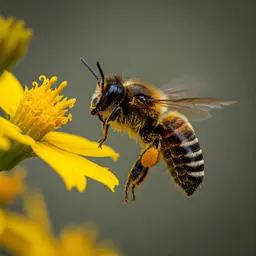
Afrikanized Honey Bee
Specie(s) | Africanized Apis Mellifera | ||||||||
|---|---|---|---|---|---|---|---|---|---|
Distribution Range | North America Central America South America | ||||||||
Characteristics | Aggressive Colony Defense Rapid Environmental Adaptation High Defensive Behavior | ||||||||
Ecological Impacts | Alterations in Pollination Dynamics Competition with Native Bee Species | ||||||||
Human Interaction | Challenges in Beekeeping Practices | ||||||||
The Africanized honey bee (Africanized Apis mellifera) is a hybrid bee species that emerged as a result of crossbreeding between African and European honey bees in the Americas. These bees are known for their high adaptability and aggressive behavior. Such traits have enabled them to quickly adjust to new environmental conditions and expand across a wide geographical area.
The Africanized honey bee is not a scientifically distinct species or subspecies but rather a population formed through hybridization between Apis mellifera scutellata (the African honey bee) and several European honey bee subspecies. This hybridization occurred as part of a breeding program initiated in Brazil in 1956. The program aimed to produce honey bees that were better adapted to tropical climates. However, in 1957, some African queen bees escaped into the wild, leading to the uncontrolled spread of Africanized honey bees. Despite their distinct traits, the name "Africanized honey bee" does not refer to a formal taxonomic classification but rather denotes a hybrid population with specific biological and behavioral characteristics. Consequently, in scientific literature, these bees are typically referred to as Africanized Apis mellifera.
Africanized honey bees closely resemble their European counterparts in morphology. However, genetic analyses have revealed that these bees carry African genetic traits. These inherited characteristics contribute to their behavioral and physiological differences.

Afrikanized Honey Bee (Created by Artificial Intelligence)
The reproductive behaviors of Africanized honey bees (Africanized Apis mellifera) distinctly reflect the species’ characteristic aggressiveness and strong tendency to form new colonies. These bees typically mate in mid-air at specialized areas known as drone congregation areas. A young queen mates with multiple drones in succession during a single mating flight, ensuring high genetic diversity. This polyandrous strategy enhances the colony’s adaptability and resilience, facilitating the rapid spread of Africanized honey bees.
Colonies of Africanized bees frequently undergo swarming, a process in which a portion of the colony, along with the old queen, leaves to establish a new nest. The remaining bees stay with a newly developed queen. Compared to other honey bee species, Africanized bees swarm more often and more intensely, allowing them to colonize new habitats at a faster rate. This high swarming frequency increases local bee population density and gives them a competitive edge over other bee species in the same ecosystem.
Africanized honey bees are renowned for their defensive behavior. When perceiving a threat, they are capable of launching rapid and coordinated attacks. They are also more assertive in searching for new nesting sites and can adapt swiftly to diverse environmental conditions.
Starting in South America, these bees have expanded through Central and North America. Their spread has placed pressure on native bee populations, contributing to a decline in some local species. However, their pollination behavior has positively impacted the reproductive success of certain native plant species in the regions they inhabit.
Due to their aggressive nature, Africanized honey bees can pose challenges in human interactions, particularly in beekeeping. Managing these bees requires more caution and protective measures than traditional European honey bees. Nevertheless, in some regions, their high honey production potential has made them economically valuable despite their temperament.
Pereira, Rogério A., Michelle M. Morais, Tiago M. Francoy ve Lionel S. Gonçalves. 2013. “Hygienic Behavior of Africanized Honey Bees Apis mellifera Directed towards Brood in Old and New Combs during Diurnal and Nocturnal Periods.” Insects 4(4): 521–532. Accessed May 27, 2025. https://doi.org/10.3390/insects4040521.
Santos, Gilberto M. de M., Cândida M. L. Aguiar, Julieta Genini, Celso F. Martins, Fernando C. V. Zanella ve Marco A. R. Mello. 2012. “Invasive Africanized Honeybees Change the Structure of Native Pollination Networks in Brazil.” Biological Invasions 14(11): 2369–2378. Accessed May 27, 2025. https://doi.org/10.1007/s10530-012-0235-8.
Vital, Marcos Vinícius Carneiro, Randall Hepburn, Sarah Radloff ve Stefan Fuchs. 2012. “Geographic Distribution of Africanized Honeybees (Apis mellifera) Reflects Niche Characteristics of Ancestral African Subspecies.” Natureza & Conservação 10(2): 164–190. Accessed May 27, 2025. https://doi.org/10.4322/natcon.2012.021.

Afrikanized Honey Bee
Specie(s) | Africanized Apis Mellifera | ||||||||
|---|---|---|---|---|---|---|---|---|---|
Distribution Range | North America Central America South America | ||||||||
Characteristics | Aggressive Colony Defense Rapid Environmental Adaptation High Defensive Behavior | ||||||||
Ecological Impacts | Alterations in Pollination Dynamics Competition with Native Bee Species | ||||||||
Human Interaction | Challenges in Beekeeping Practices | ||||||||
No Discussion Added Yet
Start discussion for "Africanized Honey Bee" article
Taxonomy and Origin
Morphological and Genetic Characteristics
Reproductive Structures
Behavioral Traits and Ecological Impact
Impact on Humans and Agriculture
This article was created with the support of artificial intelligence.