


This article was automatically translated from the original Turkish version.
Afro-Turks are the descendants of Africans who arrived in Anatolia, the Balkans, and the Aegean Islands during the Ottoman Empire. This community uses the term "Afro-Turk" to reference their African ancestry. Afro-Turks carry not only the ethnic or geographic origins of their ancestors but also the traces of social, cultural, and political experiences from various historical periods and regions.
On the Daily Life of Afro-Turks (AA)
Throughout the approximately 600-year existence of the Ottoman Empire, populations of African origin lived in various provinces of the empire. Africans who migrated to Anatolia from regions such as the Middle East, Arabia, Egypt, and North Africa for various reasons gradually became part of Ottoman societal structure. During this process, Ottoman administration maintained its authority in these regions through either local rulers or governors appointed from the center.
There are significant historical records documenting the presence of Africans in Ottoman territories. For instance, it is known that African students attended the Sahn-ı Seman medreses founded by Mehmed II in the 15th century. The 16th-century work Miratü’l-Hubuş (Mirror of the Habeshis) by Ali Mekki is one such historical testimony.
The presence of Africans in Arab regions during the Ottoman period forms the historical basis for why some Black populations in certain areas today are still referred to as "Arabs."
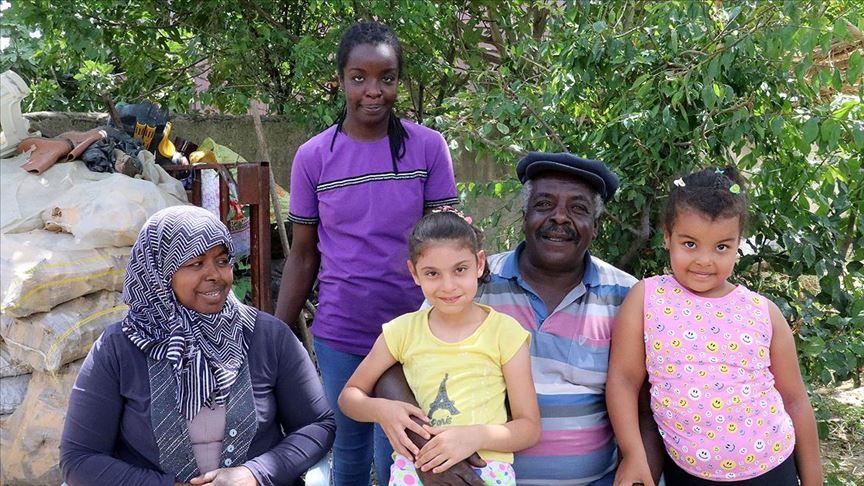
Families Settled in Aydın and Known as "Afro-Turks" (AA)
During the Ottoman period, Africans were commonly referred to in popular usage as "Arabs," while non-African individuals living in Arab provinces were called "Ak Arap." In Ottoman archives, Africans were recorded as "zenc" or "zenciye." These designations acquired different meanings in the modern era with the formation of concepts of race and nationality. The multicultural and multiethnic structure of Ottoman society made the existence of Afro-Turks possible as part of this diversity.
The presence of individuals of African origin in Anatolia was largely shaped by trade routes and the slave trade. In the 19th century, particularly with the widespread adoption of steamships and the end of the Atlantic slave trade, a migration flow emerged from ports such as Cairo and Tripoli toward Istanbul, Izmir, Thessaloniki, and the Aegean islands.
Historical sources demonstrate that Afro-Turks held active roles within Ottoman society. Hacı Beşir Ağa, of Ethiopian origin, served as Darüssaade Ağası during the reigns of three sultans. Zenci Musa, who accompanied Enver Pasha and Mustafa Kemal during the Tripolitania War, became a soldier under Kuşçubaşı Eşref of the Teşkilat-ı Mahsusa. Zenci Musa is also mentioned in the poetry of Mehmet Akif Ersoy. Afro-Zeybeks played an influential role during the National Struggle period in Aegean folklore, finding their place in folk songs such as "Koca Arap Zeybeği."
Afro-Turks continue to maintain their unique identities in Türkiye as carriers of the African cultural heritage that spread across the world. This identity is rooted both in the multicultural structure of the Ottoman period and in contemporary individual and collective memory. Afro-Turks preserve their existence through historical documents, folklore, and oral culture.
The music group founded by Afro-Turks to learn the rhythms they left behind in Africa (AA)
AFRO-TÜRKLER Kültür, Solidarity, and Mutual Aid Association. "Hakkımızda." Accessed June 7, 2025. https://afroturkler.com/hakkimizda/
Anadolu Ajansı. "Afro-Türkler atalarının müziklerini 500 yıl sonra öğreniyor." Accessed June 7, 2025. https://www.aa.com.tr/tr/yasam/afro-turkler-atalarinin-muziklerini-500-yil-sonra-ogreniyor/1061696
Anadolu Ajansı. “Ege’nin ‘renkli’ simaları: Afro-Türkler.” Accessed June 7, 2025. https://www.aa.com.tr/tr/yasam/egenin-renkli-simalari-afro-turkler/1873040

Historical Background
Terminology and Social Definitions
Migration and Slavery History
Prominent Figures of African Origin in the Ottoman Period
Cultural and Historical Heritage