


This article was automatically translated from the original Turkish version.
+1 More
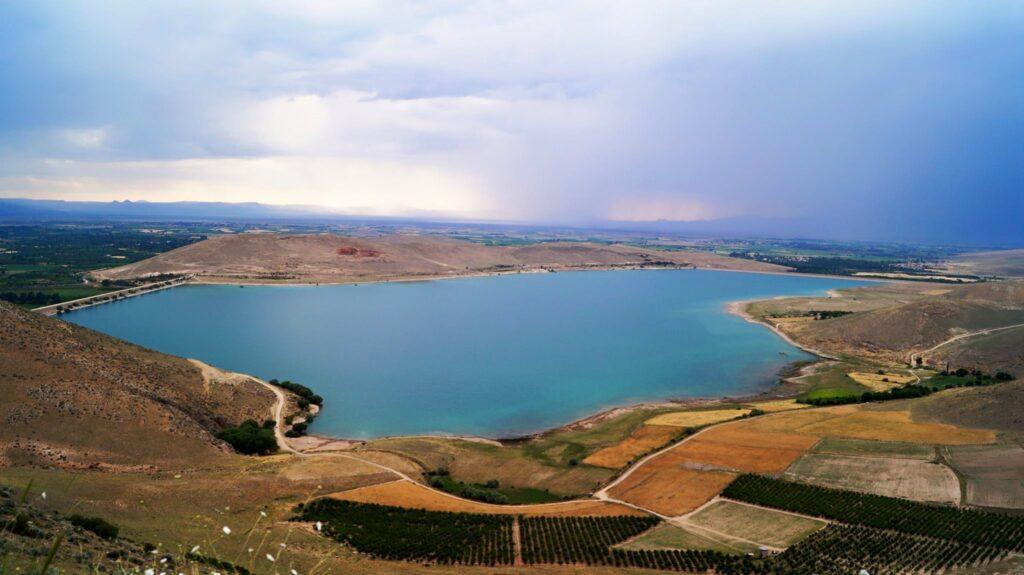
Ağcaşar Dam
Location | Kayseri/Develi Plain | ||||||||
|---|---|---|---|---|---|---|---|---|---|
Year of Construction | 1986 | ||||||||
Operation | State Hydraulic Works (DSİ) | ||||||||
Purpose(s) | Irrigation Water management Flood control | ||||||||
Basin | Develi Closed Basin | ||||||||
Ecosystem | Freshwater ecosystem | ||||||||
Feeding Rivers | Zamantı River and local streams | ||||||||
Nearby Water Bodies | Yay Lake, Camız Lake, Sultansazlığı Wetland | ||||||||
Ağcaşar Dam is a water structure constructed in 1986 by the State Hydraulic Works (DSİ) in the Develi Plain of Kayseri Province, Türkiye. It is used for agricultural irrigation flood control and water management. Located within the Develi Closed Basin the dam operates as an integrated component of the region’s water resources system.

Ağcaşar Reservoir (Kayseri City)
Ağcaşar Dam is situated on the western side of the Develi Plain and is located near the Sultansazlığı Wetland. The dam is fed by the Zamantı River and surrounding tributaries. Other water bodies in the region include Yay Lake Camız Lake and the Sultansazlığı Wetland. The dam exhibits variable water levels depending on annual precipitation patterns.
The ecological impacts of Ağcaşar Dam are directly linked to its alteration of the regional water regime. Due to its proximity to the Sultansazlığı Wetland the dam plays a significant role in maintaining the regional water balance. Changes in the water regime affect wetland ecosystems bird habitats and local flora and fauna structures.
Irrigation: One of the dam’s most important uses is agricultural irrigation. It supports agricultural production in the Develi Plain by meeting farmers’ water needs and enhancing productivity.
Flood Control: The dam plays a critical role in flood management by mitigating risks from sudden rainfall and flooding in the region.
Ecotourism and Biodiversity: The reservoir and its surrounding natural habitats are valuable for ecotourism and nature observation. It particularly provides critical habitat for bird species found in Sultansazlığı.
Research conducted around Ağcaşar Dam has demonstrated that the reservoir offers a highly diverse habitat for zooplankton fauna. Numerous new records of Rotifera species have been identified in the region. As part of the regional aquatic ecosystems the reservoir functions as a feeding and breeding ground for aquatic organisms.
Meteorological measurements carried out over the years in the Develi Closed Basin indicate that the region’s average annual relative humidity ranges between 58% and 63%. Temperature and evaporation rates in the area are key factors directly influencing the dam’s water levels.
Ağcaşar Dam holds a critical position in water management within the Develi Plain. A sustainable management model is considered essential for the dam’s future taking into account not only its benefits in irrigation and flood control but also its environmental impacts. The dam’s water regime requires careful management due to its connection with important wetlands such as Sultansazlığı. Forward-looking scientific studies and sustainable water policies are necessary to preserve the ecological balance of the region and minimize the dam’s environmental effects.
"Ağcaşar Barajı." Kayseri City. Accessed March 17, 2025. Accessed Adresi.
Karabaşa, Solmaz. *Kayseri Sultan Sazlığı’nda Kültür – Çevre İlişkileri.* Master's thesis,Ankara Üniversitesi Institute of Social Sciences, 2006. Accessed March 17, 2025. Accessed Adresi.
Kaya, Murat. *Develi Ovası (Kayseri) ve Çevresinin Rotifera Faunası Üzerine Taksonomik Bir Çalışma.* PhD thesis, Ankara Üniversitesi Fen Bilimleri Enstitüsü, 2008. Accessed March 17, 2025. Accessed Adresi.
State Hydraulic Works (DSİ) 2014 Activity Report. Accessed March 17, 2025. Accessed Adresi.
Yıldız, F. Ebru, and İbrahim Gürer. "Sultansazlığı Sulak Alanı İçin Buharlaşma Yöntemlerinin Karşılaştırılması." *Gazi Üniversitesi Fen Bilimleri Dergisi, Part C, Tasarım ve Teknoloji* 2, no. 3 (2014): 247-254. Accessed March 17, 2025. Accessed Adresi.

Ağcaşar Dam
Location | Kayseri/Develi Plain | ||||||||
|---|---|---|---|---|---|---|---|---|---|
Year of Construction | 1986 | ||||||||
Operation | State Hydraulic Works (DSİ) | ||||||||
Purpose(s) | Irrigation Water management Flood control | ||||||||
Basin | Develi Closed Basin | ||||||||
Ecosystem | Freshwater ecosystem | ||||||||
Feeding Rivers | Zamantı River and local streams | ||||||||
Nearby Water Bodies | Yay Lake, Camız Lake, Sultansazlığı Wetland | ||||||||
Geographical Location and Hydrological Characteristics
Ecological and Environmental Impacts
Uses
Biodiversity
Climate and Meteorological Observations