


This article was automatically translated from the original Turkish version.
+2 More
Location | Kayseri Aşağı Pınar Location Ağırnas Town | ||||||||
|---|---|---|---|---|---|---|---|---|---|
Date(s) | Usage from the 7th century BC to the 13th century AD | ||||||||
Depth(s) | Approximately 85 metres | ||||||||
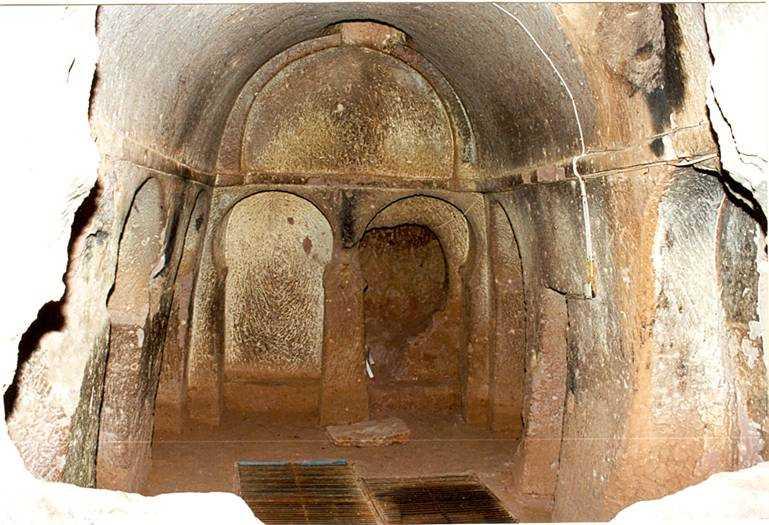
Structural Features | Tunnel System, Stone Gates, Storage and Living Areas, Ventilation Systems, Underground Church | ||||||||
Current Status | Open to Tourism (After 2017) | ||||||||
Ağırnas Underground City is a historical subterranean settlement located in the town of Ağırnas, within the province of Kayseri. Ağırnas, the birthplace of the architect Mimar Sinan, attracts attention not only for its surface structures but also for its multi-layered underground architecture. The underground city was constructed to meet needs for defense, shelter, and daily life, similar to other such structures in the Cappadocia region.
Ağırnas Yeraltı Şehri (Türkiye Culture Portal)
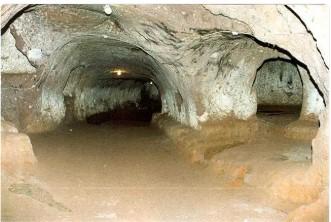
The Ağırnas Underground City is carved into a rocky ridge approximately 200 meters south of the Aşağı Pınar locality, southeast of the town. The entrance area contains a small chapel, food storage rooms, stone doors, and living quarters. Inside the structure, there are halls measuring up to 24 meters in length and 4 meters in width, along with eleven storage or living rooms distributed along the main tunnel. At the ends of the tunnels, stone-door exits open in various directions.
Based on archaeological and architectural evidence, certain sections of the structure were built in pre-Christian times, with its most intensive use believed to have occurred between the 1st and 13th centuries CE. It is understood that usage increased significantly during the Roman and Byzantine periods, and later additions were made by various communities. The niches, paintings, and stonework found in the area support this historical timeframe.
The structure exhibits a settlement layout consistent with Cappadocian underground city architecture, featuring multiple rooms, stone doors, and defensive elements. The rooms are larger and more spacious than similar examples in Cappadocia. Ventilation shafts enabled long-term habitation underground. Secret passages, blocked entrances, and operational rooms indicate that the design prioritized security.
Based on historical documents and archaeological findings, Ağırnas has undergone a significant demographic and economic transformation. Ottoman archives from tax registers dated 1500 record that Ağırnas, under the Koramaz subdistrict of the Kayseri sanjak, had 53 Christian households, 3 Muslim households, two mills, and four textile workshops, paying a total of 18,000 akçe in taxes. These figures demonstrate that the settlement was a significant regional center in terms of both population and economic scale. Records from the 19th century show a gradual increase in the Muslim population and a corresponding demographic shift in the settlement structure. Due to its volcanic terrain, unsuitable for agriculture, the population turned to diverse trades for livelihood. Particularly during the 16th and 17th centuries, textile production became prominent; the fine white cotton fabrics known as “Ağırnas boğası” gained popularity in European markets, especially in England, France, and the Netherlands. In addition, Ağırnas craftsmen specialized in stonemasonry, plastering, ornamentation, and wall-building, and participated in construction projects across the Ottoman Empire in major centers such as Istanbul, Cairo, Damascus, and Aleppo, carrying their cultural knowledge back to their village. This cultural exchange influenced Ağırnas’ sociocultural fabric across a broad spectrum—from architecture and spoken dialect to culinary traditions and daily life.
The first school in Ağırnas opened in 1876. In 1908, a new school building constructed by Mustafa Ağırnaslı is now used as a library. The local dialect spoken in the town exhibits features close to Istanbul Turkish, a result of social and cultural interactions.
In recent years, Ağırnas Underground City has been opened to visitors following cleaning and restoration efforts. The discovery of passageways linked to the house where Mimar Sinan was born has drawn interest from both domestic and international tourists. Mapping and scientific documentation of the structure are ongoing.
Altınkaya, Zeliha. “Ağırnas Yeraltı Şehrini Tanıyalım.” *AGU News*, November 2023, no. 80. Accessed June 17, 2025. https://agunews.agu.edu.tr/kasim-2023/sayi-80/agirnas-yeralti-sehrini-taniyalim-411.
Kayseri Büyükşehir Municipality. *Kayseri – Underground Structures Inventory Second Interim Report.* 2017. Accessed June 17, 2025. https://www.kayseri.bel.tr/uploads/pdf/kayseri_yeralti_envanteri_2.pdf.
T.C. Kayseri Valiliği. "Ağırnas Yeraltı Şehri." Accessed June 17, 2025. http://www.kayseri.gov.tr/agirnas-yeralti-sehri.
Türkiye Kültür Portalı. *Ağırnas Yer Altı Şehri - Kayseri.* Accessed June 17, 2025. https://www.kulturportali.gov.tr/turkiye/kayseri/gezilecekyer/agirnas-yer-alti-sehri.

Location | Kayseri Aşağı Pınar Location Ağırnas Town | ||||||||
|---|---|---|---|---|---|---|---|---|---|
Date(s) | Usage from the 7th century BC to the 13th century AD | ||||||||
Depth(s) | Approximately 85 metres | ||||||||
Structural Features | Tunnel System, Stone Gates, Storage and Living Areas, Ventilation Systems, Underground Church | ||||||||
Current Status | Open to Tourism (After 2017) | ||||||||
No Discussion Added Yet
Start discussion for "Ağırnas Underground City" article
Location and Physical Characteristics
Historical Development and Periods of Use
Architectural Features
Ağırnas’ Historical Identity and Economic Transformation
Educational and Cultural Development
Opening to Tourism and Current Status