

This article was automatically translated from the original Turkish version.
+1 More
Building Material(s) | Cut and rubble stone Tile Brick Wood | ||||||||
|---|---|---|---|---|---|---|---|---|---|
Founder | Hızır Bey | ||||||||
Repair | Ahmet Gazi Bey | ||||||||
Architectural Style | Beylikler Period architecture | ||||||||
Architectural Plan | square-planned and single-volume | ||||||||
Location | Çine - Aydın / Türkiye | ||||||||
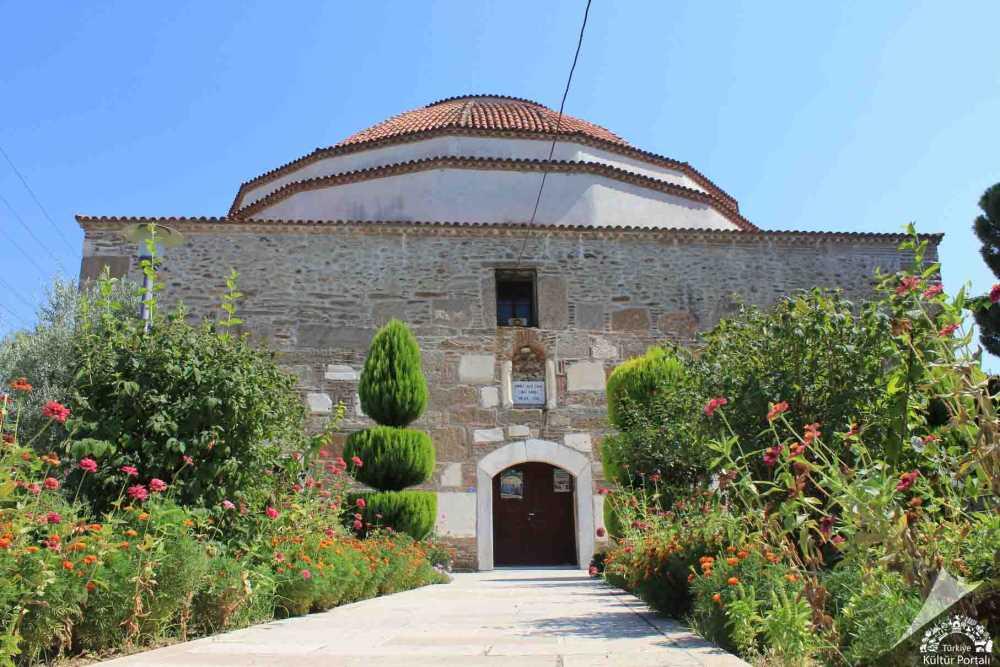
Ahmet Gazi Camii (also known as Ulu Cami) is a historical place of worship from the Menteşe Beylik period, located in Eski Çine Village, Çine District, Aydın Province. The structure, situated approximately 10 km from the district center along the Çine–Muğla road, is regarded as the oldest known mosque in Aydın Province and one of the earliest Turkish Ulu mosques in Western Anatolia.
No inscriptive foundation tablet exists with definitive information regarding the construction date or founder of the mosque. However, endowment records dated 1308 indicate that the building was constructed in the first half of the 14th century. 【1】 Although commonly associated in literature with the name of Menteşeoğlu Ahmet Gazi Bey, the foundation deed predates his period of rule (before 1375), leading scholars to conclude that the original founder was likely Hızır Bey, son of Menteşeoğlu Orhan Bey.
Ahmet Gazi Bey is believed to have undertaken extensive repairs and restoration of the structure in the second half of the 14th century (after 1375), established new endowments, and thereby caused the mosque to become widely known by his name.
The mosque features a square-plan, single-volume design. Measuring 19.70 x 19.65 meters externally, its walls are 1.70 meters thick and the total floor area is approximately 400 m².【2】 The construction employs cut stone with rubble infill. The building is notable for lacking additional units such as a rear prayer space or portico on its exterior facade.
Ahmet Gazi Camii is among the largest domed structures of its era in Anatolia, featuring a dome approximately 17 meters in diameter.【3】
The mosque has undergone numerous restorations throughout its history, notably in 1322/1904, 1978, and 1990. These interventions, carried out by the General Directorate of Foundations, addressed the exterior facade, the dome drum, and interior plastering. In 2017, the Aydın Regional Board for the Protection of Cultural Heritage evaluated new conservation and restoration proposals for the site. Today, the structure functions as a cultural heritage site open to both worship and visitation.
Duran, Remzi. “Ortaçağ Türk Mimarisinin Önemli Bir Eseri: Eski Çine – Ahmed Gazi Câmii.” *Süleyman Demirel Üniversitesi Sosyal Bilimler Enstitüsü Dergisi*, no. 10 (2003): 493–506. Accessed April 15, 2026. https://dergipark.org.tr/en/download/article-file/1722196
T.C. Ministry of Culture and Tourism. "Ahmet Gazi Camii - Aydın." Türkiye Kültür Portalı. Accessed April 15, 2026. https://www.kulturportali.gov.tr/turkiye/aydin/gezilecekyer/ahmet-gazi-camii-
T.C. Ministry of Culture and Tourism. "Ahmet Gazi Camii."Aydın İl Directorate of Culture and Tourism. Accessed April 15, 2026. https://aydin.ktb.gov.tr/TR-64448/ahmet-gazi-camii.html
T.C. Ministry of National Education. "Ahmet Gazi Camii."EBA Okul Learning Environments. Accessed April 15, 2026. https://okuldisiogrenme.eba.gov.tr/place-detail/ahmet-gazi-camii-5696
[1]
T.C. Kültür ve Turizm Bakanlığı, “Ahmet Gazi Camii,” Aydın İl Kültür ve Turizm Müdürlüğü, erişim tarihi 15 Nisan 2026, https://aydin.ktb.gov.tr/TR-64448/ahmet-gazi-camii.html
[2]
T.C. Kültür ve Turizm Bakanlığı, “Ahmet Gazi Camii,” Aydın İl Kültür ve Turizm Müdürlüğü, erişim tarihi 15 Nisan 2026, https://aydin.ktb.gov.tr/TR-64448/ahmet-gazi-camii.html
[3]
Remzi Duran, “Ortaçağ Türk Mimarîsinin Önemli Bir Eseri: Eski Çine - Ahmed Gazi Câmii,” Süleyman Demirel Üniversitesi Sosyal Bilimler Enstitüsü Dergisi, no. 10 (2003): 494. https://dergipark.org.tr/tr/pub/susbed/article/923532

Building Material(s) | Cut and rubble stone Tile Brick Wood | ||||||||
|---|---|---|---|---|---|---|---|---|---|
Founder | Hızır Bey | ||||||||
Repair | Ahmet Gazi Bey | ||||||||
Architectural Style | Beylikler Period architecture | ||||||||
Architectural Plan | square-planned and single-volume | ||||||||
Location | Çine - Aydın / Türkiye | ||||||||
Historical Background and Founder
Architectural Structure and Plan Features
Current Condition