

This article was automatically translated from the original Turkish version.
+2 More
Model | A330-300 | ||||||||
|---|---|---|---|---|---|---|---|---|---|
Type | wide-body | ||||||||
Service | 1994 | ||||||||
Capacity | 465 | ||||||||
Wing | 60.30 m | ||||||||
Speed | 912 km/s | ||||||||
Range | 11.750 km | ||||||||
Engine | twin-engine | ||||||||
Producer | Airbus | ||||||||
Length | 63.69 m | ||||||||
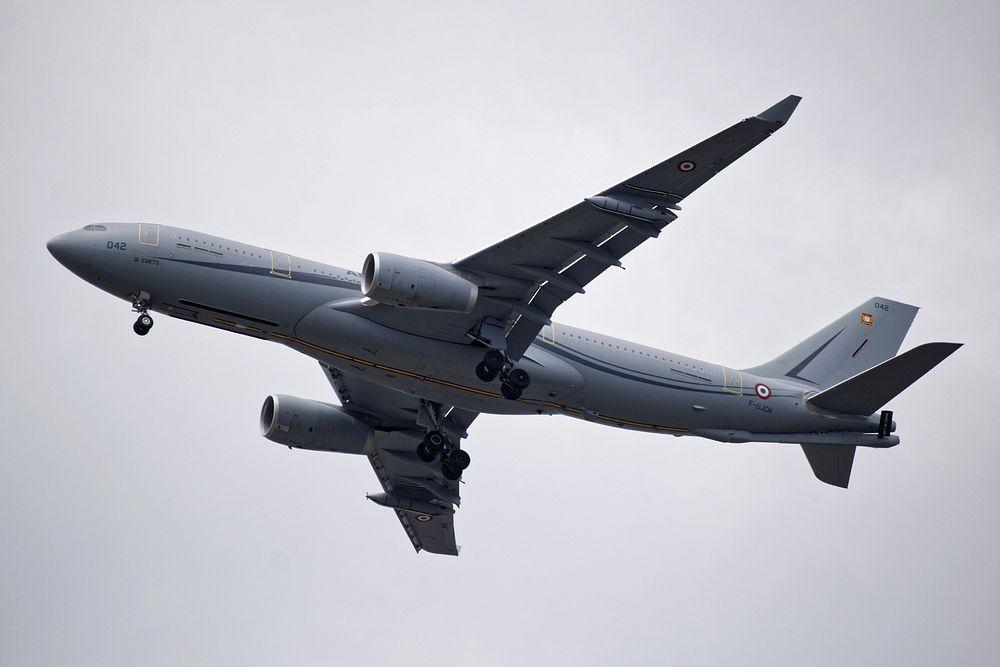
The Airbus A330 is a twin-engine widebody passenger aircraft family introduced in the early 1990s to the commercial aviation market, designed for both regional and long-haul flights. The first variant of the series, the A330-300, was officially launched into service in 1994 with the goal of delivering operational flexibility and the efficiency of twin-engine propulsion. Following this model, the A330-200 variant, featuring a shortened and optimized fuselage for longer-range operations, was introduced to airlines in 1998. After this first generation, classified in industry literature as "ceo" (Current Engine Option), Airbus announced in 2014 the "neo" (New Engine Option) program to respond to evolving market demands for reduced emissions and improved efficiency. The first commercial flight of this new generation took place in 2018. Since entering service, the A330 family has captured a significant global market share, being operated by over 150 airlines worldwide, with more than 1,900 orders placed, over 1,600 deliveries completed, and a cumulative total of over 70 million flight hours, securing a prominent position in commercial aviation history.【1】
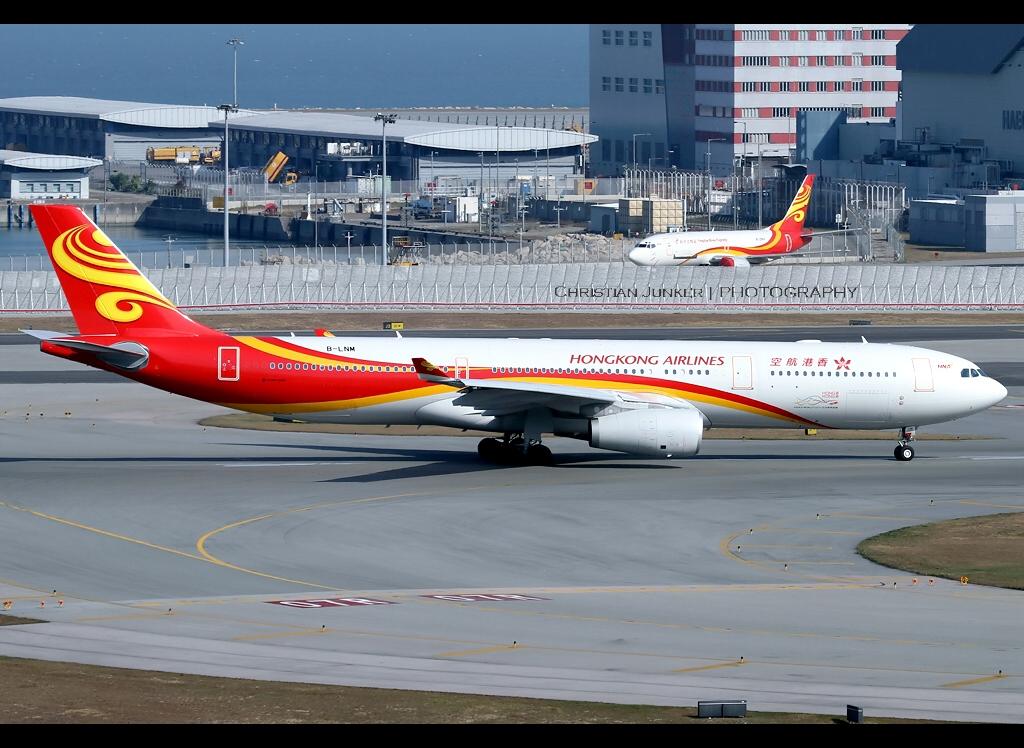
Airbus A330-300 (Flickr)
The dimensional parameters of the A330 platform vary by model. The fuselage length of the A330-300 ranges between approximately 63.66 and 63.73 metres, while the shorter-fuselage A330-200 variant measures 58.82 metres. 【2】The aircraft family has a standard wingspan of 60.30 metres, with its ground clearance ranging from 16.79 to 17.39 metres depending on configuration. 【3】To achieve weight savings and structural durability, key areas of the fuselage utilize aluminium and titanium alloys, while corrosion-resistant carbon fibre-reinforced polymer (CFRP) composite materials are employed in components such as vertical and horizontal stabilizers and winglets. The aircraft’s construction follows a distributed European supply and production system: fuselage components are manufactured in Hamburg, Germany and Saint-Nazaire, France; wings are produced in Broughton, United Kingdom; horizontal tail units are made in Spain; and final assembly is completed at Airbus facilities in Toulouse, France. In terms of avionics and flight control, the aircraft is equipped with a digital fly-by-wire control system. Additionally, the A330 cockpit features advanced flight management systems and a system compatibility that allows pilots to transition to the Airbus A350 model with only an eight-day cross-training program, eliminating the need for full-flight simulators.
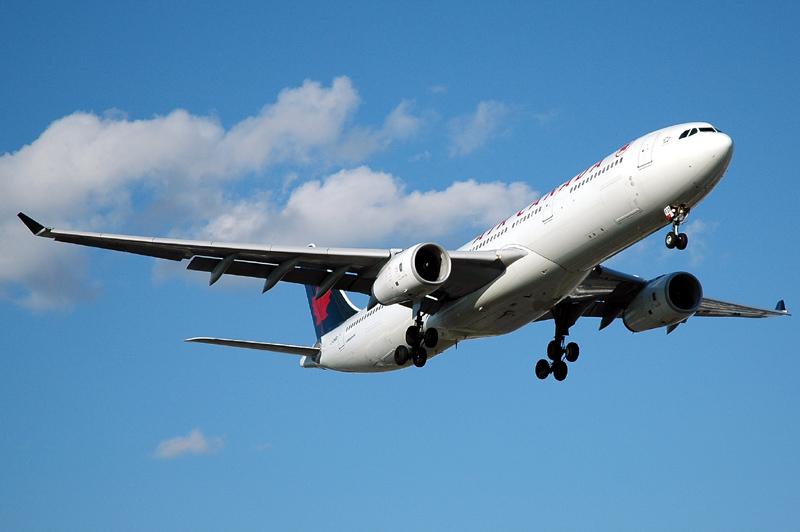
Airbus A330-300 (Flickr)
The A330 series can be equipped with engines from different manufacturers to meet airline route and performance requirements; for example, the General Electric CF6-80E1A3, Rolls-Royce Trent 772B, and the specially developed Rolls-Royce Trent 7000 engines for the A330neo variants are in use. 【4】Depending on the model, the aircraft can achieve a maximum takeoff weight of up to 233 tonnes, cruise at speeds between 870 and 912 kilometres per hour, and operate at a maximum cruise altitude of 11,000 to 12,500 metres (approximately 36,100 to 41,000 feet). 【5】The range capabilities of the A330 variants are directly optimized according to their physical design. The A330-300 has a range of 10,000 to 11,750 kilometres, while the A330-200 variant, with increased fuel capacity and a shortened fuselage, can perform non-stop flights of up to 15,500 kilometres. 【6】The A330-800neo, powered by new-generation engines, is certified with a maximum range of 8,100 nautical miles, while the A330-900neo model has a certified maximum range of 7,350 nautical miles.【7】
The aircraft’s interior architecture and passenger capacity can be highly customized according to airline market strategies. In standard three-class seating configurations, the aircraft can carry between 220 and 300 passengers, while high-density all-economy layouts can accommodate up to 465 passengers.【8】The 2-4-2 seating arrangement, now an industry standard in economy class, is widely preferred. Examples from global operators include Saudia Airlines with a 298-seat configuration (36 Business, 262 Economy), Hi Fly with 268 seats, Lufthansa with 255 seats, and Scandinavian Airlines (SAS) with 266 seats.【9】Regarding cabin air quality and health, the cabin air circulation system employs HEPA (High-Efficiency Particulate Air) filters capable of removing 99.97% of airborne particles down to 0.3 microns, ensuring that the cabin air is completely refreshed on average every two to three minutes.【10】
Airbus A330-300 (Aerowanderer)
With a global operator profile, the A330 was first introduced into Hong Kong Airlines’ fleet in 2012 and has since become a cornerstone for long- and medium-haul routes of flag carriers such as Air Canada and Turkish Airlines. Due to its flexibility, it is also widely used by companies like Hi Fly, which provide charter operations and wet lease services. In 2026, Scandinavian Airlines (SAS), celebrating its 80th anniversary, repainted an A330-300 aircraft, registered as LN-RKR and named “Tore Viking,” in its corporate blue livery, adding the national flags of Denmark, Norway and Sweden to commemorate its inaugural 1946 flight from Copenhagen to New York, and reassigning the aircraft to that same route.
As part of its compliance with International Civil Aviation Organization (ICAO) standards, Airbus has undertaken major technological revisions to the A330 platform to meet sustainability goals. The A330neo variants, equipped with advanced winglets and Rolls-Royce Trent 7000 series engines, achieve a 25% improvement in fuel consumption per seat and direct carbon emissions compared to the previous “ceo” generation. To reduce dependence on fossil fuels, the entire A330 family is certified to operate commercial flights using a blend of up to 50% Sustainable Aviation Fuel (SAF).
Accessed November 26, 2025. https://www.aa.com.tr/tr/kultur/ahlatta-acilan-kurslarla-geleneksel-tas-isciligi-yasatiliyor/3116279.
Accessed November 26, 2025. https://www.aa.com.tr/tr/kultur/ahlatta-acilan-kurslarla-geleneksel-tas-isciligi-yasatiliyor/3116279.
Accessed November 26, 2025. https://www.aa.com.tr/tr/kultur/ahlatta-acilan-kurslarla-geleneksel-tas-isciligi-yasatiliyor/3116279.
Aerowanderer. "Flying CATHAY PACIFIC Airbus A330-300 | Hong Kong to Manila - TRIP REPORT." YouTube, Accessed April 3, 2026.
Airbus. "Airbus A330 Family, Versatile Widebody Aircraft." Airbus, 2026. Accessed April 3, 2026.
Caribb. "Air Canada A330-300 C-GHKR." Flickr, January 8, 2006. Accessed April 3, 2026.
Hartley, Paul. "Blue Airbus A330: SAS Unveils Special Livery To Commemorate 80 Years Of Flying." Simple Flying, April 1, 2026. Accessed April 3, 2026.
Hi Fly. "Airbus A330." Hi Fly, Accessed April 3, 2026.
Junker, Christian. "A330-300 | Hong Kong Airlines | B-LNM | VHHH." Flickr, February 24, 2013. Accessed April 3, 2026.
Lufthansa. "Airbus A330-300." Lufthansa, Accessed April 3, 2026.
Saudia Airlines. "Airbus A330." Saudia Airlines, 2026. Accessed April 3, 2026.
Türk Hava Yolları. "Airbus A330-300 | Filo." Türk Hava Yolları, 2026. Accessed April 3, 2026.
https://hifly.aero/fleet/a330/
https://simpleflying.com/sas-special-livery-commemorate-80-years-flying/
https://www.flickr.com/photos/caribb/83636674
https://www.flickr.com/photos/chrisjunker/8503240906
https://www.lufthansa.com/hr/en/333
https://www.turkishairlines.com/tr-tr/ucak-bileti/ucus-deneyimi/filo/airbus-a330-300/
[1]
Airbus. “Airbus A330 Family, Versatile Widebody Aircraft.” Airbus, 2026. Access date: 03 April 2026.
https://www.airbus.com/en/products-services/commercial-aircraft/passenger-aircraft/a330-family
[2]
Saudia Airlines. “Airbus A330.” Saudia Airlines, 2026. Access date: 03 April 2026.
https://www.saudia.com/explore/about-saudia/our-fleet/airbus-a330
[3]
Saudia Airlines. “Airbus A330.” Saudia Airlines, 2026. Access date: 03 April 2026.
https://www.saudia.com/explore/about-saudia/our-fleet/airbus-a330
[4]
Airbus. “Airbus A330 Family, Versatile Widebody Aircraft.” Airbus, 2026. Access date: 03 April 2026.
https://www.airbus.com/en/products-services/commercial-aircraft/passenger-aircraft/a330-family
[5]
Saudia Airlines. “Airbus A330.” Saudia Airlines, 2026. Access date: 03 April 2026.
https://www.saudia.com/explore/about-saudia/our-fleet/airbus-a330
[6]
Türk Hava Yolları. “Airbus A330-300 | Fleet.” Türk Hava Yolları, 2026. Access date: 03 April 2026.
https://www.turkishairlines.com/tr-tr/ucak-bileti/ucus-deneyimi/filo/airbus-a330-300/
[7]
Airbus. “Airbus A330 Family, Versatile Widebody Aircraft.” Airbus, 2026. Access date: 03 April 2026.
https://www.airbus.com/en/products-services/commercial-aircraft/passenger-aircraft/a330-family
[8]
Airbus. “Airbus A330 Family, Versatile Widebody Aircraft.” Airbus, 2026. Access date: 03 April 2026.
https://www.airbus.com/en/products-services/commercial-aircraft/passenger-aircraft/a330-family
[9]
Saudia Airlines. “Airbus A330.” Saudia Airlines, 2026. Access date: 03 April 2026.
https://www.saudia.com/explore/about-saudia/our-fleet/airbus-a330
[10]
Airbus. “Airbus A330 Family, Versatile Widebody Aircraft.” Airbus, 2026. Access date: 03 April 2026.
https://www.airbus.com/en/products-services/commercial-aircraft/passenger-aircraft/a330-family

Model | A330-300 | ||||||||
|---|---|---|---|---|---|---|---|---|---|
Type | wide-body | ||||||||
Service | 1994 | ||||||||
Capacity | 465 | ||||||||
Wing | 60.30 m | ||||||||
Speed | 912 km/s | ||||||||
Range | 11.750 km | ||||||||
Engine | twin-engine | ||||||||
Producer | Airbus | ||||||||
Length | 63.69 m | ||||||||
Structural Features, Production Network and Cockpit Technologies
Operational Performance, Engine Variants and Range
Capacity, Cabin Configurations and Climate Control Systems
Global Operator Network and Corporate Historical Role
Environmental Sustainability and Carbon Emission Strategies