

This article was automatically translated from the original Turkish version.
+2 More
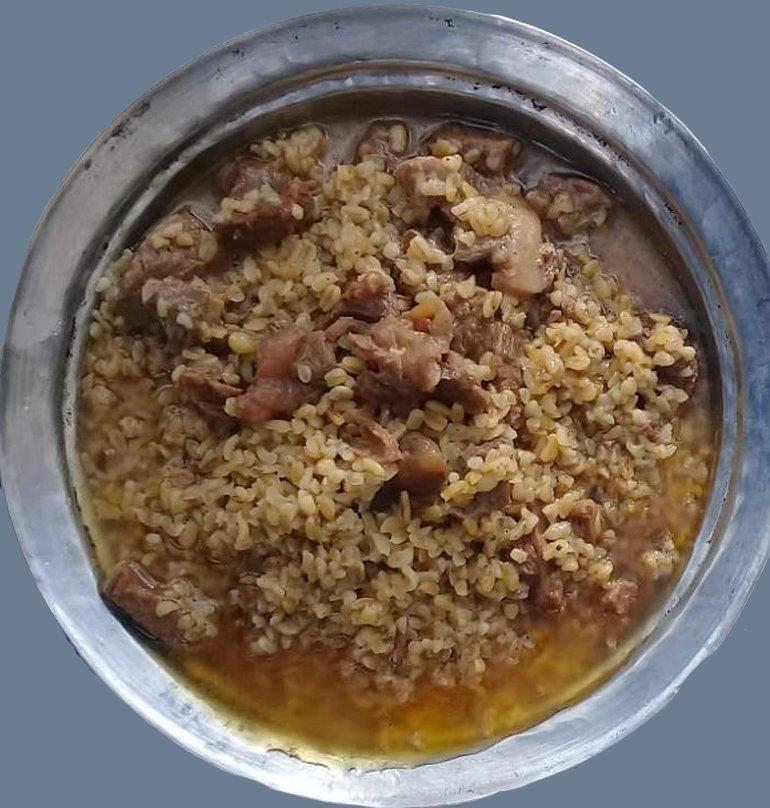
Akçadağ pilaf is a geographically registered dish unique to the Akçadağ district of Malatya Province in Türkiye. It is prepared using bulgur made from kundura wheat and meat from small livestock, particularly lamb or mutton, with cuts such as ribs, hind leg, foreleg, and back diced into small pieces and cooked in butter and tail fat. Seasoned with black pepper, this pilaf holds an important place in Akçadağ’s culinary culture and is consumed both in daily meals and on special occasions such as engagements and weddings. All ingredients and the entire cooking process must be carried out within the boundaries of the Akçadağ district.
Akçadağ pilaf is a type of pilaf prepared using bulgur derived from kundura wheat and meat from small livestock—preferably lamb or mutton. The preferred cuts of meat are ribs, hind leg, foreleg, and back. The meat is diced into small pieces and cooked together with butter and tail fat, with the addition of black pepper.
This dish is not merely consumed as part of daily meals; it also occupies a significant place in the social life of Akçadağ district. It is prepared and served communally during special events and ceremonies such as engagements and weddings. Because of these characteristics, the product is intrinsically linked to the geographical boundaries of Akçadağ district.
The ingredients required to prepare Akçadağ pilaf for ten people are as follows:
All these ingredients are sourced from products grown and produced within Akçadağ district.
The production of Akçadağ pilaf follows a series of specific stages. First, the ribs, hind leg, foreleg, and back cuts are diced into small pieces and refrigerated for one day prior to cooking.
The cooking process begins by melting butter and tail fat over low heat in a pot. The diced meat is then added on top, evenly spread, and the pot is covered. After approximately 20 minutes, the meat is stirred, the lid is partially opened, and the meat is cooked until it releases its juices. Once the meat begins to sizzle and brown, salt is added and the meat is continuously stirred over low heat until thoroughly browned.
After browning, boiling water is added to the meat and the mixture is simmered over low heat for approximately 20 to 30 minutes. This prepared mixture is called tirit.
In a separate container, butter is melted and browned, black pepper is added to create a homogeneous mixture, and this mixture is poured over the tirit. Bulgur is then added and the entire mixture is cooked over low heat for 15 to 20 minutes. After cooking, the pilaf is left to rest for approximately 10 minutes. When serving, melted butter is preferably drizzled over the bulgur.
The production of Akçadağ pilaf has deep historical roots and occupies a central place in the culinary culture of Akçadağ district. Because the product is intrinsically linked to its geographical origin, all stages of production must be carried out within the boundaries of Akçadağ district in Malatya Province. This requirement is established to preserve the product’s authentic character and reputation.
According to the registration, the designation “Akçadağ pilaf” and its official emblem must appear on the product itself or its packaging. If these markings cannot be placed directly on the product or packaging, they must be clearly displayed within the production facility.
After registration, the production of Akçadağ pilaf is subject to specific inspection procedures. These inspections are conducted by a minimum of three experts appointed by the Akçadağ Municipality, in coordination with the Akçadağ Municipality, the Akçadağ District Directorate of Agriculture and Forestry, and the Akçadağ Chamber of Tradesmen and Craftsmen. Inspections are carried out at least once annually and may also be conducted at any time upon request or in response to complaints.
The inspection body verifies the suitability of the ingredients used, the conformity of the production method with the procedures specified in the geographical indication registration document, and the correct use of the “Akçadağ pilaf” designation and official emblem. During inspections, experts from public institutions, private organizations, or individuals employed by such entities may be consulted, or inspection services may be procured. The registering institution is responsible for undertaking all necessary legal procedures to protect the rights associated with the geographical indication.

Distinctive Features
Ingredients
Recipe/Production Method
Production Within the Geographical Boundary
Usage Format
Inspection