

This article was automatically translated from the original Turkish version.
+1 More
Location | Gevaş Lake Van | ||||||||
|---|---|---|---|---|---|---|---|---|---|
Main Structure | Church of the Holy Cross | ||||||||
Current Status | Monumental Museum (since 2007), Archaeological Site Area (since 1990) | ||||||||
Climate(s) | Terrestrial | ||||||||
Vegetation | Almond Trees, Apricot Trees | ||||||||
Fauna | Turtles Wild Rabbits Seagulls | ||||||||
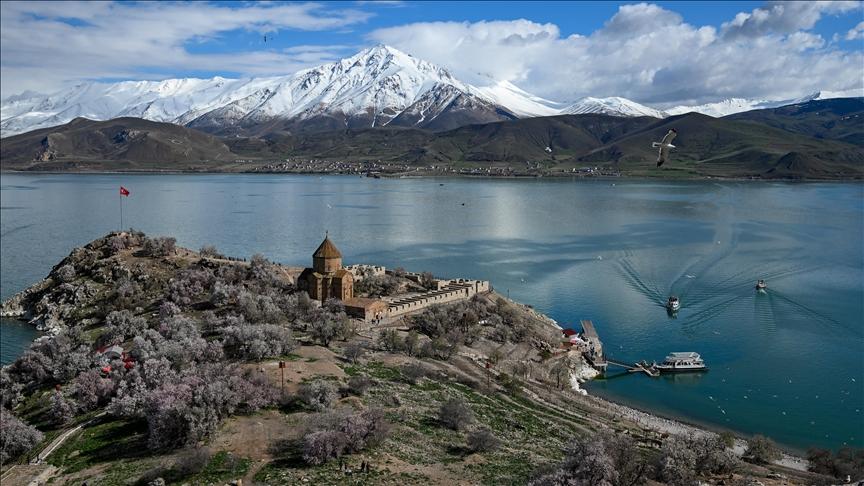
Akdamar Island is one of four islands in Lake Van and lies within the boundaries of the Gevaş district. It is located 52 kilometers from the city center of Van. The island was registered as an Archaeological Site Area in 1990.
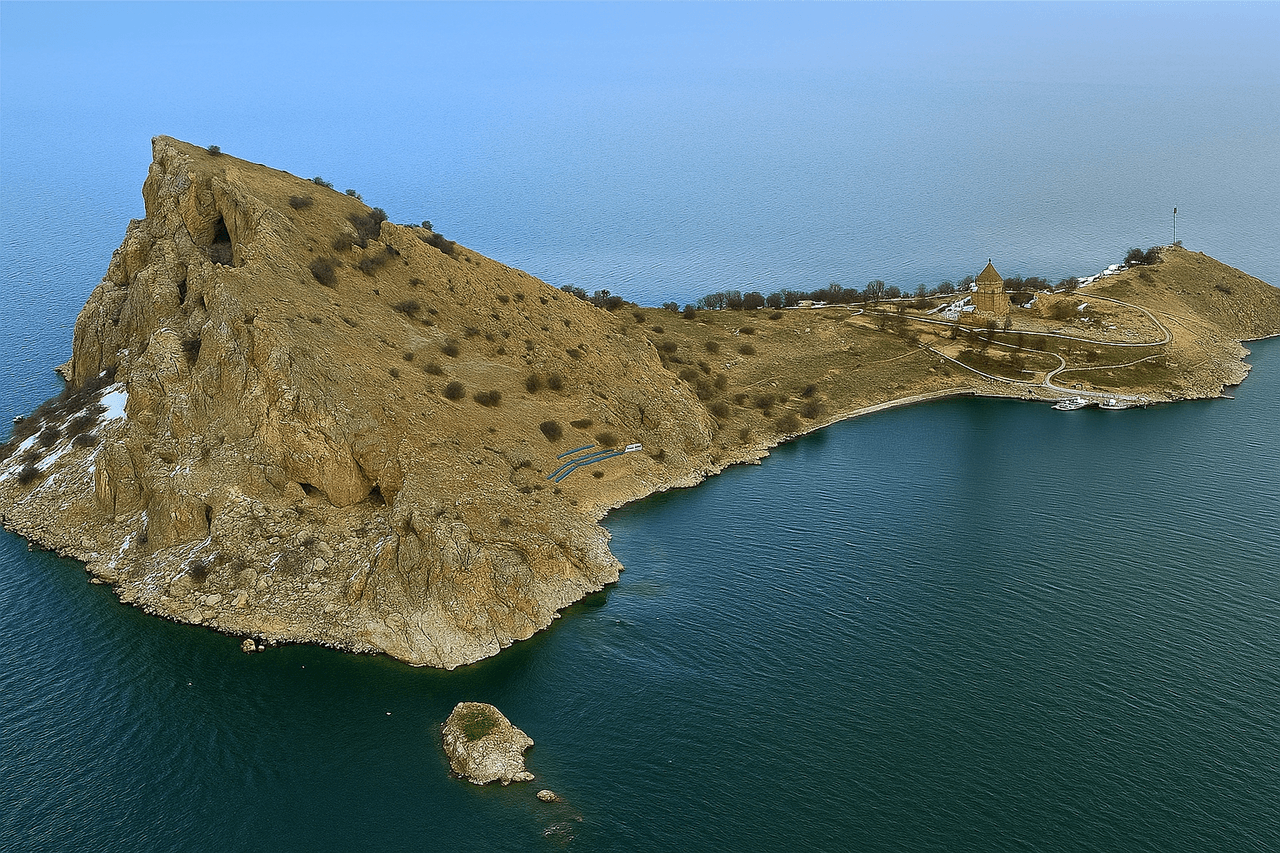
Akdamar Island (AA)
Lake Van is a crater lake formed by the eruption of Mount Nemrut. The lake has a surface area of 3,713 km² and an elevation of 1,646 meters above sea level. Its waters are saline and sodic. The average depth of the lake is 171 meters, with its deepest point reaching 451 meters.
The island and its surroundings exhibit continental climate characteristics: summers are hot and dry, while winters are cold and snowy. The influence of Lake Van moderates the winter conditions. The annual average temperature is 8.8°C. January is the coldest month, while July and August are the warmest. The ground surface remains snow-covered for approximately 80 days per year, and the number of frost days is 133.
Mount Artos, located opposite the island and an extension of the Southeastern Taurus Mountains, helps soften the climate of the basin due to the microclimate created by the lake. The mountain is also known for hosting approximately 200 species of butterflies.
Akdamar Island | In the Shadow of the Past | (TRT Documentary)
The Church of the Holy Cross on Akdamar Island was built between 915 and 921 by King Gagik I of Vaspurakan. Architecturally, it features a central dome and a four-leaf clover cross plan. The church is most renowned for its rich stone reliefs adorning its exterior walls, depicting scenes from the Bible, various animal figures, and secular themes. Restored in 2007, the structure now functions as a Monumental Museum.
In contrast to Van, where steppe vegetation predominates, Akdamar Island is home to apricot and almond trees. In May, the island is covered in blossoms that first turn white, then gradually take on lilac and purple hues.
The island also provides habitat for various species:
Access to Akdamar Island is provided by boats departing from the motor pier in Gevaş district. The sea journey takes approximately 25 to 35 minutes. Regular ferry services are suspended between October and March due to weather conditions.
Anadolu Ajansı. "Akdamar Adası Havadan Görüntülendi." Accessed June 20, 2025. https://www.aa.com.tr/tr/pg/foto-galeri/akdamar-adasi-havadan-goruntulendi/0.
Anadolu Ajansı. "Baharın tonlarına bürünen Akdamar Adası 'Badem Çiçeği Festivali'ne hazırlanıyor." Accessed June 20, 2025. https://www.aa.com.tr/tr/yasam/baharin-tonlarina-burunen-akdamar-adasi-badem-cicegi-festivaline-hazirlaniyor/3541806
Ministry of Culture and Tourism of the Republic of Türkiye. "Akdamar Adası." *Akdamar Kilisesi Resmî Web Sitesi*. Accessed June 20, 2025. https://www.akdamarkilisesi.gov.tr/akdamar-adasi#ada-cografyasi.
T.C.Van Valiliği. "Akdamar Adası." Accessed June 20, 2025. http://www.van.gov.tr/akdamar-adasi.
TRT Belgesel. "Akdamar Adası, Geçmişin Gölgesinde." YouTube video, 25:52. Date Published November 25, 2020. Accessed June 20, 2025. https://www.youtube.com/watch?v=uXwbGusX6fw.
Turkish Museums. "Van Akdamar Anıt Müzesi." Turkishmuseums.com. Accessed June 20, 2025. https://www.turkishmuseums.com/museum/detail/2250-van-akdamar-anit-muzesi/2250/1.

Location | Gevaş Lake Van | ||||||||
|---|---|---|---|---|---|---|---|---|---|
Main Structure | Church of the Holy Cross | ||||||||
Current Status | Monumental Museum (since 2007), Archaeological Site Area (since 1990) | ||||||||
Climate(s) | Terrestrial | ||||||||
Vegetation | Almond Trees, Apricot Trees | ||||||||
Fauna | Turtles Wild Rabbits Seagulls | ||||||||
Geography and Climate
Historical Structures on the Island
Church of the Holy Cross
Vegetation and Wildlife
Transportation