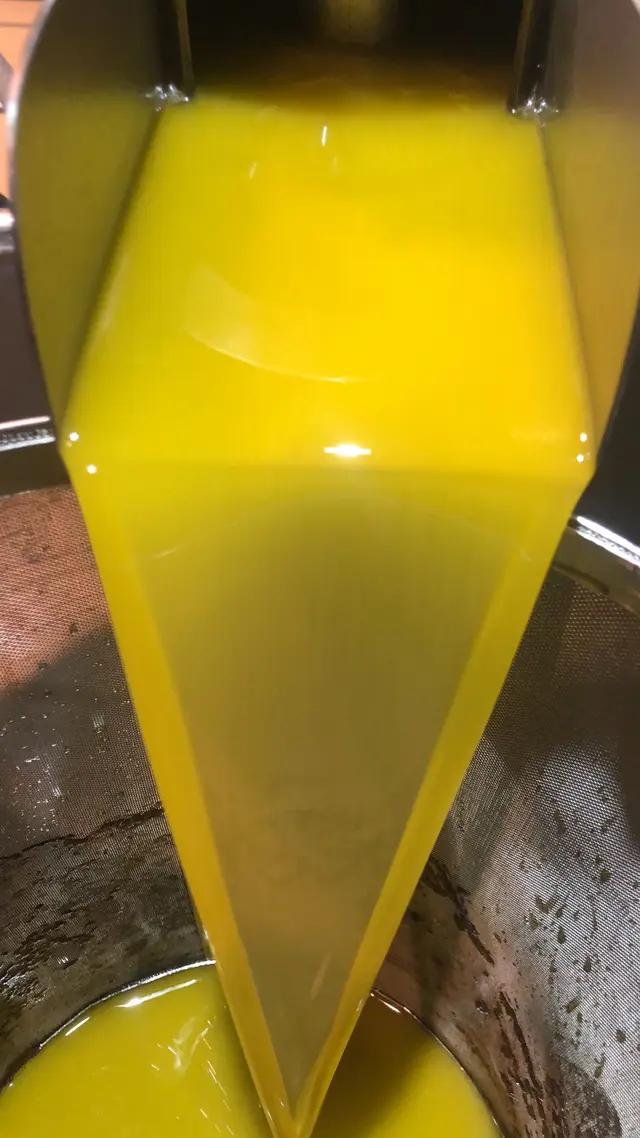



Akhisar uslu olive oil is an extra virgin olive oil produced in Akhisar and certain surrounding districts (Gölmarmara, Salihli, Turgutlu, Saruhanlı, Kırkağaç) in Manisa province, Türkiye. It is registered with a Protected Geographical Indication and protected under the Industrial Property Law No. 6769. The product was registered on 28 March 2022 and its geographical indication protection is managed by the Akhisar Chamber of Commerce and Industry.
Akhisar uslu olive oil is produced exclusively from Akhisar uslu olives, which are grown within the same geographical boundaries and registered as a geographical indication under number 165. The product’s reputation is shaped by its historical and production ties to this region. All production stages must take place within the designated geographical area.
Akhisar uslu olive oil is defined by the following distinguishing chemical parameters:
These values define the purity and characteristic profile of the product.
Akhisar uslu olive oil is made exclusively from the geographically indicated Akhisar uslu olives. The production process follows strict technical and hygiene standards. Harvested olives are first washed with purified water to remove foreign materials. They are then crushed with water at a maximum temperature of 26 °C. The crushed olives are kneaded into a paste in stainless steel tanks. The consistency and oil yield of the paste are optimized by temperature control, keeping it at 26 °C.
The paste is centrifuged at 3000 rpm to separate olive oil from pomace. The extracted oil is purified from residual water via a second centrifugation. The clean oil is stored in stainless steel or food-grade plastic tanks in a dark environment at 18–22 °C, away from odors that could compromise quality.
After sediment filtration using a clay method, the oil is packaged in glass or tin containers. Products not immediately entering the market are stored in suitable tanks at 20 °C and undergo a final paper filtration to remove sediments before final packaging and sealing.
Packages must display “Akhisar Uslu Olive Oil” and the Protected Geographical Indication symbol. Logos must cover at least 2/3 of the company mark and be at least 3×3 cm in size. If labels cannot be displayed on the package, the marks must be exhibited visibly in the facility.
Product inspection is coordinated by the Akhisar Chamber of Commerce and Industry and carried out by a supervisory board of at least four experts from the Akhisar Commodity Exchange, Akhisar Provincial Directorate of Agriculture and Forestry, and Bornova Olive Research Institute. Inspections are conducted at least once a year (January–March) and additionally upon complaint.
Inspection criteria include:
Samples are coded to anonymize the producer before analysis. Inspection costs are borne by the Akhisar
Chamber of Commerce and Industry and are recoverable from the sample owner.

No Discussion Added Yet
Start discussion for "Akhisar Uslu Olive Oil " article
Origin and Geographical Link
Physical and Chemical Characteristics
Production Process
Packaging and Labeling
Inspection Mechanism
This article was created with the support of artificial intelligence.