

This article was automatically translated from the original Turkish version.
+2 More
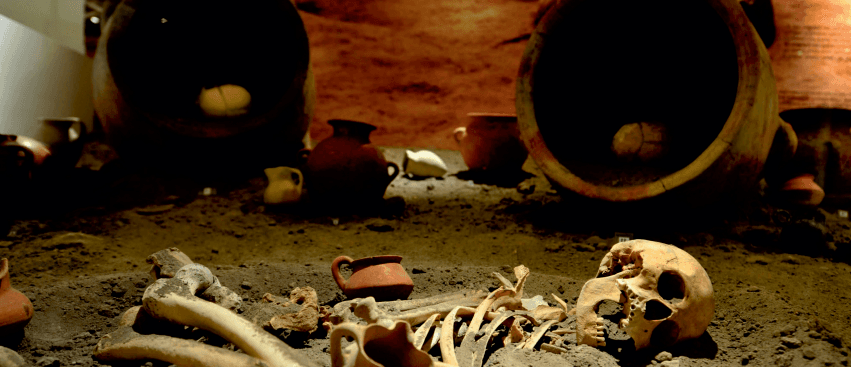
Aksaray Museum
Year of Establishment | 1969 | ||||||||
|---|---|---|---|---|---|---|---|---|---|
New Building Opening | 2006 | ||||||||
Address | Hacılar Harmanı Mah. Merkez / Aksaray 5719 Sk. No:16 Konya Cad. 5. Bulvar | ||||||||
Visiting Hour(s) | Every day except Monday 09.00 – 16.30 | ||||||||
Outdoor Area | 10.200 m² | ||||||||
Exhibition Halls | Coin Hall Mummy Hall Ethnography Hall Archaeology Hall | ||||||||
Aksaray Museum is a cultural institution located in the city center of Aksaray, often described as the gateway to Cappadocia in Türkiye’s Central Anatolia Region, shedding light on the thousands of years of history of Anatolian civilizations. The museum was first established in 1969 within the historic Zinciriye Medresesi, a structure dating to the Karamanoğlu Beylik period. It was relocated to a modern building in 2006 and reopened to the public in 2014 with a new chronological exhibition layout.
The museum is situated at 16, 5719 Sokak, 5th Bulvar, Konya Caddesi, Hacılar Harmanı Mahallesi. The building spans 10,200 m² of open space and 2,400 m² of indoor area, and consists of three floors. Its architecture draws inspiration from Anatolian Seljuk kümbets and the unique fairy chimneys of Cappadocia. The interior is enriched with interconnected exhibition halls linked by corridors and supporting spaces.
The museum comprises four main exhibition halls: Archaeology, Ethnography, Mummies, and Coins.
This section displays artifacts excavated from major archaeological sites in the region, including Aşıklı Höyük, Güvercinkayası, and Acemhöyük. One of the most remarkable pieces is a skull belonging to a young woman who lived 10,500 years ago and bears the earliest known evidence of brain surgery (trepanation). Also exhibited are tools made of obsidian, stone mortars, fired clay vessels, and figurines.
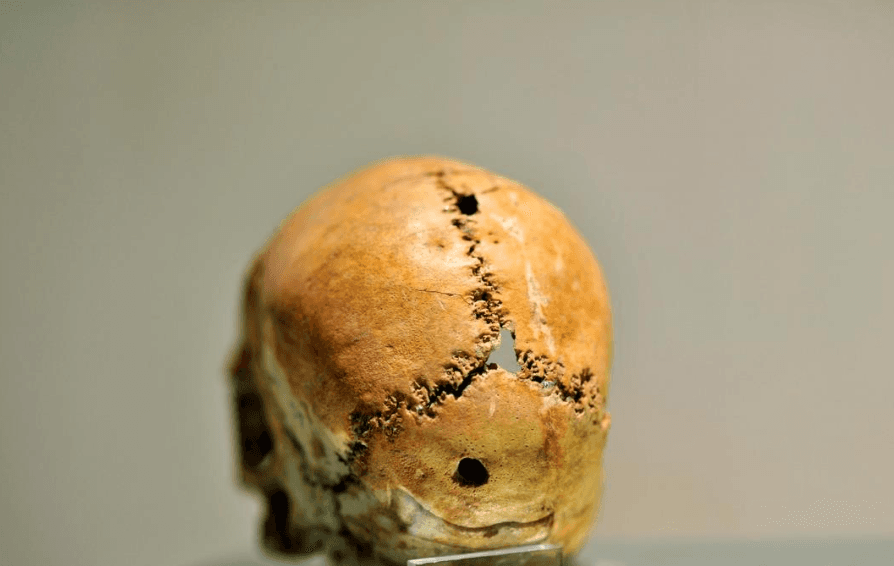
Skull with Evidence of Brain Surgery (Trepanation) (Ministry of Culture and Tourism of the Republic of Türkiye)
Human and cat mummies from the Byzantine period are among the hall’s most compelling exhibits. These mummies, primarily recovered from the Çanlı Kilise in Akhisar Village, under Aksaray’s jurisdiction, and from the Ihlara Valley, are regarded as tangible evidence of the belief in afterlife in Cappadocia. The museum’s collection includes four well-preserved human mummies, one of which is incomplete, along with child mummies and two cat mummies.

Child Mummies (Ministry of Culture and Tourism of the Republic of Türkiye)
This section illuminates the recent history of Aksaray through items reflecting local folk culture: traditional garments such as three-piece skirts, cepken, and bindallı; wooden and mother-of-pearl inlaid household items; steel swords, pistols, healing bowls, kitchen and bathroom utensils, and handwoven carpets and kilims. This collection offers profound insights into the socio-cultural fabric of the region by documenting daily life and ceremonial traditions.
The coin collection comprises gold, silver, bronze, and copper coins from the Hellenistic, Roman, Byzantine, Seljuk, and Ottoman periods. Another notable artifact is a cannon dating from World War I, a significant component of the museum’s modern history collection.
The Seljuk-period sandukalı grave stones in the museum’s open-air and stone artifact collection represent some of the most refined examples of stonemasonry. These sarcophagi, dating from the 13th to 15th centuries and primarily sourced from the Ervah Cemetery, are adorned with floral motifs (rumi, palmette, scroll vine, lotus), geometric patterns (zencerek), architectural decorations (fluted columns), and symbolic objects (lanterns, vases). Crafted from marble and brown tuff stone, they were meticulously carved using high-relief and incision techniques. These works reflect both the elegance of Seljuk art and the belief in life after death.
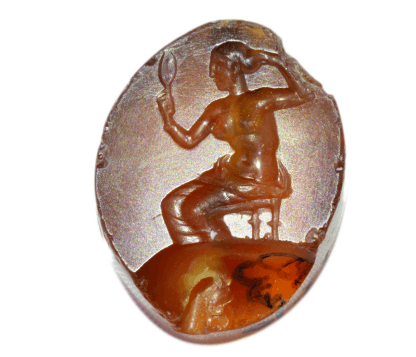
Amber Ring Scraper (Museum)
Aksaray Müze Directorate. "Aksaray Museum Directorate." Kültür Varlıkları ve Müzeler Genel Müdürlüğü. Accessed June 8, 2025. https://kvmgm.ktb.gov.tr/TR-44057/aksaray-muze-mudurlugu.html.
Aksaray Müzesi Directorate of Culture and Tourism. "Aksaray Museum." T.C. Kültür veTurizm Bakanlığı. Accessed June 8, 2025. https://aksaray.ktb.gov.tr/TR-243000/aksaray-muzesi.html
Bölükbaş, Elif and Sema Etikan. “Aksaray Müzesi'nde Sergilenen Sandukalı Mezar Taşları ve Süsleme Özellikler.” Accessed June 9, 2025. https://www.academia.edu/116149842/Aksaray_Müzesi_nde_Sergi_lenen_Sandukali_Mezar_Taşlari_Ve_Süsleme_Özelli_kleri_.
Ministry of Culture and Tourism. *Aksaray Müzesi Brochure*. Accessed June 8, 2025. https://muze.gov.tr/s3/MysFileLibrary/Aksaray%20Muzesi-1c1cac82-0355-4a59-b2cf-656c96dd5943.pdf.
Ministry of Culture and Tourism. *Aksaray İl Tanıtım Broşürü*. 2025. Accessed June 8, 2025. https://www.kulturportali.gov.tr/medya/dokuman/dokumandetay/4001.

Aksaray Museum
Year of Establishment | 1969 | ||||||||
|---|---|---|---|---|---|---|---|---|---|
New Building Opening | 2006 | ||||||||
Address | Hacılar Harmanı Mah. Merkez / Aksaray 5719 Sk. No:16 Konya Cad. 5. Bulvar | ||||||||
Visiting Hour(s) | Every day except Monday 09.00 – 16.30 | ||||||||
Outdoor Area | 10.200 m² | ||||||||
Exhibition Halls | Coin Hall Mummy Hall Ethnography Hall Archaeology Hall | ||||||||
Location and Architectural Structure
Exhibition Areas and Collections
Archaeology Hall
Mummy Hall
Ethnography Hall
Coin Collection
Sandukalı Grave Stones
Archaeological and Artistic Highlights