This article was automatically translated from the original Turkish version.
+1 More
Location | Karaman | ||||||||
|---|---|---|---|---|---|---|---|---|---|
Commissioned by | Karamanoğlu Alaeddin Halil Bey | ||||||||
Construction Date(s) | Hijri 772 / Gregorian 1370 | ||||||||
Building Material | Cut Stone (White Aktaş) | ||||||||
Plan Feature | Last Congregation Aisle Three Dome Single Dome Square Plan | ||||||||
Prominent Features | 82 Tombstones 21 Chests Mevlana's Mother Mümine Hatun's Chest | ||||||||
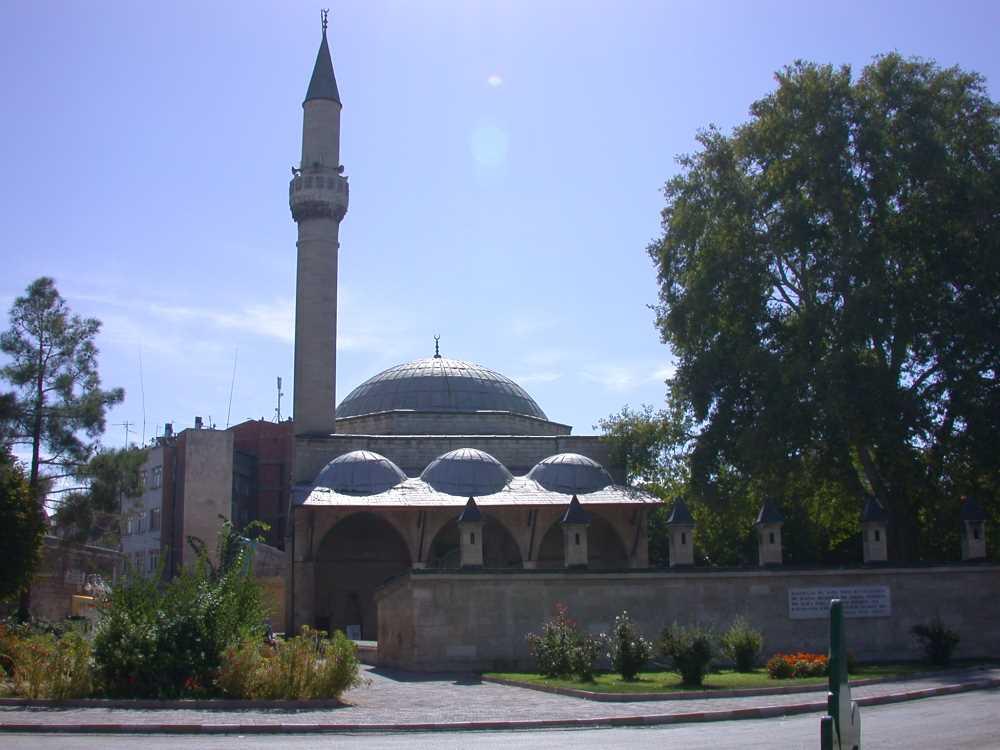
Aktekke Camii is a complex comprising a mosque, tomb, cemetery, and zawiya, located in the center of Karaman province and historically recognized as one of the significant structures of the Mevlevi order. Since it contains the graves of Mümine Hatun, mother of Mevlânâ Celâleddîn-i Rûmî, and her close relatives, it is also known among the public as "Mader-i Mevlâna Camii."
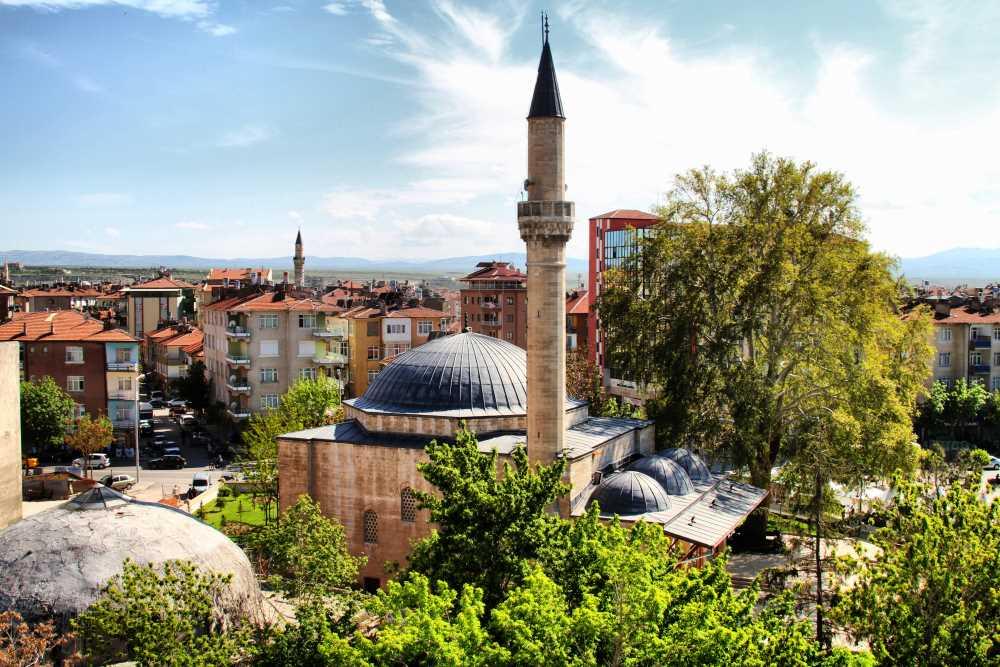
Aktekke Camii (Türkiye Culture Portal)
According to its Arabic inscription, the structure was commissioned in Rebiülevvel of the Hijri year 772 / AD 1370 by Alaeddin Bey, son of Halil, son of Mahmud of the Karamanids. The mosque acquired the name "Aktekke" among the people because it was built using the white stone typical of Karaman’s architectural tradition. Its architecture closely resembles the classical Ottoman style; the main prayer hall, with a square plan, is covered by a large dome. The final congregation area consists of three domes and presents a simple arrangement alongside the two mihraps on either side.
The side walls of the portico feature windows, while two marble columns stand in the center. The northern side of the main prayer space was extended with an arch, upon which two marble columns support Bursa-style arches that carry the women’s gallery. A stone minaret is situated in the northeast corner of the mosque. Inside the mosque, the tomb section houses the graves of Mümine Hatun, mother of Mevlânâ, as well as those of her son Alaeddin Çelebi and several Mevlevi sheikhs.
Aktekke Camii was not constructed merely as a mosque but also as a Mevlevihane. Seven dervish cells are located to the north of the mosque. Each cell contains a hearth and two niches, with lighting provided through window openings. Some of these cells have not survived to the present day. On the western side is the Çelebi Dairesi, used by the postnişinlers, while the interior of the mosque serves as the main space for sema ceremonies and worship.
Upon entering the mosque, to the left, a section separated by a wooden railing contains a total of 21 chests, including that of Mümine Hatun, mother of Mevlânâ, and other family members. This area functions as a family cemetery. Many of the tombstones lack inscriptions and are not adorned with ceramic tiles.
A total of 82 tombstones have been identified in the cemetery located to the south and west of the mosque. Of these, 34 are inscribed. The inscriptions are predominantly in sülüs script (25 stones) and talik script (8 stones), with the language mostly being Turkish (29 stones) and Arabic (5 stones). The oldest dated tombstone bears the Hijri year 775 (AD 1374). Among the tombstones, Mevlevi coins and symbols representing the Mevlevi tradition are also visible. The inscriptions reflect the beliefs, literature, and social structure of the period.
It is known that Mevlânâ Celâleddîn-i Rûmî, along with his family, arrived in Karaman in 1222, married there, and resided for approximately seven years. Various sources indicate that his mother, Mümine Hatun, was the daughter of Belh Emir Rükneddin and that she married Bahâeddin Veled, known as Sultanü’l-Ulemâ, with whom she migrated to Anatolia. The grave of Mümine Hatun is located within Aktekke Camii, and the fact that the tomb was directly built in her name significantly contributed to the mosque being called "Mader-i Mevlâna."
Culture Portal. "Aktekke Camii-Karaman." Ministry of Culture and Tourism of the Republic of Türkiye. Accessed July 10, 2025. AKTEKKE CAMİİ | Kültür Portalı.
Oral, M. Zeki. “Mâder-i Mevlânâ – Prenses Mü’mine: Camii, Türbesi ve Hayatı.” Konya Halkevi Kültür Dergisi Mevlana Özel Sayısı (1943). Accessed July 10, 2025. D01876s51-62y1943.pdf.
Sahip Ata Museum. "Aktekke (Mâder-i Mevlânâ) Camii." Accessed July 10, 2025. Eserler / AKTEKKE (MADER-İ MEVLANA) CAMİİ | Sahip Ata Vakıf Müzesi.
Şahin, Harun. “Karaman Mâder-i Mevlânâ (Aktekke) Camisi Haziresinde Bulunan Mezar Taşları.” *Türk Dünyası Dil ve Edebiyat Dergisi* 44 (2017). Accessed July 10, 2025. 502436.

Location | Karaman | ||||||||
|---|---|---|---|---|---|---|---|---|---|
Commissioned by | Karamanoğlu Alaeddin Halil Bey | ||||||||
Construction Date(s) | Hijri 772 / Gregorian 1370 | ||||||||
Building Material | Cut Stone (White Aktaş) | ||||||||
Plan Feature | Last Congregation Aisle Three Dome Single Dome Square Plan | ||||||||
Prominent Features | 82 Tombstones 21 Chests Mevlana's Mother Mümine Hatun's Chest | ||||||||
No Discussion Added Yet
Start discussion for "Aktekke Camii (Mader-i Mevlana)" article
History and Architecture
Mevlevihane and Zawiya
Tombs and Chests
Cemetery and Tombstones
Historical and Cultural Context