
badge icon

This article was automatically translated from the original Turkish version.

Article

Akyurt Fıtı Soup

Quote
Type of geographical indication
Mahreç Sign
Application Date
30.01.2021
Registration Number
957
Registration Date
24.11.2021
Product Group
Meals and soups
Province
Ankara
Applicant/Registrant
Akyurt Municipality

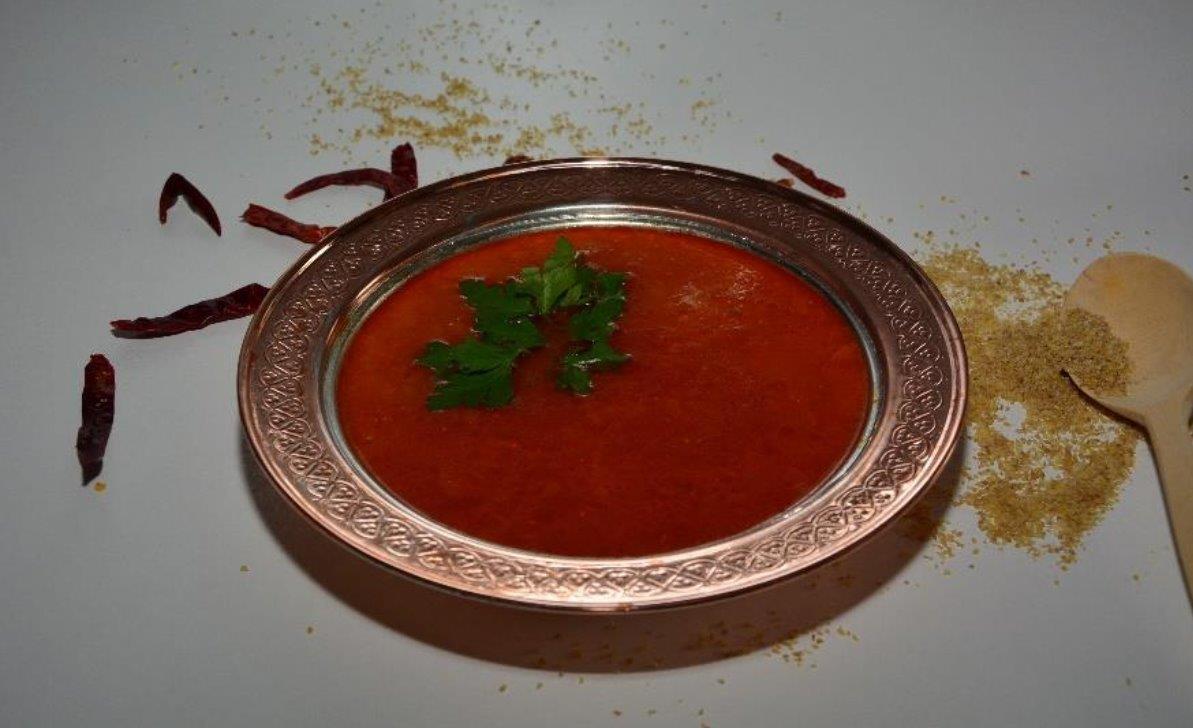
Akyurt Fıtı Çorbası is a traditional soup native to the Akyurt district of Ankara Province in Türkiye, prepared with fıtılık bulgur and rooted in a long-standing culinary heritage. It was officially registered as a geographical indication under the Industrial Property Law No. 6769 by the Turkish Patent and Trademark Office on 24 November 2021. The soup holds a significant place in Akyurt’s culinary culture and is a traditional dish intrinsically linked to its geographical origin.

Definition and Distinctive Characteristics

Akyurt Fıtı Çorbası is primarily made using fıtılık bulgur, dried onion, green pepper, tomato, tomato paste, butter, water, and spices (pul biber and mint). Its distinguishing feature is the use of fıtılık bulgur, which is produced through a specialized method from kunduru wheat grown exclusively in the Akyurt district. This bulgur is smaller in size than pilaf-grade bulgur but larger than kofta or coarse bulgur, with grain dimensions ranging between 2–3 mm. The traditional preparation method and use of local ingredients make it an essential component of Akyurt’s culinary heritage.

Production Process

Production of Fıtılık Bulgur

Fıtılık bulgur is produced from kunduru wheat cultivated in the Akyurt district. The production process consists of the following stages:

  1. Harvesting and Cleaning: After harvesting, the kunduru wheat is separated for milling. The grains are cleaned by sifting them on cloth placed over threshing floors or in front of homes using sieves to remove chaff and impurities.
  2. Washing and Boiling: The cleaned wheat is drained and placed in sacks. It is then boiled in large copper pans (tinç) with water and left to stand for one day. During boiling, the grains are stirred occasionally to prevent sticking to the bottom.
  3. Drying: The boiled wheat is spread on cloth to drain excess water and left to dry in the sun. The drying process takes approximately two days, during which the grains are turned every two to three hours.
  4. Milling and Toasting: The dried wheat is taken to a bulgur mill. Before milling, the grains are lightly moistened with a small amount of water, then rubbed to soften them. This toasting process causes the grains to swell and facilitates the milling operation.
  5. Sifting: The milled wheat is passed through sieves with mesh openings of 2–5 mm. Larger grains that do not pass through are separated as “başbaşı” and stored for the next year’s milling. The remaining portion is sifted again through fine wire sieves with mesh openings of 1–3 mm. The material retained on top of the wire sieve is classified as bulgur, while the finer particles that pass through are identified as fıtılık bulgur and used exclusively for Akyurt Fıtı Çorbası.

Preparation of Akyurt Fıtı Çorbası (Serves 8)

Ingredients

  • 1 glass of fıtılık bulgur
  • 1 medium-sized dried onion
  • 1 medium-sized tomato
  • 2 medium-sized green peppers
  • 1 tablespoon of tomato paste
  • 7 glasses of water (approximately 1.5 liters)
  • 1 tablespoon of butter
  • Salt, pul biber, and mint (to taste)

Preparation Steps

  1. In a pot, melt the butter and add diced onion. Sauté until translucent.
  2. When the onions turn pink, add finely chopped green peppers and sauté for 2–3 minutes.
  3. Add peeled and grated or finely diced tomatoes along with tomato paste. Continue cooking for another 2–3 minutes.
  4. Add the fıtılık bulgur to the pot and sauté together with the vegetables for 2–3 minutes.
  5. Pour in the water, add salt and spices (pul biber and mint), stir well, and bring to a boil.
  6. Once the soup begins to boil, reduce the heat and simmer for an additional 5 minutes. Then remove from heat; the soup is ready to serve.

Geographical Connection and Cultural Significance

Akyurt Fıtı Çorbası has deep roots in the culinary traditions of the Akyurt district. The method of preparing fıtılık bulgur is based on local, traditional techniques unique to the region. As a result, the soup maintains a strong association with Akyurt, and all stages of its production occur within its geographical boundaries. It is a dish commonly consumed both in daily meals and during special occasions, reflecting the identity of the local community.

Registration and Oversight

Akyurt Fıtı Çorbası has been officially registered by the Akyurt Municipality. The name, logo, and geographical indication emblem are used on the product itself or its packaging. If this is not feasible, they must be prominently displayed within the production facilities.

Inspections are conducted annually by a minimum three-member inspection body composed of experts from the Akyurt Municipality, the Akyurt District Directorate of Agriculture and Forestry, and the Akyurt District Directorate of Health, under the coordination of the Akyurt Municipality. Additional inspections are carried out as needed or in response to complaints. The inspection criteria include:

  • Compliance with the established production method
  • Proper production of fıtılık bulgur
  • Correct use of the name “Akyurt Fıtı Çorbası,” its logo, and the geographical indication emblem

The inspection body may, when necessary, seek expert support or procure services from public or private institutions. The registering Akyurt Municipality is responsible for initiating legal proceedings to protect the rights associated with the geographical indication.

Author Information

Avatar
AuthorElif LaçinDecember 1, 2025 at 12:38 PM

Tags

Discussions

No Discussion Added Yet

Start discussion for "Akyurt Fıtı Soup" article

View Discussions

Contents

  • Definition and Distinctive Characteristics

  • Production Process

    • Production of Fıtılık Bulgur

    • Preparation of Akyurt Fıtı Çorbası (Serves 8)

    • Ingredients

    • Preparation Steps

  • Geographical Connection and Cultural Significance

  • Registration and Oversight

Ask to Küre