

This article was automatically translated from the original Turkish version.
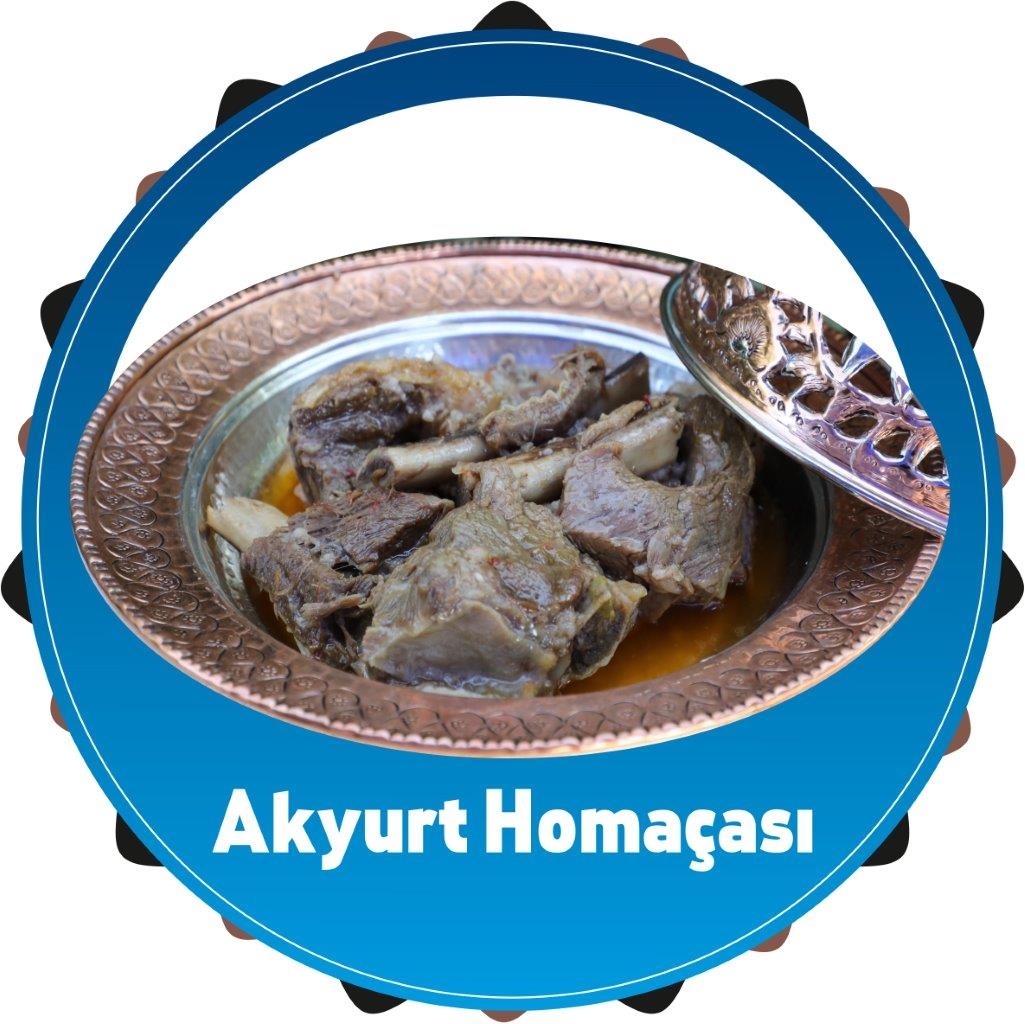
Akyurt homaça is a traditional dish specific to the Akyurt district of Ankara, prepared using bone-in meat with marrow, water, and salt. This dish contains no vegetables and is made by searing the meat in butter, with spices added optionally. Homaça holds an important place in Akyurt’s culinary culture and is frequently served at weddings and special gatherings. The dish’s reputation is closely tied to the Akyurt district, and as a result, it was registered as a geographical indication on 23 December 2021 under Law No. 6769 on Industrial Property.
Akyurt homaça is a dish with ancient origins and forms part of Akyurt’s gastronomic heritage. In local butcheries, bone-in meat with marrow suitable for homaça preparation is commonly sold. The care and traditional methods used in its preparation have given homaça a distinctive place in Akyurt’s social and cultural life, especially during communal feasts. Homaça stands out as an emblem of the district’s identity, valued both for its flavor and the rituals involved in its preparation.
The meat used in Akyurt homaça is sourced from cattle raised within the Akyurt district. For a portion serving six people, the ingredients and preparation method are as follows:
For large gatherings, preparation is carried out on a larger scale. Cattle are slaughtered and the carcasses are prepared into suitable cuts for homaça. After a resting period, the meat is seared in wide tin-coated copper pans known locally as “tinç.” The seared meat is placed in trays, covered with heavy lids, and left overnight to drain the blood. The next day, the meat is arranged in large cauldrons, covered with boiling water and salt, and cooked over wood fires or large stoves for three to four hours.
Akyurt homaça is served hot after the meat is stripped from the bones. It is presented together with its cooking broth, and in Akyurt it is traditionally consumed by dipping bread into the broth. This traditional method of consumption enhances the dish’s flavor and is considered an essential part of its identity.
All stages of Akyurt homaça production take place within the boundaries of the Akyurt district. The dish’s reputation and traditional production method are directly linked to this geographical region. The homaça was registered as a geographical indication on 23 December 2021 following an application submitted by the Akyurt Municipality on 6 January 2021. Under this registration, the dish’s name, logo, and geographical indication emblem are used on the product or packaging; if this is not feasible, they must be displayed prominently within the production facilities.
The maintenance of production standards for Akyurt homaça is ensured through inspections coordinated by the Akyurt Municipality. The inspection body consists of one expert each from the Akyurt Municipality Municipal Police Directorate, the Akyurt District Directorate of Agriculture and Forestry, and the Akyurt District Directorate of Health. Inspections are conducted annually; additional inspections are carried out within 15 days in case of complaints or specific needs. The following criteria are checked during inspections:
If non-compliance is detected, the producer is given 15 days to correct the issue, followed by a re-inspection. The inspection body may obtain expert support or purchase services from public or private institutions when necessary. Legal proceedings to protect the registration are carried out by the Akyurt Municipality.

History and Cultural Significance
Production Method
Ingredients
Preparation Steps
Serving and Consumption
Geographical Link and Registration
Monitoring Process