

This article was automatically translated from the original Turkish version.
Akyurt Teberik Bean is a variety of bean belonging to the species Phaseolus vulgaris var. comminus within the Fabaceae family, cultivated in the Akyurt district of Ankara Province. This bean holds a significant place in Akyurt’s agricultural economy and has a long-standing tradition. It was officially registered as a geographical indication by the Turkish Patent and Trademark Office on 22 December 2023. The registration was formally initiated by the Akyurt Municipality on 24 January 2022.
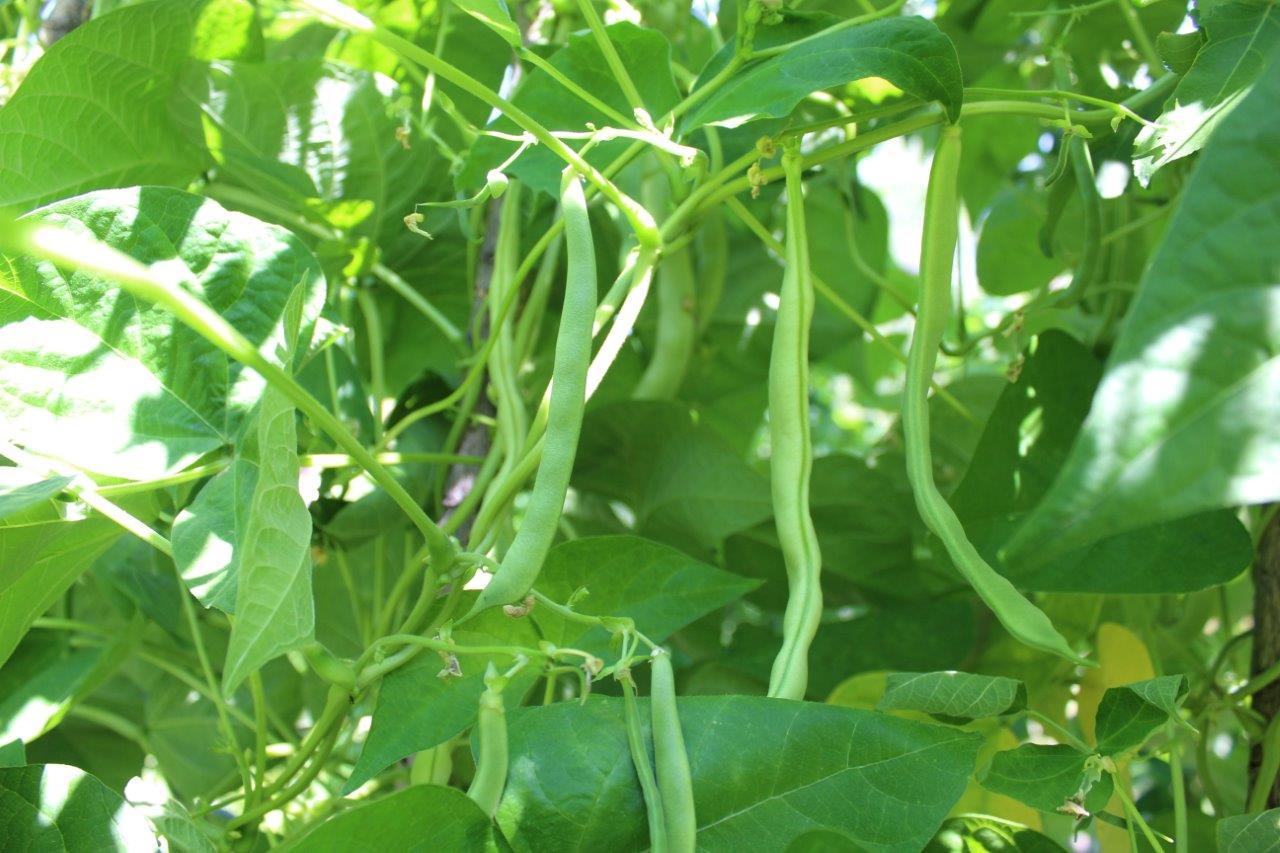
The Akyurt Teberik Bean is a climbing plant with a quadrangular stem structure. The plant can reach a height of 2 to 3 meters by wrapping around supports via its tendrils, known locally as “sülük” or “bıyık.” The terminal leaflets are green and rhomboid in shape, with negligible leaf wrinkling. The flower corolla petals are pale purple, and flowering occurs in July. The pods are green, glabrous, smooth-surfaced, and slightly concave. Each pod measures 17–22 cm in length, 16.32 mm in width, and 8.80 mm in thickness. Each pod contains 7–10 seeds. The dry weight of 100 seeds ranges from 450 to 460 grams, while the fresh weight ranges from 1015 to 1050 grams.
The soil in the region where the Akyurt Teberik Bean is grown is clay-loam in texture, with a pH of approximately 7.0–7.5, and is rich in organic matter, potassium, and zinc. These moderately saline soils are located at an elevation of 1300–1400 meters, and the region receives an annual rainfall of 450–500 mm.
The nutritional values per 100 grams of fresh Akyurt Teberik Bean are as follows:
Dry matter: 6.50%–10.30%
Protein: 2.2%–2.9%
Fat: 0.20%–0.40%
Carbohydrates: 2.40%–6.90%
Dietary fiber: 1.4%–3.5%
Potassium: 145–215 mg
Calcium: 44–62 mg
Sodium: 6.1–7.4 mg
Vitamin B12: 0.3–0.5 µg
Soil preparation for Akyurt Teberik Bean production begins at the end of April or beginning of May, depending on seasonal conditions. In autumn, during the period when the soil is plowed, 1–1.5 tons of well-rotted farmyard manure are applied per hectare, followed by plowing to a depth of 20–25 cm. In spring, prior to sowing, the soil is harrowed 3–4 times with a cultivator to break up the surface crust. Weeds are removed by shallow tillage, and drip irrigation pipes are laid if drip irrigation is to be used.
Sowing takes place between 25 April and 30 May using local seeds. Soil temperature must not fall below 13°C. Seeds are sown at a spacing of at least 120 cm between rows, with 3–4 seeds planted every 20 cm. Germination occurs within 6–8 days at temperatures of 15–20°C; under lower temperatures, this period may extend to 20–25 days.
The plant begins leafing out in late May and remains green until the first or second week of October. The vegetative period lasts between 70 and 140 days. Supports such as stakes or trellises are used for climbing. Weeding is performed twice: once when the plant reaches 20 cm in height and again when it begins to coil around the support. Irrigation starts during flowering and is applied three times per week when soil moisture drops to 60% of field capacity.
Well-rotted animal manure is applied in autumn. After the first weeding, additional animal manure is applied along the rows during June. Based on soil analysis, 4–5 kg of nitrogen, 6–8 kg of phosphorus, and 10–15 kg of magnesium sulfate per hectare are applied as needed.
Harvesting is carried out manually once a week from late July to early October. Pods are collected when they reach one-third of the variety’s characteristic size. Fresh beans are sent to market or stored at 80% humidity and 4–5°C for 8–10 days. For winter consumption, they are dried or preserved in deep freezers.
The production of Akyurt Teberik Bean occurs exclusively within the boundaries of Akyurt district and is closely tied to the region’s agricultural culture. Monitoring is conducted annually or upon complaint, coordinated by the Akyurt Municipality, with experts from the Akyurt District Directorate of Agriculture and Forestry and Ankara University Faculty of Agriculture. Monitoring verifies the product’s morphological characteristics, production methods, and compliance with geographical indication standards.

No Discussion Added Yet
Start discussion for "Akyurt Teberik Bean" article
Characteristics
Nutritional Value
Production Process
Soil Preparation
Sowing
Vegetation and Maintenance
Fertilization
Harvesting and Storage
Geographical Link and Monitoring