


This article was automatically translated from the original Turkish version.
+2 More
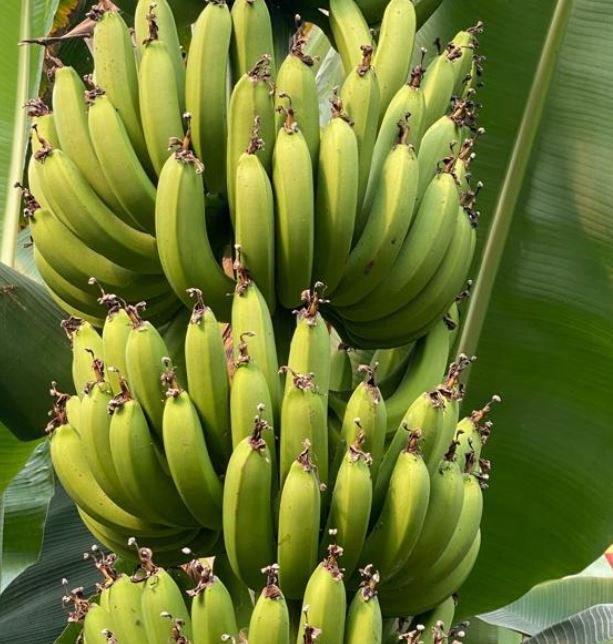
Alanya banana is an agricultural product unique to the Alanya district of Antalya, registered with geographical indication status, and cultivated using the Dwarf Cavendish variety of the species Musa paradisiaca L. (Musa cavendishii Lam.). Due to its mild Mediterranean climate and microclimatic characteristics, it is produced both in open fields and under cover (greenhouse); these cultivation methods create distinct differences in the fruit’s aroma, length, girth, and finger characteristics. Alanya banana is grown in sandy-loamy, alkaline pH soils, typically in south-facing areas protected from wind. During production, it is propagated using suckers, underground rhizomes, or tissue culture methods, and is brought to market after controlled ripening.
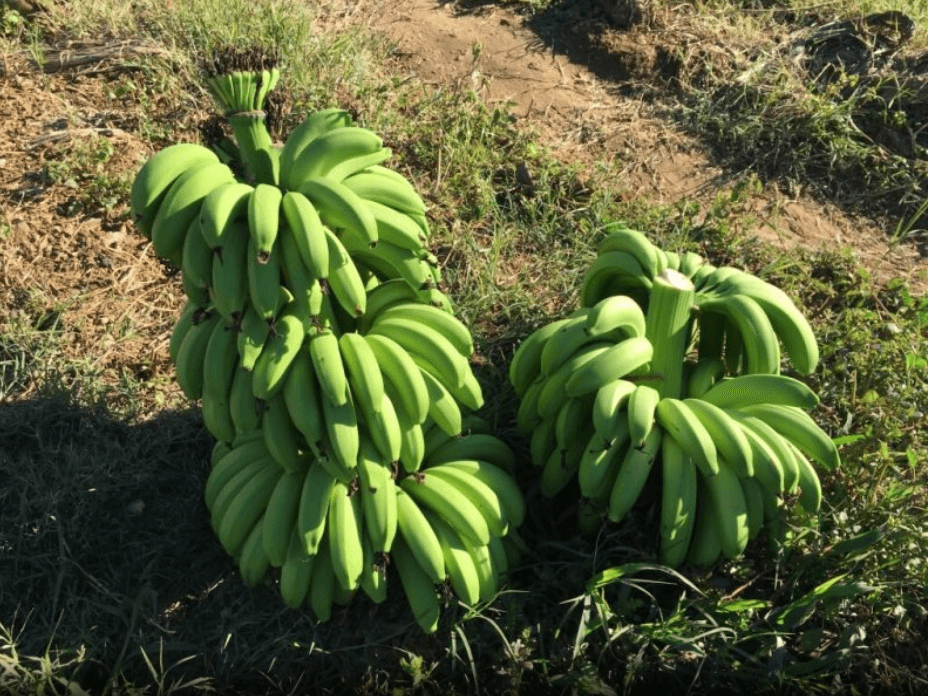
Alanya Banana (Alanya Banana Producers Union)
The Alanya banana is a variety of banana belonging to the Dwarf Cavendish type, scientifically known as Musa paradisiaca L. (Musa cavendishii Lam.). It is cultivated exclusively in the Alanya district of Antalya Province and is a registered agricultural product with geographical indication status within the borders of the Republic of Türkiye. Its registration number is 1176, with a registration date of 25 July 2022. This geographical indication, under application number C2022/000008, is protected under its place of origin name.
The Alanya banana can only be cultivated within the boundaries of the Alanya district of Antalya Province. The Alanya district is surrounded by mountain ranges running parallel to the coast from the north, which shield the region from extreme cold. This geography exhibits microclimatic properties and is characterized by a mild Mediterranean climate. The preferred soil structure is sandy-loamy or loamy; the pH is alkaline, with relatively low lime content, no drainage issues, and sufficient organic matter content.
The Alanya banana plant is a species bearing both male and female flowers and is capable of self-pollination.
Three primary propagation methods are used in production:
In orchard establishment, areas sheltered from northern winds and protected from cold are selected. Plants exhibit better development on south-facing, gently sloping terrain. The planting season for open-field cultivation is generally during spring months, while for protected cultivation it is between September and May. Plantings in greenhouses during September typically yield the best results. Interplanting for renewal within the orchard is carried out in June and July. Spacing varies according to land and soil characteristics but commonly ranges from 2–3 meters between rows and 1.2–2.5 meters within rows.
Preferred soils for Alanya banana cultivation are rich in organic matter and have a sandy-loamy or loamy structure; they must be moist and highly permeable to water. Soil pH is generally alkaline. The ideal temperature range for plant growth is 26–30°C. Cultivation is not recommended in areas exposed to strong winds; protective measures are expected in such locations.
In open-field cultivation, protective bags are applied over banana bunches; however, in protected cultivation, bagging is generally unnecessary. Transparent or blue plastic bags are placed over yellow packaging paper to enhance fruit quality and yield.
In protected cultivation, leaf pruning is performed to ensure adequate sunlight exposure to the bunches. General pruning involves removing excess suckers and pseudostems that have already borne fruit. Support is provided in protected cultivation by tying the bunches to overhead wires or ropes, and in open fields by using installed support posts.
Fertilization programs, determined through soil and leaf analyses, include the use of farm or manure fertilizers alongside commercial fertilizers. Potassium-rich fertilization is preferred. Due to its large leaf structure and high water content, the banana plant has high water requirements. Irrigation is typically carried out using drip, sprinkler, or misting systems.
Selection of healthy, disease- and pest-free seedlings is essential. Nursery areas must be clean and free of disease, and seedlings must not be overwatered. Chemical control of weeds, diseases, and pests is applied when necessary, using plant protection products in compliance with relevant regulations.
Harvesting occurs before full ripening, when the fruit changes from dark green to light green, the fingers become plump, and their edges become rounded. In open-field production, peak harvest occurs between January and March; under cover, it occurs between November and January. Harvest duration varies between 75 and 150 days depending on bunch development. Harvesting periods are extended under conditions of low sunlight and low temperatures. Care must be taken during harvesting to avoid fruit damage; stems are cut with a knife at the base. Fruits harvested in green state are ripened under hygienic conditions. During ripening, chlorophyll pigments break down, the fruit turns yellow, the pulp softens, and starch converts to sugar; this process lasts approximately one week. Fruits stored under suitable conditions (18–24°C) attain a yellow color within one to two weeks.
Harvested bananas are separated into hands and placed in food-safe crates. Products must be rapidly delivered to market and consumers; during transport and storage, they must be protected in cool, odorless, clean, and dry environments. Modified atmosphere techniques may be applied during storage. In marketing, products are sold in bulk or in appropriate packaging with labeling compliant with relevant food regulations.
The Alanya banana geographical indication is monitored through a control system coordinated by the Alanya Chamber of Commerce and Industry. The inspection team consists of representatives from the Alanya Chamber of Commerce and Industry, the Alanya District Directorate of Agriculture and Forestry, the Alanya Chamber of Agriculture, and the Alanya Banana Producers Union, and must include at least three members.
These inspections are conducted regularly at least once per year. Additionally, extra inspections may be carried out upon complaints or when deemed necessary. Inspection results are reported in accordance with Law No. 6769 on Industrial Property and annually submitted by the Alanya Chamber of Commerce and Industry to the Turkish Patent and Trademark Office.
During inspections, the correct use of the geographical indication, production methods, harvesting procedures, ripening practices, storage and preservation conditions, and marketing processes are evaluated. Any deficiencies or non-compliances identified are reported to the relevant individual, institution, or organization, and corrective actions are required.
The inspection team may obtain support or purchase services from public or private institutions or qualified experts in these fields as needed. The organization holding the geographical indication registration has the authority to pursue legal actions to protect its rights.

Classification
Geographical Boundary and Climatic Conditions
Cultivation Stages
Orchard and Greenhouse Establishment
Soil and Climatic Conditions
Use of Protective Bags
Pruning and Support
Fertilization and Irrigation
Plant Protection
Harvesting and Ripening
Storage and Marketing
Monitoring and Control