


This article was automatically translated from the original Turkish version.
+1 More
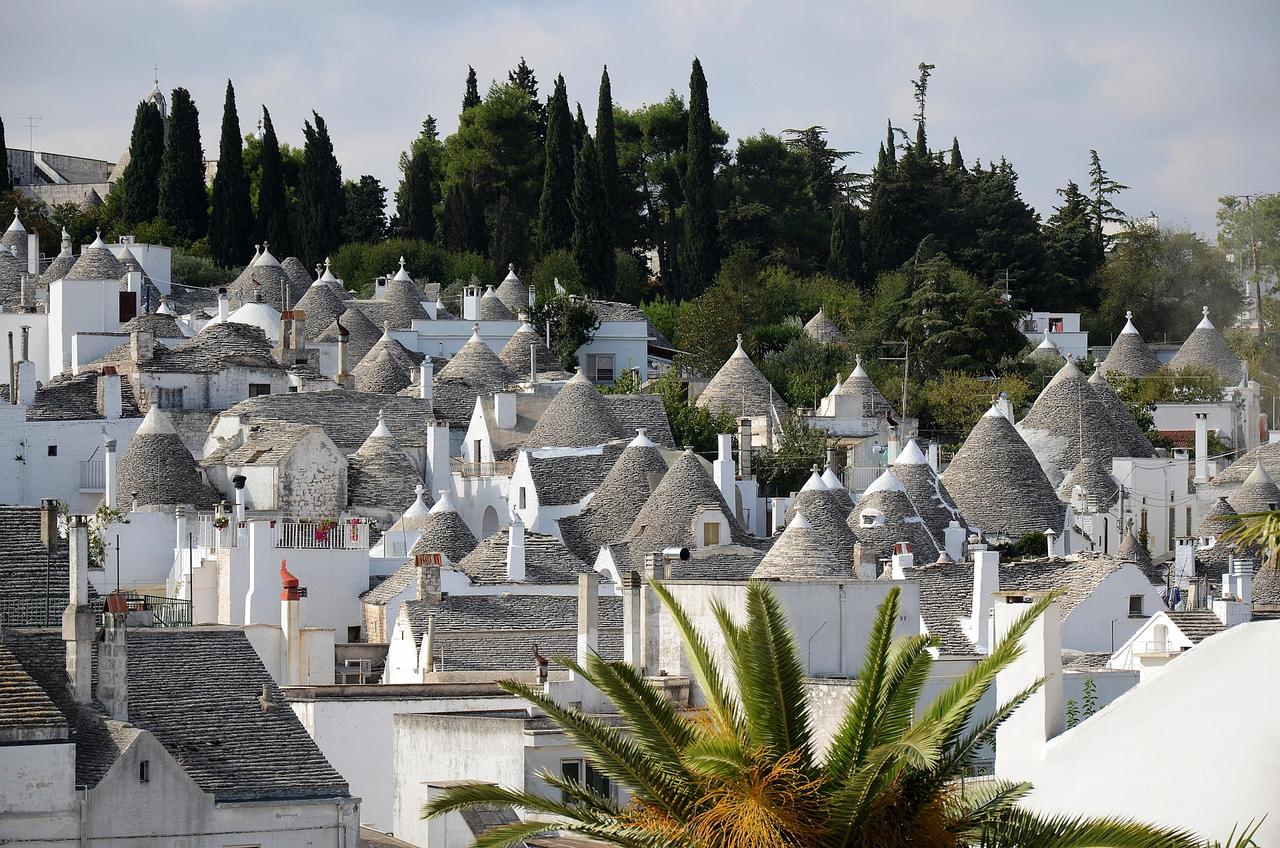
Alberobello is a town in the Apulia region of southern Italy, renowned for its traditional Trulli houses and listed as a UNESCO World Heritage Site. Trulli are distinctive structures built with stone walls and typically characterized by conical roofs. These buildings are not only significant from an architectural standpoint but also represent an important narrative of the region’s cultural heritage. The Trulli houses of Alberobello hold value as examples of both engineering achievement and traditional Italian ways of life.

Trulli houses of Alberobello (Kelly, Pexels)
The stones used in constructing Trulli are sourced locally from abundant limestone deposits. The most distinctive feature of Trulli houses is the absence of mortar in the construction of their dome-shaped roofs. This is achieved by carefully fitting stones together to form a stable structure. These stone constructions offer valuable insights into the building techniques of their time. The roofs are typically built in circular or conical shapes using stones, and it is common to find carved stones with various symbols placed at the apex of these dwellings.
The wall structure generally consists of an inner and outer stone layer, with smaller stones and earth fill placed between them. The inner wall is usually made of precisely cut stones and serves a load-bearing function, while the outer wall is constructed with larger, broader-based stones. The roofing stones, known as “chiancarelle,” are thin limestone slabs laid with an outward slope to provide waterproofing.
The origins of Trulli houses date back to the early settlements of the Apulia region. These structures began to be built from the 14th century onward, reportedly to evade taxation. It is believed that the dry-stone construction method allowed residents to dismantle and rebuild their homes quickly, thereby avoiding tax assessments by authorities of the time. However, these tax-related claims are based on local oral traditions rather than documented evidence. There is no direct documentary link between the construction method and tax evasion. Nevertheless, Trulli were not merely temporary dwellings; they were also used as permanent residences and agricultural structures, representing a sophisticated form of stone architecture.

Trulli houses (Gabriel Hebert, pexels)
The construction of Trulli houses in Alberobello reflects the traditional lifestyle of the local population. These buildings were designed to adapt to climatic conditions, providing cool interiors during hot summers and warmth during winter. Trulli are built by skilled local artisans known as trullaro. These craftsmen oversee the entire process—from selecting and cutting the stones to shaping the geometric form of the roof—acting simultaneously as architects and engineers.
In 1996, the Trulli houses of Alberobello were inscribed on the UNESCO World Heritage List. UNESCO recognized these unique structures as the finest examples of traditional stone architecture in the Apulia region. The Trulli houses of Alberobello contribute to the preservation of the area’s historical and cultural values and are widely admired globally for their architectural and engineering significance.
More than 1,600 Trulli structures in the Rione Monti and Aia Piccola districts have been granted the status of “Outstanding Universal Value” by UNESCO due to their integrity and authentic character.
The Trulli houses of Alberobello are strongly connected to the local population’s way of life and their agrarian livelihoods. These structures are also regarded as a vital symbol of the town’s identity. Recognized as cultural heritage, the Trulli preserve traces of rural life in the region and constitute an essential component of traditional Italian architecture.
Trulli are typically constructed with heights between 2 and 4 metres and diameters ranging from 3 to 5 metres. However, research has shown that these proportions do not always align with structural safety requirements; the construction process relies more heavily on the artisans’ experience than on standardized measurements.

No Discussion Added Yet
Start discussion for "Alberobello Trulli Houses" article
Architectural Structure of the Trulli
History and Origins of the Trulli
UNESCO World Heritage List
Cultural Significance of the Trulli