


+1 More

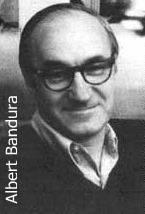
Albert Bandura
Birth | December 4, 1925, Mundare, Alberta, Canada | ||||||||
|---|---|---|---|---|---|---|---|---|---|
Death | July 26, 2021, Stanford, California, USA | ||||||||
Profession(s) | Academic Psychologist | ||||||||
Areas of Work | Aggression Self-Efficacy Behavioral Psychology Social Learning | ||||||||
Family | Virginia Varns (Spouse) Two Children | ||||||||
Theory | Social Learning Theory, Social Cognitive Theory | ||||||||
Notable Work | Bobo Doll Experiment | ||||||||
Albert Bandura (December 4, 1925 – July 26, 2021) was a psychologist known for social learning theory and social cognitive theory. Critically developing the classical behaviorist perspective, Bandura emphasized observational learning, modeling, and indirect learning processes, making enduring theoretical contributions to psychology and educational sciences.
Bandura was born as the only son in a family of six children in Mundare, a small town in Alberta, Canada. His family was of Ukrainian origin. He received his early education in a small school with limited resources. During summer breaks after high school, he worked on the Alaska Highway construction projects, engaging with diverse social environments. These experiences deepened his interest in human psychology.
In 1946, Bandura began his studies in psychology at the University of British Columbia, graduating in 1949. He pursued his graduate and doctoral studies at the University of Iowa under the guidance of Kenneth Spence and Kurt Lewin. After completing his doctorate in 1952, he briefly worked at a counseling center. In 1953, he began his academic career at Stanford University.
While continuing his academic work at Stanford University, Bandura co-authored his first book, Adolescent Aggression, with his student Richard Walters in 1959. In 1973, he was elected president of the American Psychological Association (APA). In 1980, he received the APA’s Scientific Contribution Award.
Bandura’s theory pioneered the systematic study of observational learning in psychological literature. His 1986 publication, Social Foundations of Thought and Action, became one of the foundational texts of social cognitive theory.
Bandura argued that human behavior is learned not only through external reinforcement but also through observation and social interaction. With the concept of “reciprocal determinism,” he emphasized the mutual influence among the individual, the environment, and behavior. He developed the concept of “self-efficacy,” proposing that individuals’ beliefs about their own capabilities shape their behavior.
Bandura’s most famous study is the 1961 Bobo Doll Experiment. In this experiment, children were exposed to violent behaviors and demonstrated that such behaviors could be learned and imitated through observation. This finding established that learning is possible not only through direct experience but also through observation.
It has been noted that Albert Bandura had a special interest in classical music and that his surname derives from a Ukrainian stringed instrument. This interest helped foster his lifelong connection to cultural values.
Bandura married Virginia Varns, whom he met at the University of Iowa, and they had two daughters. Very little is publicly known about his family life.
In the final years of his life, Bandura continued his work at Stanford University, further developing his theory. At age 82, he was awarded the Psychology Grawemeyer Award.
He died on July 26, 2021, in Stanford, California.
Bandura’s theory is widely used as a foundational reference in numerous disciplines including media studies, aggression, social gender roles, and child development. Particularly in educational sciences, the importance of observational learning and modeling has been institutionalized thanks to his theory.
His theory has provided a theoretical foundation for researchers in fields beyond psychology, including communication, sociology, and education. Concepts such as self-efficacy and modeling are now commonly used to understand individual differences and learning processes.
Boeree, C. George. "Albert Bandura." *Personality Theories*. Shippensburg University. Accessed May 18, 2025. https://webspace.ship.edu/cgboer/Bandura.pdf.
Flickr. "Fotoğraf." Accessed May 28, 2025. https://www.flickr.com/photos/josemota/3616861665
Tatlıoğlu, Sevra Su. “Öğrenmeye Sosyal-Bilişsel Bir Bakış: Albert Bandura.” *Sosyoloji Notları* 5, no. 1 (2021): 15–29. Accessed May 18, 2025. https://dergipark.org.tr/en/download/article-file/1622510.

Albert Bandura
Birth | December 4, 1925, Mundare, Alberta, Canada | ||||||||
|---|---|---|---|---|---|---|---|---|---|
Death | July 26, 2021, Stanford, California, USA | ||||||||
Profession(s) | Academic Psychologist | ||||||||
Areas of Work | Aggression Self-Efficacy Behavioral Psychology Social Learning | ||||||||
Family | Virginia Varns (Spouse) Two Children | ||||||||
Theory | Social Learning Theory, Social Cognitive Theory | ||||||||
Notable Work | Bobo Doll Experiment | ||||||||
Early Life and Education
Career and Achievements
Key Studies and Contributions
Personal Life
Later Years and Death
Legacy and Influence