

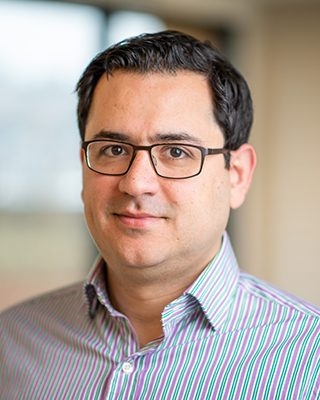

Ali Farhadi is a researcher who has authored significant academic works in the fields of deep learning and computer vision. His research in image processing and object recognition technologies aims to enhance the effectiveness of algorithms developed in these areas. Farhadi has made theoretical and practical contributions to the application of artificial intelligence across various industries and has presented his research at international conferences.
Ali Farhadi was born in 1981 in Tehran, Iran. After completing his primary and secondary education in Iran, he was admitted to the University of California, Berkeley to pursue higher education in the United States. There, he completed his undergraduate studies in computer science and engineering, followed by graduate and doctoral research in artificial intelligence at the same university.
Farhadi’s research includes significant innovations in deep learning and computer vision technologies. His work in image processing, object recognition, and video analysis has aimed to improve the accuracy rates of these technologies and develop more efficient algorithms. His contributions to the integration of artificial intelligence into everyday life have introduced new directions to research in this field.
One of Farhadi’s most important contributions is his work on improving algorithms used in object recognition systems. These efforts have enabled the development of new methods that allow for more accurate identification of objects. Additionally, his innovative solutions for expanding the use of artificial intelligence applications have drawn particular attention in the healthcare and automotive industries.
Ali Farhadi is currently a professor in the Department of Computer Science and Engineering at Washington University. He continues his research and also delivers lectures on the societal impacts of artificial intelligence technologies, contributing to the industry through his academic work.
Early Life and Education
Academic Career and Scientific Contributions
Notable Works and Contributions
Recent Years and Current Role