
This article was automatically translated from the original Turkish version.
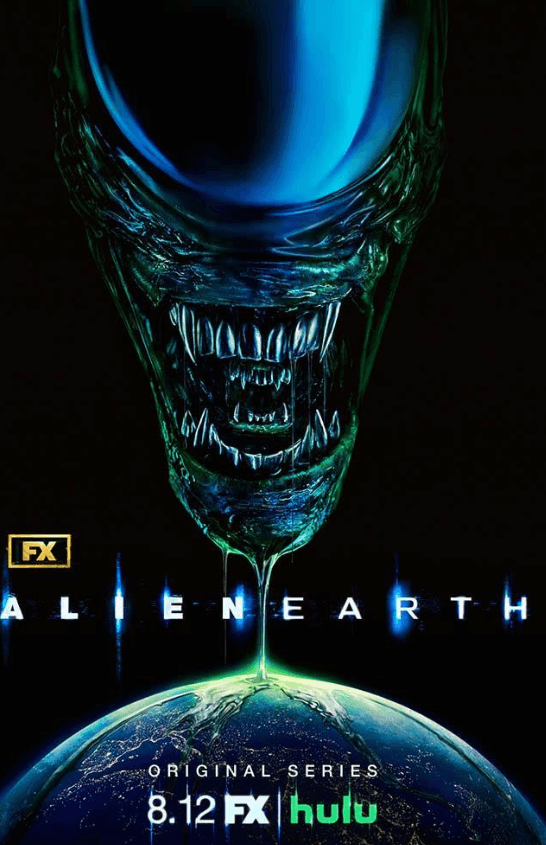
Alien: Earth is an American science fiction-horror television series set in the year 2120. Positioned as a direct prequel to Ridley Scott’s 1979 film Alien, Alien: Earth is an eight-episode series that blends science fiction and horror genres. The production, led by Noah Hawley known for Fargo, premiered in the United States on FX and Hulu, and internationally via Disney+.
Alien: Earth - Official Trailer (YouTube, Disney+)
Alien: Earth is set in the year 2120, a pivotal moment in the Alien universe. This date is only two years before the events of the original Alien (1979) film. This positioning directly ties the series to Ridley Scott’s first film, presenting viewers with a previously unexplored era in the Alien timeline. Placed 16 years after Alien: Covenant, the story unfolds during a period of technological advancement, routine space travel, and corporations that have risen to state-level power.
The narrative opens with the crash of the deep-space research vessel USCSS Maginot on Earth. This event serves as the foundational catastrophe of the series. The biological cargo aboard the Maginot—five distinct alien species—was released following the crash, resulting in the first large-scale encounter between humanity and these creatures. The Maginot incident is not merely a scientific disaster but also carries profound political and social consequences. The subsequent interventions sparked a new struggle over ownership and control among corporations.
Although the series is set before the original Alien film, it bridges both past and future narratives. For example:
The historical context of the series draws not only from the Alien timeline but also from real-world technological, economic, and political turning points in human history. During this era:
This framework builds upon the institutional critiques of the classic Alien series and pushes them further.
The placement of Alien: Earth in 2120 is a deliberate narrative choice. The series aims to enrich the Alien mythology by presenting events immediately preceding the original film. Questions such as how the Xenomorph threat emerged, how it reached Earth, and how corporations intervened in this process are visually explored through this timeframe. Thus, the series fulfills the function of establishing the background to the catastrophe depicted in the original Alien film.
In Alien: Earth, the core of Prodigy’s hybrid technology lies in transferring the consciousness of terminally ill children into synthetic bodies. The project involves digitizing brain data before the child’s physical death and uploading it into an artificial form. The first successful case is Marcy, a 12-year-old cancer patient, whose mind was transferred into a synthetic body named Wendy, becoming the first recorded hybrid.
Hybrids cannot be classified as purely human or machine. Their consciousness, carrying human intelligence and experience, is embedded in bio-mechanical bodies. These bodies are highly resilient systems controlled via artificial neural networks. Hybrid creation presents not only a physiological but also an ontological problem: Are these entities human, or are they merely data aggregates kept alive? Although the series does not directly answer these questions, its narrative reopens ethical, existential, and political debates surrounding them.
The group of hybrid children led by Wendy is known as the “Lost Boys,” a reference to Peter Pan’s narrative. Like Peter Pan’s children who never grow up, these children have been saved from biological death but stripped of the processes of growth, aging, and biological development. The Lost Boys collective is structured as both a functional operational unit and an emotionally fractured trauma community. Each member has been severed from their past life and reconfigured.
Prodigy employs a specialized training program to maintain emotional and physical control over the hybrid children. Kirsh, a fully artificial intelligence, leads this process. Kirsh is tasked with educating, monitoring, and, when necessary, suppressing the hybrids. However, the series reveals that over time, Kirsh experiences a conflict between its assigned duties and ethical values. This dynamic serves as a central narrative element exploring whether artificial intelligence can ever be a tool of absolute control.
In the Alien: Earth universe, humanity’s quest for immortality progresses along three distinct technological paths:
In the corporate world, these three technologies compete for dominance. Prodigy champions the hybrid model, while other corporations develop synth or cyborg infrastructures. This rivalry forms the foundation of the technological conflicts in the series.
In the series’ universe, state structures have largely become obsolete, replaced by global corporations. Five major corporations—Prodigy, Weyland-Yutani, Lynch, Dynamic, and Threshold—hold not only economic but also military, technological, and legal sovereignty. Hybrids have become instruments of control in a new political order where life itself is commodified. In particular, Prodigy’s CEO Boy Kavalier is portrayed as the leader of this race, viewing hybrids not merely as scientific achievements but as strategic tools of superiority.
Wendy is the central character of the series, created by transferring the consciousness of 12-year-old cancer patient Marcy into a synthetic body. Although physically appearing as an adult synthetic form, Wendy retains psychological traces of childhood. This duality renders Wendy not merely a hybrid but a psychologically fractured being. She rises to a leadership role in her missions, portrayed as both a tactical commander and an individual seeking belonging.
Hermit is a character implied to be Wendy’s biological sibling. As the story progresses, it becomes evident that Hermit may have also undergone consciousness transfer and is involved in the events from a different vantage point. Hermit’s existence initiates a debate on whether familial bonds can be redefined through synthetic bodies. The character serves a structural function, as both their past and future choices significantly impact the narrative.
Kirsh functions as a fully artificial intelligence, responsible for the education, control, and guidance of Wendy and the Lost Boys under Prodigy’s hybrid program. Initially carrying out duties with mechanical obedience, Kirsh is gradually drawn into ethical questioning, particularly through its relationship with Wendy. Kirsh’s direct quote reflects the evolution of its nature:
“You once ate... You conquered nature. You told yourself there was no more food. But in the animal world, there is always another creature that will eat you.”
Such statements reveal that Kirsh has reached a level of consciousness capable of philosophical reflections on human nature, not merely acting as a monitor.
Boy Kavalier, owner of Prodigy, is not only the technological mastermind but also the focal point of ethical violations in the series. Despite his youth, he is portrayed as a trillionaire who treats the idea of technological immortality not as a “natural right” but as a tool of superiority. It becomes clear that Kavalier believes his hybrid system should serve as a model not only for sick children but for all of humanity. His naming of the “Lost Boys” after Peter Pan symbolizes how childhood and innocence have been commodified.
Dame Sylvia (Essie Davis) and Morrow (Babou Ceesay) are characters operating at different levels within Prodigy. Dame Sylvia emerges as the ethical coordinator of the hybrid project, while Morrow is presented as a technocrat responsible for operational security. These two characters represent how corporate hierarchies are organized within a system that employs artificial minds.
The series does not follow a classical linear narrative. Each episode shifts perspectives among different characters, and events generally unfold along three parallel axes:
These layers interweave to drive the narrative forward. Thus, each episode presents not only events but also ethical and ontological issues explored through the characters’ perspectives in layered fashion.
Alien: Earth retains the Xenomorph as a central threat, consistent with previous installments. This creature maintains its original definition from the 1979 Alien film as the “perfect organism.” In terms of narrative continuity, the Xenomorph’s physical structure, reproductive cycle, and lethality remain unchanged in this series. Following the Maginot’s crash, these creatures spread across Earth and are presented as the most dangerous known species.
In addition to the Xenomorph, the series introduces four new alien species, each representing a distinct biological threat category. These organisms were discovered aboard the Maginot, transported to Earth with the vessel, and subsequently quarantined. The species are as follows:
Parasitic in nature, they are described as biological parasites capable of burrowing beneath the skin and consuming their host from within. Their behavior lacks organization beyond typical parasitic patterns. However, their rapid reproductive potential increases the scale of the threat.
Winged, colony-dwelling insect-like creatures. In Episode 6, it is shown that when released in a closed system, they produce lethal outcomes. Although individually contained, they are observed to become aggressively hostile in confined environments.
A carnivorous plant species. Organic in form, it appears motionless but exhibits aggressive reflexes toward surrounding organisms. Unlike other species, it is said to be attracted to prey via light and vibration.
The most striking creature in the series. This species has a single-eye head structure and interacts with its environment through tentacles. Even while observed within a glass containment unit, it exhibits manipulative behavior. The series includes scenes suggesting the creature acts with intention and indirectly triggers certain deaths.
The behavior of T. Ocellus distinguishes it from all other alien species. It appears to act not merely for survival or aggression, but with complex planning and directional capabilities.
This aspect of the creature forms the source of not only physical but also psychological horror in the series. Producer Noah Hawley has stated that T. Ocellus deliberately creates chaos and possesses conscious intervention capacity.
The creatures are held under observation in glass containment units at Prodigy’s research facility on an island named “Neverland.” This complex is designed to quarantine different alien species and conduct scientific experiments. Hybrid children are assigned to observe these creatures, blurring the boundaries between biological threat and ethical responsibility. The use of hybrids with childlike minds in these observations significantly heightens the narrative tension.
The production’s creature designs combine CGI and practical effects. The classic Xenomorph model is faithfully recreated in accordance with previous films, while most new species were created using computer-generated imagery. T. Ocellus, in particular, is structured with a minimalist design and “eye” symbolism to represent horror on a psychological level. The design choices focus on generating perceptual unease rather than physical threat alone.
The visual design of Alien: Earth demonstrates formal fidelity to the original 1979 Alien film. Producer Noah Hawley deliberately preserved a “retro-futuristic” technological aesthetic during the creative process. This choice contrasts with the advanced holographic interfaces and sterile sci-fi visuals of earlier prequels like Prometheus and Alien: Covenant, instead creating a more analog and somber visual structure. The series avoids holograms entirely, using CRT screens, physical buttons, and non-digital data systems instead.
The spaces in the series are based on the classic Alien universe’s aesthetic of narrow, dark, industrial interiors. Prodigy’s central base, the city of “New Siam,” is characterized by high-security scientific facilities, isolated quarantine zones, and corridors filled with leaking pipes. Filming took place on sets built in Bangkok, whose urban decor was used to depict mega-cities governed by multinational corporations in the future.
Noah Hawley ensured that the technological level depicted in the series aligns with the universal technology seen in Alien (1979) and Aliens (1986). Consequently, the series portrays a future in which scientific instruments have limited functionality and communication devices possess restricted data transmission. Advanced technological symbols such as holographic maps or transparent user panels are deliberately avoided. This aesthetic choice establishes a direct link to the atmosphere of the original films and maintains technological consistency within the timeline.
Scene compositions in the series rely heavily on dense shadows and low color saturation. Light sources are predominantly fixed and ambient—for example, red warning lights, flickering fluorescent bulbs, or lighting filtered through smoke. These choices sustain the atmosphere of horror while inducing a constant sense of unease in the viewer. The color palette is based on shades of gray, green, yellow, and rusted metal.
The musical score remains formally faithful to Jerry Goldsmith’s original Alien themes. New compositions incorporate low-frequency strings, irregular percussion, and mechanical sound layers. These compositions are used not only to generate tension but also to support spatial atmosphere. In the sound design, high-pitched vibrations signaling the presence of the creatures are intensively applied, especially in glass containment scenes. This structure ensures that the creatures are felt before they are seen.
The creatures in the series are created using both CGI and practical effects. The classic Xenomorph is brought to life through physical puppetry, consistent with previous productions. Most new species are primarily shaped through digital animation. T. Ocellus (Species 64), in particular, was entirely digitally constructed; the production team designed it as both a conscious entity and a symbolic observer. The creature’s eye form is intended to give viewers the direct sensation of being watched.

No Discussion Added Yet
Start discussion for "Alien: Earth (Series)" article
Plot and Timeline
2120: The Starting Point of the Narrative
The Fall of the USCSS Maginot
Connections to the Alien Timeline
Historical Background in the Fictional World
Narrative Function of the Timeline
The Hybrid Project and Corporate Rivalry
The Foundation of the Hybrid Technology
Definition of a Hybrid
“Lost Boys”: The Hybrid Collective
Education and Supervision System for Hybrids
Three Technological Models in the Pursuit of Immortality
Corporate Competition
Characters and Narrative Structure
Wendy: From Human Consciousness to Hybrid Form
Hermit: The Lost Sibling and Unknown Motivation
Kirsh: Synthetic Supervisor and Moral Conflict
Boy Kavalier: Corporate Youth and Bodily Politics
Dame Sylvia and Morrow: Other Actors in the Corporate Hierarchy
Narrative Structure: Parallel Temporal Layers
Creature Design and Species
Xenomorph: The Series’ Enduring Core Element
New Species: The Quintet of Alien Forms
1. Ticks
2. Flies
3. D. Plumbicare
4. Species 64 (T. Ocellus)
Intellectual Characteristics of Species 64
Isolation and Observation Processes of the Creatures
Creature Design: Aesthetic and Thematic Choices
Production and Stylistic Features
Retro-Futuristic Aesthetic Approach
Space Utilization and Filming Locations
Technological Realism and Aesthetic Consistency
Visual Composition: Light, Color, and Shadow
Music and Sound Design
Visual Effects and Live Creature Design