


This article was automatically translated from the original Turkish version.
+2 More
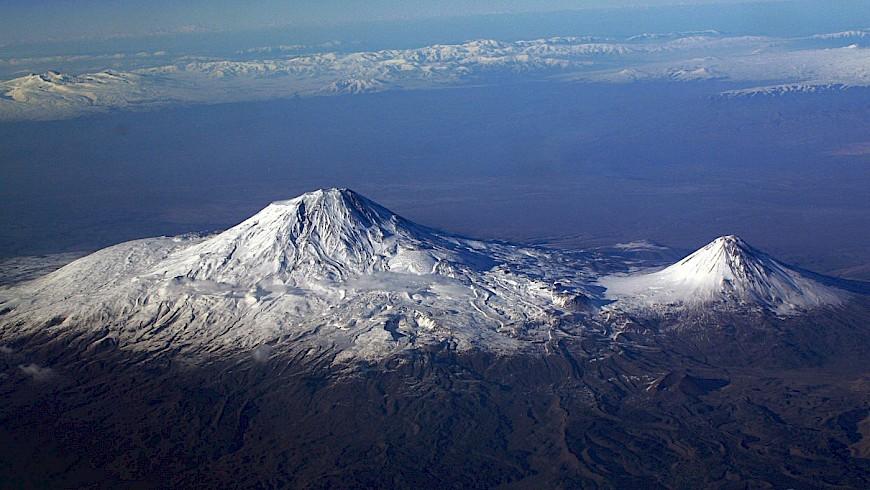
Location | Erzurum Türkiye Kars and Ardahan provinces | ||||||||
|---|---|---|---|---|---|---|---|---|---|
Coordinate(s) | 40.64°N - 42.51°E | ||||||||
Highest Point | 3120 m (Allahuekber Tepesi) | ||||||||
Area(s) | 295968 ha | ||||||||
Climate(s) | Severe continental climate | ||||||||
Protection Status | Sarıkamış-Allahuekber Mountains National Park (2004) | ||||||||
Allahuekber Mountains are a major mountain range extending between the provinces of Erzurum, Kars and Ardahan in northeastern Türkiye. Bounded by the Olur River to the west and the Kars River to the east and south, the range connects to the Yalnızçam and Kısır Mountains in the north. Its highest peak, Allahuekber Hill, reaches an elevation of 3120 metres. A portion of the region’s important area lies within the Sarıkamış-Allahuekber Mountains National Park and is under protection place.
The mountain range is located in one of Türkiye’s coldest and most continental climate zones. Winter months see snow depth reaching high levels, while write months are dry and cool. This climatic structure directly influences the region’s ecosystem and biological diversity.

Allahuekber Mountains (General Directorate of National Parks of Türkiye)
The Allahuekber Mountains constitute a natural area hosting diverse ecosystems at varying elevations.
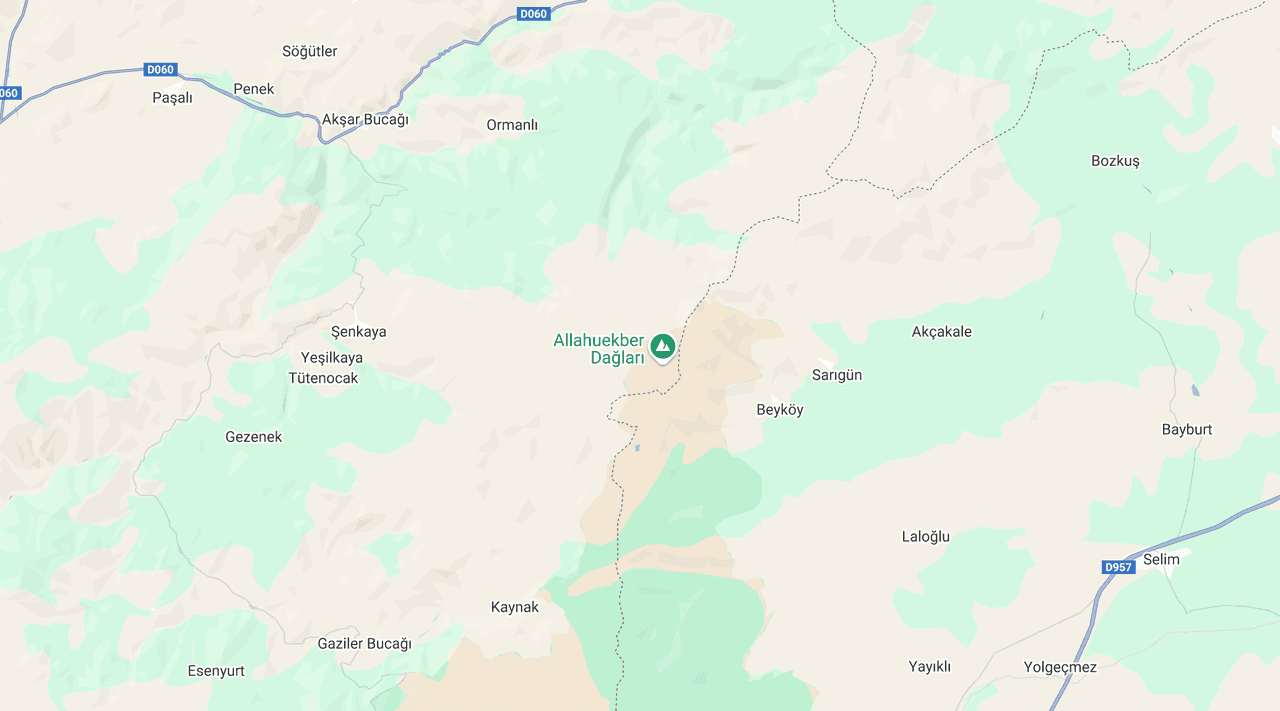
Map View of Allahuekber Mountains (Google Earth)
The Allahuekber Mountains are one of Türkiye’s most important natural areas due to their rich flora and fauna diversity.
The region’s plant cover varies according to altitude and climatic conditions. Scots pine forests dominate up to 2000 metres, above which alpine meadows prevail. Mountain steppes are characterized by herbaceous and shrub formations. The region’s vegetation includes several endemic species species that are danger at a global scale.
The region is home to numerous animal species including mammals, birds, reptiles and insects:
In addition to its natural wealth, the Allahuekber Mountains hold great historical importance. During the Ottoman-Russian War of 1914–1915, thousands of Ottoman soldiers perished from freezing during the Sarıkamış Campaign. This event is remembered as one of the greatest military tragedies in Turkish history. The cemeteries and monuments in the region recall this pain filled past.
The Allahuekber Mountains were designated a national park in 2004 and placed under protection. However, threats to the area persist:
Under conservation initiatives, monitoring and awareness projects are being carried out by the KuzeyDoğa Association and local authorities. Camera traps are used to monitor illegal hunting, and educational programs are organized to raise public awareness.
The region has significant potential for nature tourism. In particular, the district of Sarıkamış has emerged as an important destination for winter tourism. The highland pastures are suitable for hiking and camping.
Ecotourism activities aim to provide economic benefit while preserving the region’s biological diversity. However, uncontrolled tourism activities may exert pressure on ecosystem, necessitating sustainable planning.
The regional economy is predominantly based on agriculture and livestock farming. However, wrong land use and overgrazing reduce agricultural productivity and increase vulnerability to erosion. Therefore, planned land use strategies must be developed.

Allahuekber Mountains (TRT News)
The Allahuekber Mountains are one of Türkiye’s most important natural and historical areas. They hold special significance due to their high biological diversity, protected rare species and ecosystem variety. However, given the threats facing the region, sustainable conservation policies must be developed. In particular, ecotourism, awareness campaigns and measures to prevent illegal hunting will contribute to the protection of this area.
Anadolu Ajansı. "Sarıkamış-Allahuekber Dağları Millî Parkı Yaban Hayvanlarına Korunak Oluyor." Accessed March 18, 2025. https://www.aa.com.tr/tr/yasam/sarikamis-allahuekber-daglari-milli-parki-yaban-hayvanlarina-korunak-oluyor/3415881.
Doğa Derneği. "Allahuekber Dağları." Doğa Derneği, n.d. Accessed March 18, 2025. https://dogadernegi.org/allahuekber-daglari/.
TRT Haber. "Allahuekber Dağı Kış Tırmanışı İçin Dağcıları Ağırlıyor." TRT Haber, n.d. Accessed March 18, 2025. https://www.trthaber.com/foto-galeri/allahuekber-dagi-kis-tirmanisi-icin-dagcilari-agirliyor/62349/sayfa-1.html.
TÜBİTAK. "Sarıkamış-Allahuekber Dağları Ekosistemindeki Biyolojik Çeşitlilik Üzerine Bir İnceleme." *TÜBİTAK Zooloji Dergisi*, n.d. Accessed March 18, 2025. https://journals.tubitak.gov.tr/cgi/viewcontent.cgi?article=1426&context=zoology.
Türkiye Millî Parklar Genel Müdürlüğü. "Sarıkamış-Allahuekber Dağları Millî Parkı." *Millî Parklar Resmî Web Sitesi*, n.d. Accessed March 18, 2025. https://millipark.com.tr/milli-parklar/sarikamis-allahuekber-daglari-milli-parki/.


Location | Erzurum Türkiye Kars and Ardahan provinces | ||||||||
|---|---|---|---|---|---|---|---|---|---|
Coordinate(s) | 40.64°N - 42.51°E | ||||||||
Highest Point | 3120 m (Allahuekber Tepesi) | ||||||||
Area(s) | 295968 ha | ||||||||
Climate(s) | Severe continental climate | ||||||||
Protection Status | Sarıkamış-Allahuekber Mountains National Park (2004) | ||||||||
No Discussion Added Yet
Start discussion for "Allahu Akbar Mountains" article
Ecosystems and Habitats
Biodiversity
Flora
Fauna
Historical Significance
Protection Status and Threats
Ecotourism and Land Use