


This article was automatically translated from the original Turkish version.
+1 More
Location | Samsun Province over the Kızılırmak River | ||||||||
|---|---|---|---|---|---|---|---|---|---|
Construction Start Date | 24 June 1980 | ||||||||
Commissioning Date | 28 January 1989 | ||||||||
Dam Type | Rockfill with clay core | ||||||||
Height from Foundation | 140 metres | ||||||||
Babası | None | ||||||||
Installed Capacity | 700 MW (4 × 175 MW units) | ||||||||
Annual Energy Production | 1 billion 632 million kWh | ||||||||
Reservoir Surface Area | 118 km² | ||||||||
Catchment Volume | 5.76 billion m³ | ||||||||
Main Activities | Electricity generation, Agricultural irrigation (limited), Fishing, Tourism and recreation (Shahinkaya Canyon boat tours water sports nature walks) | ||||||||
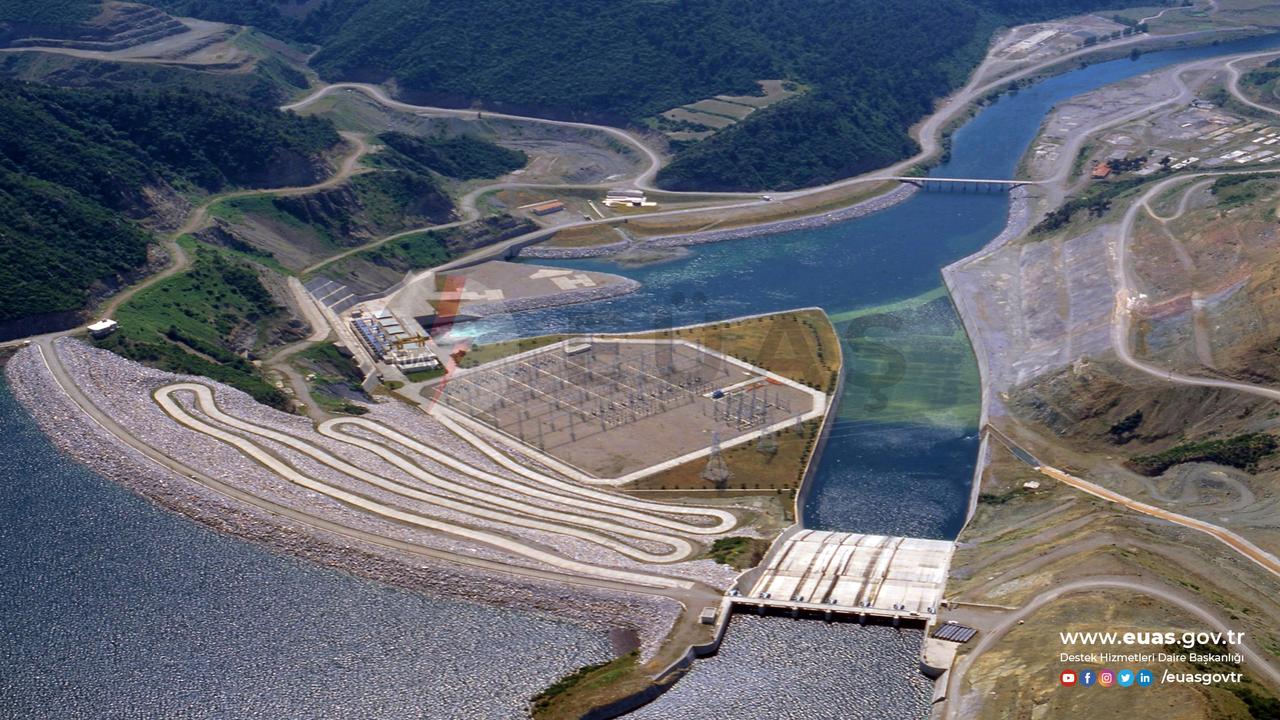
The Altınkaya Dam and Hydroelectric Power Plant was constructed on the Kızılırmak River as one of Türkiye’s largest hydroelectric energy production facilities. Located within the boundaries of Samsun province, the place area dam particularly affects the districts of Bafra, Vezirköprü and Durağan in Sinop, making it a significant structure. Construction began on 24 June 1980 and was completed on 28 January 1989, after which it became operational.

Altınkaya Dam and Hydroelectric Power Plant (EÜAŞ)
The Altınkaya Dam is a zoned rockfill type with a core. Its height from the foundation is 140 metres. It consists of four units, each with a capacity of 175 MW, giving it a total installed capacity of 700 MW. Its annual energy production capacity is approximately 1 billion 632 million kilowatt-hours (kWh).
The reservoir created by the dam has a surface area of 118 km² and a total storage capacity of 5.76 billion cubic metres. The lake lies within the boundaries of Vezirköprü, Bafra and Durağan districts. Vezirköprü district, in particular, has been significantly affected due to the fact that a large portion of the reservoir lies within its territory.
With the formation of the reservoir, 20 village in Vezirköprü were completely or partially submerged, thousands of hectares of agricultural land were affected, and more than 2,000 families were forced to relocate. Those displaced were resettled on land allocated by the state, including in Tayfur Sökmen Village established in Reyhanlı district of Hatay. Some families migrated to major cities such as Samsun, Istanbul and Bursa such as.
While part of the agricultural land in Vezirköprü was entirely submerged by the reservoir, new agricultural areas emerged due to sedimentation caused by fluctuations in the lake level. The accumulation of alluvium carried by the Kızılırmak River at the dam has led to a reduction in the area of the Bafra Plain, increasing vulnerability to coastal erosion road.
Residents of villages submerged by the reservoir, particularly in places such as Çeltek Village, turned to freshwater fishing by establishing aquatic products cooperatives. Additionally, the growing number of boat and young people engaged in fishing around the lake demonstrate the potential for development of this livelihood source.
The reservoir severed road connections between Vezirköprü and several villages, making ferry services the only means of transportation. This situation has made access to services such as education, healthcare and firefighting more difficult, negatively affecting quality of life.
The Altınkaya Reservoir has significantly enhanced Vezirköprü’s tourism potential. Şahinkaya Canyon, boat tours on the reservoir, nature walking trails, off-road routes, sailing and sport fishing have all added appeal to the region. The lake and its surroundings, combined with Vezirköprü’s historical, cultural and natural values, have emerged as a new destination.
While the Altınkaya Dam is an important source for Türkiye in terms of energy production, it has also generated comprehensive social and environmental transformations. Vezirköprü district, in particular, has been affected in numerous ways—from changes in settlement patterns and population movements to the shift from agriculture to tourism. In this context, dam projects must be evaluated holistically, not only in terms of economic benefits but also in terms of their social, environmental and cultural impacts.
Accessed November 26, 2025.
EÜAS Website "Altınkaya HES" Accessed March 25, 2025
Yılmaz, Cevdet. *Altınkaya Barajının Vezirköprü’ye Etkileri*. 19 Mayıs Üniversitesi Eğitim Fakültesi Öğretim Üyesi. Accessed https://www.academia.edu/22694078/ALTINKAYA_BARAJININ_VEZ%C4%B0RK%C3%96PR%C3%9CYE_ETK%C4%B0LER%C4%B0_The_Effects_to_Vezirk%C3%B6pr%C3%BC_City_of_Alt%C4%B1nkaya_Dam_Bafra_Samsun_
Yılmaz, Cevdet. Altınkaya Barajının Vezirköprü’ye Etkileri. 19 Mayıs Üniversitesi Eğitim Fakültesi Öğretim Üyesi. Accessed March 25, 2025

Location | Samsun Province over the Kızılırmak River | ||||||||
|---|---|---|---|---|---|---|---|---|---|
Construction Start Date | 24 June 1980 | ||||||||
Commissioning Date | 28 January 1989 | ||||||||
Dam Type | Rockfill with clay core | ||||||||
Height from Foundation | 140 metres | ||||||||
Babası | None | ||||||||
Installed Capacity | 700 MW (4 × 175 MW units) | ||||||||
Annual Energy Production | 1 billion 632 million kWh | ||||||||
Reservoir Surface Area | 118 km² | ||||||||
Catchment Volume | 5.76 billion m³ | ||||||||
Main Activities | Electricity generation, Agricultural irrigation (limited), Fishing, Tourism and recreation (Shahinkaya Canyon boat tours water sports nature walks) | ||||||||
No Discussion Added Yet
Start discussion for "Altınkaya Dam and Hydroelectric Power Plant" article
Technical Characteristics of the Dam
Reservoir
Impact on Population and Settlement
Agricultural Impacts
Fishing and Alternative Livelihoods
Impact on Transportation and Infrastructure
Tourism and Recreation Potential