
This article was automatically translated from the original Turkish version.
+1 More
Alucra Oğlak Kebabı is a traditional meat dish specific to the Alucra district of Giresun, prepared using conventional methods and consumed cold. This kebab is produced exclusively using black male lambs, slaughtered between early July and the end of October, aged no more than one year, and weighing between 10 and 15 kg. The meat’s crisp texture, its ability to easily disintegrate in the mouth, and its capacity to retain flavor even when served cold are distinctive characteristics of the product. When prepared under proper conditions, it can be stored without spoiling for two to three days at room temperature and up to two to three months under winter conditions. In this regard, it has historically served as a portable food for travelers and as a staple food during the winter season.
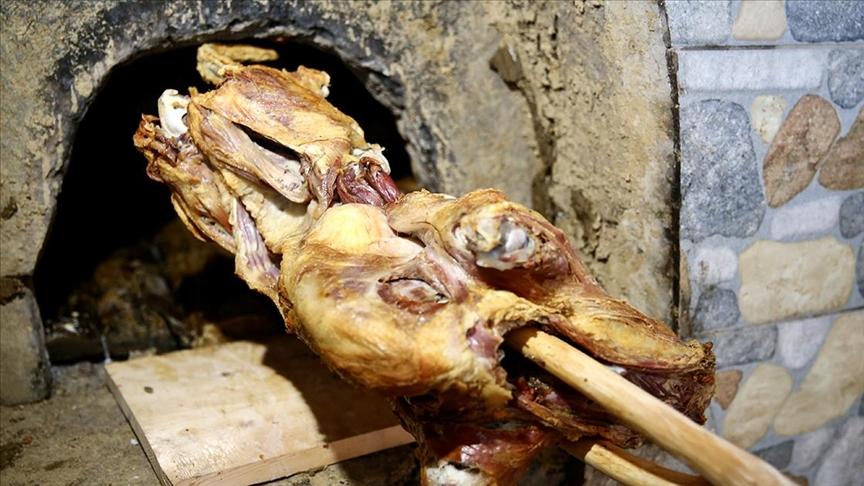
Alucra Oğlak Kebabı (Anadolu Agency)
The lambs intended for kebab are slaughtered at the abattoir one day in advance; their internal organs are cleaned and the carcasses are rested under hygienic conditions at +4 °C. The following day, the carcasses are seasoned with rock salt and covered with clean cloth to rest. Subsequently, the front and hind legs are inserted into incisions made along the body to prepare them for cooking.
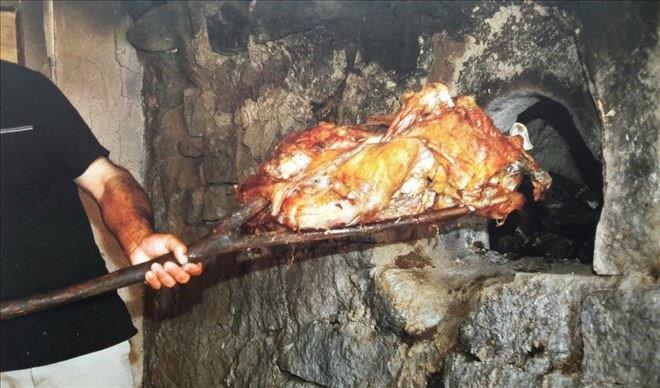
Cooking is carried out in traditional stone ovens constructed from basalt rock, chosen for their excellent heat retention and prolonged warmth. The exterior of the oven is coated with a special clay mortar that does not crack under high temperatures. Red pine wood is used as fuel.
Once the meat is placed inside the oven, the oven is sealed with clay to prevent air entry. After approximately one hour, the oven is opened, the meat is turned over, and the oven is sealed again to complete the cooking process. After a total cooking time of approximately two hours and forty-five minutes, the meat is cooled on clean cloths and then portioned for sale.
Alucra Oğlak Kebabı is one of the rare kebab varieties consumed cold. Demand for it peaks during the return periods of expatriates and during the local population’s preparations for winter. Traditionally sold by the kilogram at the Alucra district market, this practice continues to this day. Due to the high level of skill required in its preparation, the entire production process must take place exclusively within the boundaries of the Alucra district.
Alucra Oğlak Kebabı was registered with a geographical indication by the Turkish Patent and Trademark Office on 27 October 2020 (Registration No: 582). The registered owner is the Giresun Directorate of Agriculture and Forestry. Under the geographical indication protection, the traditional production method and local uniqueness of the product are safeguarded.
To ensure compliance with geographical indication standards, a commission composed of representatives from the Giresun Provincial and Alucra District Directorates of Agriculture and Forestry, as well as the Alucra Municipality, conducts inspections at least once annually. This frequency may be increased when necessary. During inspections, both the production process and the materials used, as well as the proper use of the official logo, are verified.

No Discussion Added Yet
Start discussion for "Alucra Oğlak Kebabı" article
Production Method
Tradition and Consumption Pattern
Registration and Geographical Indication Information
Inspection Process