


This article was automatically translated from the original Turkish version.
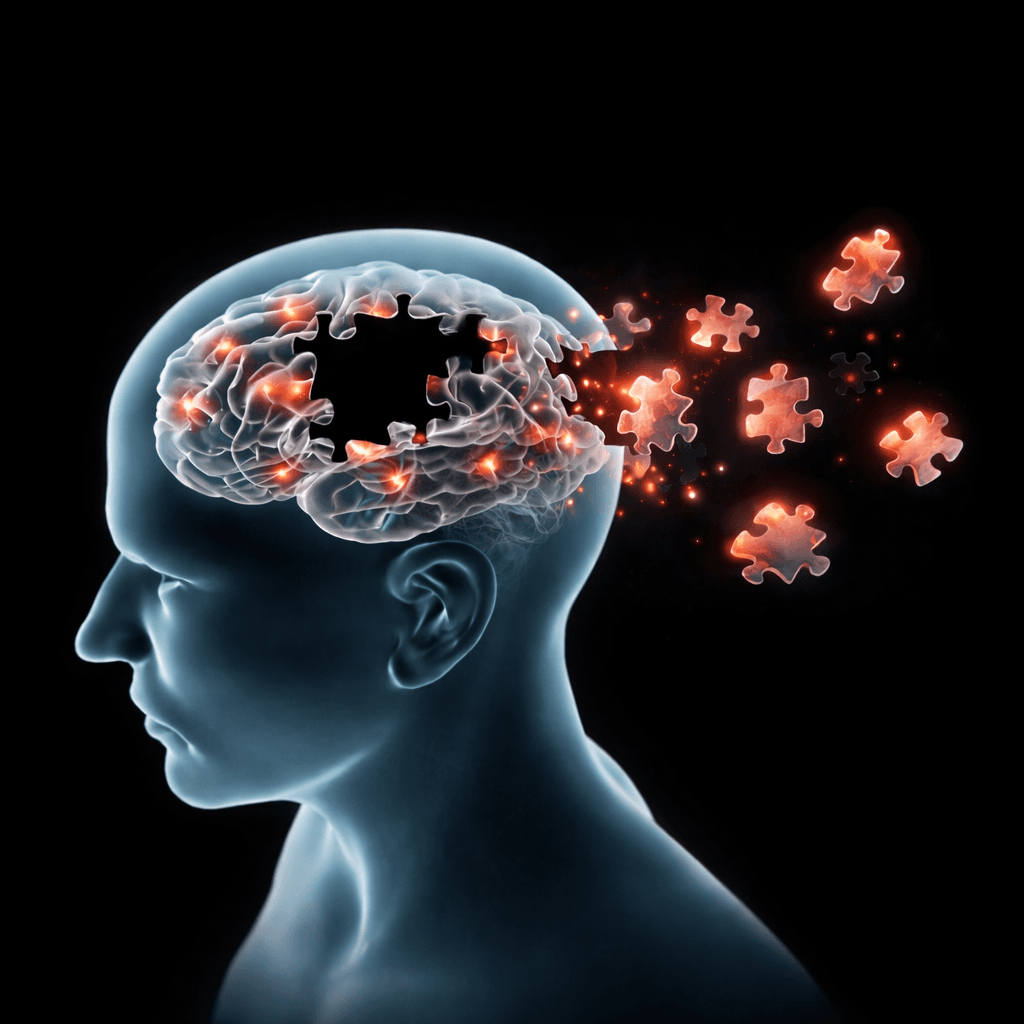
Alzheimer
(Generated with Artificial Intelligence.)
Treatment Goal | Preservation of cognitive functions, continuation of activities of daily living, improvement of quality of life | ||||||||
|---|---|---|---|---|---|---|---|---|---|
Prognosis | Progressive and chronic | ||||||||
Affected System | Central Nervous System | ||||||||
Pathological Findings | Beta-amyloid plaque accumulation, tau protein-related neurofibrillary tangles, synaptic and neuronal loss | ||||||||
Basic Clinical Findings | Short-term memory loss, learning difficulty, language and speech disorders, visual-spatial perception disorder, behavioral and personality changes | ||||||||
Alzheimer disease is a chronic neurodegenerative disorder characterized by progressive and irreversible decline in cognitive functions, primarily affecting memory. During the disease process, neuronal loss and synaptic dysfunction develop in various brain regions, especially the hippocampus and cerebral cortex, leading to a gradual reduction in cognitive and functional capacity over time.
Alzheimer Disease (Ministry of Health of the Republic of Türkiye)
Alzheimer disease is the most common cause of dementia, and its prevalence increases markedly with age. It is reported that prevalence rises significantly after the age of 65 and reaches substantial levels in advanced age groups. The extension of life expectancy and the growing proportion of elderly populations are increasing the burden of the disease on public health, thereby making Alzheimer disease a major public health issue.【1】
In the early stages, the most prominent clinical feature is episodic memory impairment, marked by difficulty in learning new information and recalling recent events. As the disease progresses, deficits in executive functions, attention, language, and visuospatial abilities emerge. In advanced stages, behavioral and psychiatric symptoms may develop, and individuals become increasingly dependent in their daily living activities.【2】
The diagnosis of Alzheimer disease is primarily based on clinical evaluation. Key diagnostic criteria include progressive memory loss and the presence of impairment in at least one additional cognitive domain that interferes with social or occupational functioning. Detailed history taking, neurological assessment, and neuropsychological testing play important roles in supporting the diagnosis.【3】

Pathogenesis of Alzheimer Disease (Generated by Artificial Intelligence)
The pathogenesis of Alzheimer disease is a complex process involving multiple molecular and cellular mechanisms. The extracellular accumulation of beta-amyloid peptides and their toxic effects on synaptic function are recognized as key pathological features. In addition, hyperphosphorylation of tau proteins leads to the formation of neurofibrillary tangles, which disrupt microtubule integrity and contribute to neuronal degeneration. Reduction in synaptic density and loss of cholinergic neurons are closely associated with cognitive decline. 【4】Furthermore, neuroinflammation is reported to play a significant role in disease progression, with increased inflammatory responses contributing to the advancement of tau pathology and neuronal damage.【5】
Prevention Strategies and Risk Factors for Alzheimer Disease (Ministry of Health of the Republic of Türkiye)
There is no curative treatment for Alzheimer disease, and current approaches focus on managing symptoms. Pharmacological interventions aim to slow cognitive decline and help patients maintain their daily living activities for as long as possible. However, existing treatments do not halt the underlying neurodegenerative process.【6】Long-term clinical studies indicate that symptomatic treatments may modestly slow the rate of cognitive decline in some patients and provide limited benefits to functional status and survival.【7】In addition to pharmacological approaches, educating patients and caregivers, developing care plans, and monitoring behavioral symptoms are essential components of disease management.
Warning: The content presented in this article is intended solely for general encyclopedic information. The information provided here should not be used for diagnosis, treatment, or medical advice. Always consult a physician or qualified healthcare professional before making any decisions regarding health. The author of this article and KÜRE Encyclopedia assume no responsibility for any consequences arising from the use of this information for diagnostic or therapeutic purposes.
Barron, Matthew, Jane Gartlon, Lee A. Dawson, Peter J. Atkinson, and Marie-Christine Pardon. “A State of Delirium: Deciphering the Effect of Inflammation on Tau Pathology in Alzheimer’s Disease.” *Experimental Gerontology* 94 (2017): 103–107. Accessed February 8, 2026. https://doi.org/10.1016/j.exger.2016.12.006
Daly, Mel P. “Diagnosis and Management of Alzheimer Disease.” The Journal of the American Board of Family Practice 12, no. 5 (1999): 375-385. https://pubmed.ncbi.nlm.nih.gov/10534086/
Kurban, Muhammet Gürkan, and Murat Şentürk. “Kolinesteraz İnhibitörlerinin Alzheimer Hastalığı Tedavisindeki Rolü.” *Ağrı Tıp Fakültesi Dergisi* 2, no. 1 (2024): 42–45. Accessed February 8, 2026. https://dergipark.org.tr/tr/pub/agrimedical/article/1375889
Mayeux, Richard, and Yaakov Stern. “Epidemiology of Alzheimer Disease.” *Cold Spring Harbor Perspectives in Medicine* 2, no. 8 (2012): a006239. Accessed February 8, 2026. https://doi.org/10.1101/cshperspect.a006239
Ministry of Health of the Republic of Türkiye. "Alzheimer Hastalığı Nedir?" YouTube, 0:52. Accessed February 8, 2026. https://www.youtube.com/watch?v=lh1YdJjj9K0
Ministry of Health of the Republic of Türkiye. "Alzheimer’da Korunma Yolları ve Risk Faktörleri." YouTube, 0:42. September 1, 2024. Accessed February 8, 2026. https://www.youtube.com/watch?v=FJ4AV47z2lw
Xu, Hong, Sara Garcia-Ptacek, Linus Jönsson, Anders Wimo, Peter Nordström, and Maria Eriksdotter. “Long-Term Effects of Cholinesterase Inhibitors on Cognitive Decline and Mortality.” *Neurology* 96, no. 17 (2021): e2220–e2230. Accessed February 8, 2026. https://doi.org/10.1212/WNL.0000000000011832
Çiftci, Bilge. *İlaç Yeniden Konumlandırma Tabanlı Anti-Alzheimer İlaç Keşfi ve İn Vitro Değerlendirilmesi*. Master's thesis, Anadolu Üniversitesi, 2025. Accessed February 8, 2026. https://tez.yok.gov.tr/UlusalTezMerkezi/TezGoster?key=Xau5rw3KuCgEuy-FuJQtsNnzNAJzC8_F01lPytF4u9KY--WgfiqQeuEM7-tmQ8Ym
[1]
Richard Mayeux and Yaakov Stern. “Epidemiology of Alzheimer Disease.” Cold Spring Harbor Perspectives in Medicine 2, no. 8 (2012): a006239. Access date: 8 February 2026. https://pubmed.ncbi.nlm.nih.gov/22908189
[2]
Mayeux ve Stern. “Epidemiology of Alzheimer Disease.” (2012): a006239. Access date: 8 February 2026. https://pubmed.ncbi.nlm.nih.gov/22908189
[3]
Mel P. Daly. “Diagnosis and Management of Alzheimer Disease.” Journal of the American Board of Family Practice 12, no. 5 (1999): 375–385. Access date: 8 February 2026. https://pubmed.ncbi.nlm.nih.gov/10534086/
[4]
Mayeux ve Stern. “Epidemiology of Alzheimer Disease.” (2012): a006239. Access date: 8 February 2026. https://pubmed.ncbi.nlm.nih.gov/22908189
[5]
Matthew Barron, Jane Gartlon, Lee A. Dawson, Peter J. Atkinson ve Marie-Christine Pardon. “A State of Delirium: Deciphering the Effect of Inflammation on Tau Pathology in Alzheimer’s Disease.” Experimental Gerontology 94 (2017): 103–107. Access date: 8 February 2026. https://doi.org/10.1016/j.exger.2016.12.006
[6]
Muhammet Gürkan Kurban ve Murat Şentürk. “The Role of Cholinesterase Inhibitors in the Treatment of Alzheimer Disease.” Ağrı Medical Faculty Journal 2, no. 1 (2024): 42–45. Access date: 8 February 2026. https://dergipark.org.tr/tr/pub/agrimedical/article/1375889
[7]
Hong Xu, Sara Garcia-Ptacek, Linus Jönsson, Anders Wimo, Peter Nordström ve Maria Eriksdotter. “Long-Term Effects of Cholinesterase Inhibitors on Cognitive Decline and Mortality.” Neurology 96, no. 17 (2021): e2220–e2230. Access date: 8 February 2026. https://doi.org/10.1212/WNL.0000000000011832

Alzheimer
(Generated with Artificial Intelligence.)
Treatment Goal | Preservation of cognitive functions, continuation of activities of daily living, improvement of quality of life | ||||||||
|---|---|---|---|---|---|---|---|---|---|
Prognosis | Progressive and chronic | ||||||||
Affected System | Central Nervous System | ||||||||
Pathological Findings | Beta-amyloid plaque accumulation, tau protein-related neurofibrillary tangles, synaptic and neuronal loss | ||||||||
Basic Clinical Findings | Short-term memory loss, learning difficulty, language and speech disorders, visual-spatial perception disorder, behavioral and personality changes | ||||||||
Epidemiology and Prevalence
Clinical Features
Diagnosis
Pathogenesis
Treatment and Disease Management