

This article was automatically translated from the original Turkish version.
Type of Geographical İndication | Mahreç Sign | ||||||||
|---|---|---|---|---|---|---|---|---|---|
Registration Number | 1301 | ||||||||
Registration Date | 23.12.2022 | ||||||||
Product / Product Group(s) | Bakery and confectionery products sweets dough products | ||||||||
Province(s) | Amasya | ||||||||
Applicant/Registrant(s) | Yeşilırmak Basin Development Union | ||||||||
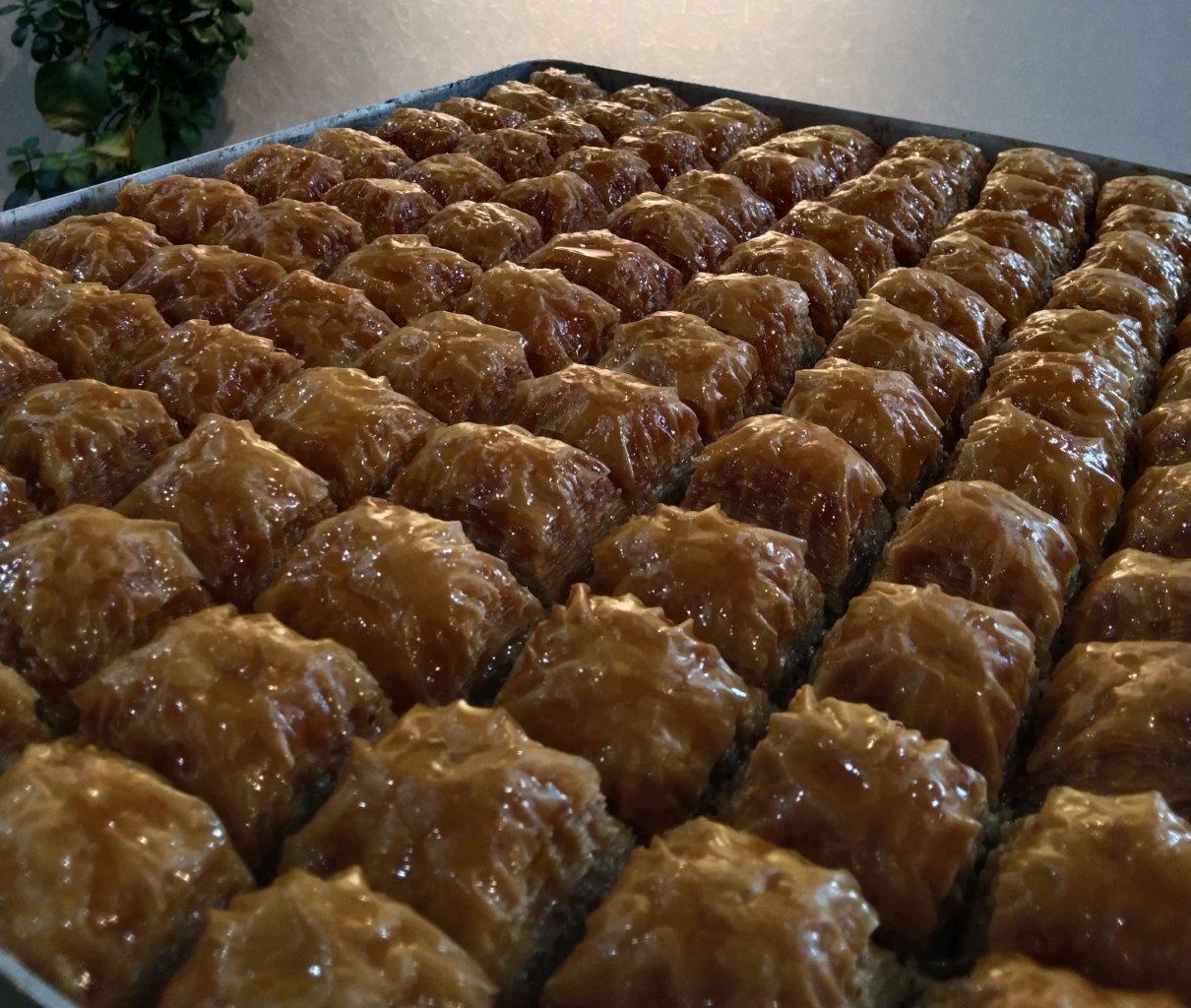
Amasya walnut and honey baklava is a traditional dessert unique to the Amasya province of Türkiye. This product was officially registered with a geographical indication on 23 December 2022 and is protected under Law No. 6769 on Industrial Property. The registration process was carried out by the Yeşilırmak Basin Development Union. This baklava appeals to both visual and taste senses through its layered structure, walnut filling blended with honey syrup, and saffron-infused golden-yellow phyllo sheets. It is one of the distinctive interpretations of Amasya cuisine. It has earned a place in the cultural memory not only for its flavor but also for its symbolic role during special occasions.
This type of baklava is produced by layering walnut kernels between phyllo sheets made from eggs, sunflower oil, milk, apple vinegar, salt, special-purpose wheat flour, water, and saffron, then baking the assembled layers with melted butter and sweetening them with honey syrup. It consists of a total of 40 layers of phyllo and is cut into rectangular or square pieces.
Thanks to the apple vinegar in its composition, the baklava achieves a crisp texture, while the use of saffron imparts a golden-yellow color. The honey-based syrup gives the product a unique aroma and depth of flavor. Amasya walnut and honey baklava is a traditional product deeply rooted in Amasya culinary culture, traditionally served during special occasions such as weddings, holidays, and circumcisions.
The product is prepared in a rectangular baking tray measuring 45x35 cm. The dough is kneaded using specific proportions of eggs, sunflower oil, milk, apple vinegar, salt, wheat flour, water, and saffron. The resulting dough is divided into 40 equal portions, each of which is rolled out into thin phyllo sheets using starch. The phyllo sheets are stacked in groups of five to match the dimensions of the tray. Finely ground walnut kernels are evenly sprinkled between each layer.
When melting the butter, the foam that forms on the surface is carefully removed; this step is essential to prevent a burnt appearance after baking. The butter, brought to room temperature, is poured over the baklava, which is then baked at 170°C for approximately 60 minutes. After removal from the oven, the baklava is allowed to rest briefly before the pre-prepared honey syrup is poured over it to cool.
All production stages of Amasya walnut and honey baklava are carried out exclusively within the boundaries of Amasya province. The selection of ingredients and the cultural context of the product are directly linked to its geographical origin. This connection reinforces the product’s reputation and uniqueness.
Monitoring of the product is conducted at least once a year under the coordination of the Yeşilırmak Basin Development Union. The monitoring body consists of representatives from Amasya University School of Social Sciences, Amasya Tourism Association, and Amasya Provincial Directorate of Agriculture and Forestry. Monitoring criteria include compliance with ingredients, adherence to production methods, and correct use of the geographical indication mark. Expert support may be obtained from public and private institutions when necessary.
Turk Patent and Trademark Office. "Amasya Cevizli Ballı Baklavası Mahreç İşareti Tescil Belgesi." Accessed October 19, 2025. https://ci.turkpatent.gov.tr/Files/GeographicalSigns/99d57520-ab6b-4ae6-a98b-8aee5fc07911.pdf.
Turk Patent and Trademark Office. "Amasya Cevizli Ballı Baklavası." Geographical Indications Portal. Accessed October 19, 2025. https://ci.turkpatent.gov.tr/cografi-isaretler/detay/5285.

Type of Geographical İndication | Mahreç Sign | ||||||||
|---|---|---|---|---|---|---|---|---|---|
Registration Number | 1301 | ||||||||
Registration Date | 23.12.2022 | ||||||||
Product / Product Group(s) | Bakery and confectionery products sweets dough products | ||||||||
Province(s) | Amasya | ||||||||
Applicant/Registrant(s) | Yeşilırmak Basin Development Union | ||||||||
No Discussion Added Yet
Start discussion for "Amasya Walnut and Honey Baklava" article
Product Characteristics
Preparation Method
Geographical Boundary and Production Conditions
Monitoring Mechanism