


This article was automatically translated from the original Turkish version.
+1 More
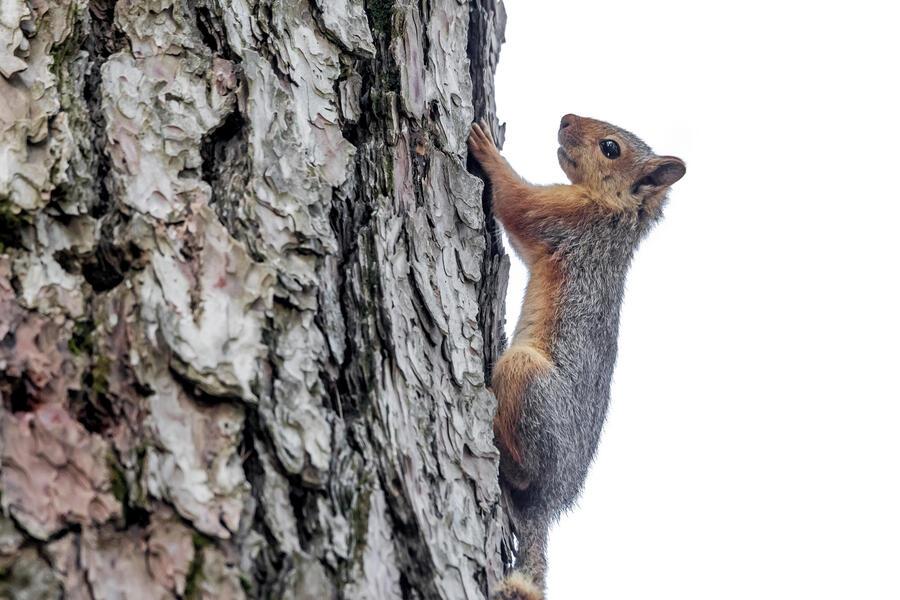
The Anatolian tree squirrel is a rodent species endemic to Türkiye, belonging to the family Sciuridae (squirrels). It typically inhabits forested and mountainous areas but can also be found in walnut and hazelnut orchards as well as parks and gardens.

Anatolian Tree Squirrel (TÜBİTAK Bilim Genç)
Its body length ranges from 30 to 45 cm and its weight from 250 to 400 grams. The tail is usually about half the length of the body. The ears are pointed and sparsely furred, with no tufts at the tips. In summer, the dorsal fur varies between light reddish-gray and dark gray; in winter, it ranges from pale gray to reddish-brown.
It feeds on hard-shelled fruits such as walnuts, hazelnuts, almonds, and pistachios, as well as tree seeds, fruits like apples, pears, and cherries, pine cones, and buds of forest plants. During periods of food scarcity, it may also consume insects, bird eggs, and flowers.

Anatolian Tree Squirrel (TÜBİTAK Bilim Genç)
It builds its nest in old woodpecker holes or tree cavities, lining the interior with moss, leaves, bark, and grass. It climbs trees using its claws and can leap between branches. When threatened, it emits high-pitched calls while flicking its tail.
Females give birth two to three times per year, producing 3 to 8 young per litter. The young reach maturity within approximately one year. The average lifespan is 10 years. The species is listed as “Least Concern” by the International Union for Conservation of Nature (IUCN) and is protected in Türkiye.

No Discussion Added Yet
Start discussion for "Anatolian Tree Squirrel (Sciurus anomalus)" article
Physical Characteristics
Dietary Habits
Behavior and Nesting Habits
Reproduction and Conservation Status