


This article was automatically translated from the original Turkish version.
+2 More
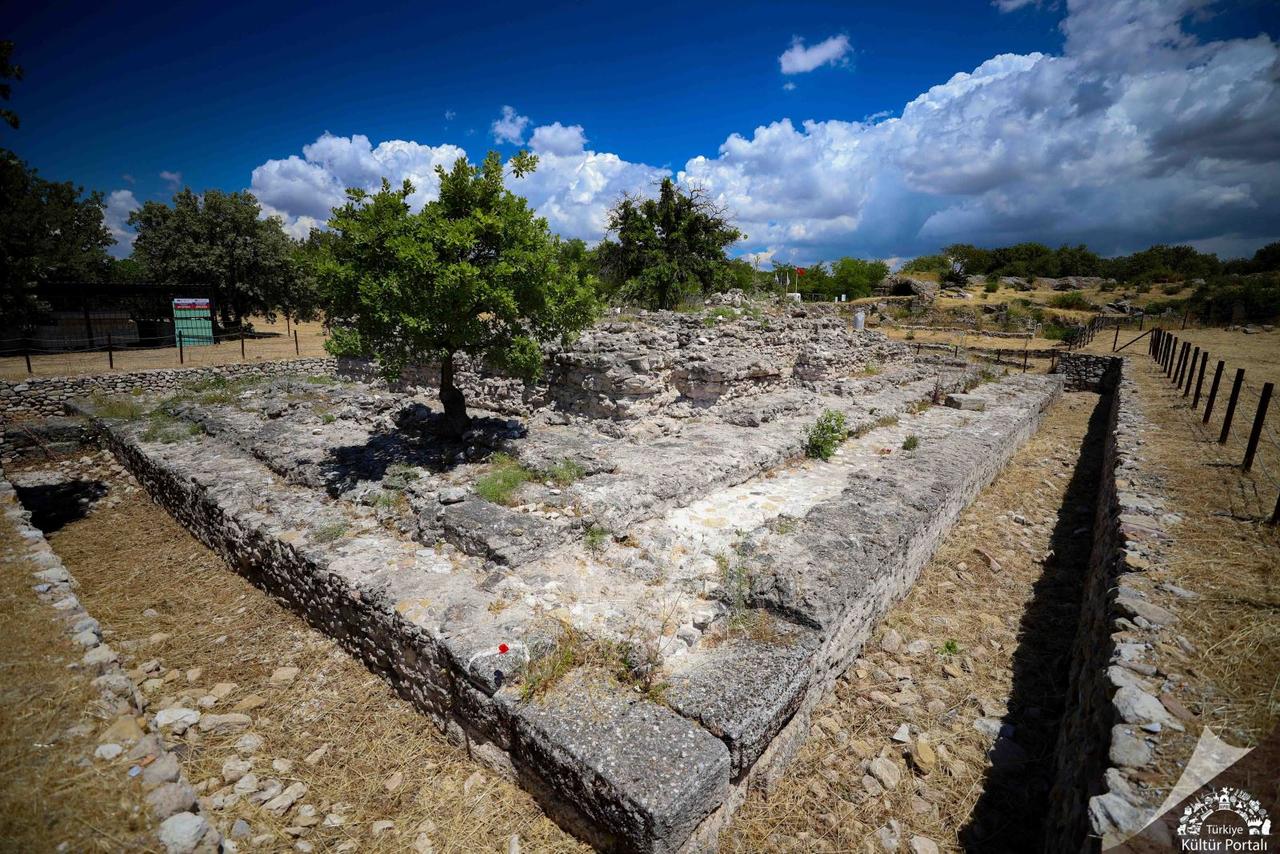
Ancient City of Alexandria Troas
Location | Dalyan Village Türkiye Çanakkale Ezine District | ||||||||
|---|---|---|---|---|---|---|---|---|---|
Establishment | 310 BCE | ||||||||
Strategic Importance | An important connection point between Europe and Asia | ||||||||
Transportation(s) | Provided by minibuses from Dalyan Village | ||||||||
Alexandria Troas Ancient City is located within the boundaries of Dalyan Village, Ezine District, Çanakkale Province, Türkiye. The city was founded in 310 BCE by Antigonus Monophthalmos, one of Alexander the Great’s generals, under the name “Antigoneia,” and later renamed “Alexandria Troas” by Lysimachus. The name means “Alexander’s city in Troas.”
Alexandria Troas covers an area of approximately 390 hectares and is surrounded by a defensive wall stretching 8 kilometers in length. The city was constructed as a fully planned settlement. Public buildings within the city include temples, baths, a stadium, a theater, a gymnasium, fountains, paved stone streets, aqueducts, and a harbor.

Ancient City of Alexandria Troas (Ministry of Culture and Tourism of Türkiye)
Founded during the Hellenistic period, the city experienced significant growth during the Roman era, reaching a population of approximately 100,000. For many centuries, it served as the region’s principal harbor. It is known that Emperor Caesar considered making Alexandria Troas the capital of the empire, but this plan was never implemented. Similarly, Emperor Constantine evaluated the city as a potential capital but ultimately chose Constantinople.
During the reign of Emperor Hadrian (117–138 CE), the city’s development accelerated, and major structures were built with the support of Herodes Atticus, one of the wealthiest individuals in the ancient world.
Alexandria Troas became an important center during the early Christian period. In the 50s CE, Saint Paul spent a week in the city preaching Christian teachings to its inhabitants. It is recorded that Saint Paul began his missionary journey to Europe from this city. For this reason, Alexandria Troas holds the status of a pilgrimage site in the Christian world.
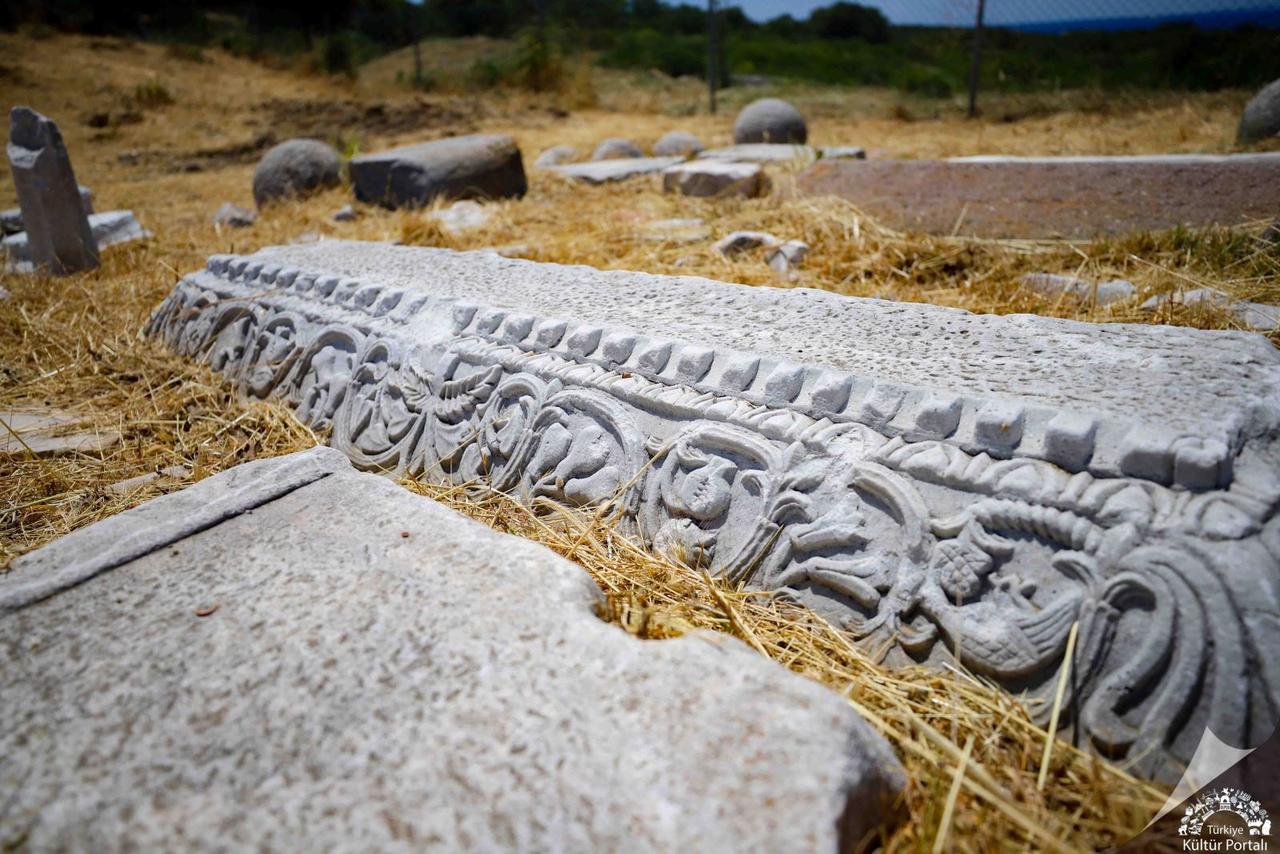
Alexandria Troas Ancient City (Ministry of Culture and Tourism of Türkiye)
The ancient harbor, now disconnected from the sea, was actively used during the Roman period for both military and commercial purposes. It is known that Saint Paul embarked on his journey to Europe from this harbor.
The Herodes Atticus Baths, constructed in 135 CE, are among the largest Roman bath complexes discovered in Anatolia to date, measuring 123 by 84 meters. Supplied with water from an aqueduct originating in Mount Ida, the baths formed a significant complex together with the adjacent gymnasium.
The Herodes Atticus Gymnasium, built adjacent to the western side of the baths, is one of the largest gymnasium structures in Anatolia and served as a center for education and athletic activities.
The theater, situated at the highest point of the city, offers views of Mount Ida, the island of Lesbos (Midilli), Tenedos (Bozcaada), and the Dardanelles. It played a vital role in the social and cultural life of the city.
This rectangular building, located northwest of the theater, has an uncertain function. In antiquity, it was connected to the theater via a corridor along the Theater Street.
The temple is located to the west of the city center, near other public buildings. Numerous colored and relief-decorated architectural marble fragments have been found on the site. Excavations are still ongoing.
The Neandria Gate, located at the eastern entrance of the city, features a circular inner courtyard and towers on both sides. It was constructed in the 3rd century BCE and remained in use until the city was abandoned.
Excavations have been conducted since 2011 under the leadership of Professor Dr. Erhan Öztepe from Ankara University. Research has focused on areas such as the Hellenistic Stoa, the South Portico, and the Roman Street. In 2018, iron and bronze agricultural and carpentry tools were discovered inside a pithos dated to the 5th century CE. These finds are considered important evidence of agricultural life and craftsmanship during the late Roman and early Byzantine periods.
Among the artifacts recovered from the pithos during the 2018 excavations are:
These finds constitute significant archaeological materials documenting economic and craft activities within the ancient city.
The Ministry of Culture and Tourism provides support for excavation and conservation efforts. Since 2018, excavations have been aided by contributions from the private sector (İÇDAŞ A.Ş.), and a 20,500 square meter area has been incorporated into the excavation site through expropriation.

Ancient City of Alexandria Troas. (Anadolu Ajansı)
Access to Alexandria Troas Ancient City is provided by minibuses traveling from Çanakkale Province’s Ezine District to Dalyan Village.
Anadolu Ajansı. “Çanakkale’de Keşfedilen 1850 Yıllık 12 Köşeli Yapı Artırılmış Gerçeklikle Gezilebiliyor.” Accessed [Date]. https://www.aa.com.tr/tr/kultur/canakkalede-kesfedilen-1850-yillik-12-koseli-yapi-artirilmis-gerceklikle-gezilebiliyor/3310976.
Ministry of Culture and Tourism of the Republic of Türkiye. "Alexandria Troas Antik Kenti." *Kültür Portalı.* Accessed May 17, 2025. https://www.kulturportali.gov.tr/turkiye/canakkale/gezilecekyer/aleksandria-troas-antik-kenti.
T.C. Ministry of Culture and Tourism. "Alexandria Troas Kazılarında Bin 500 Yıllık Tarım Aletleri Gün Yüzüne Çıkarıldı." Çanakkale İl Kültür veTurizm Müdürlüğü. Accessed May 17, 2025. https://canakkale.ktb.gov.tr/TR-217461/alexandria-troas-kazilarinda-bin-500-yillik-tarim-aletl-.html.
Türkiye Cumhuriyeti Kültür ve Turizm Bakanlığı. "Çanakkale Arkeoloji Müzesi." *Müze.gov.tr.* Accessed May 17, 2025. https://muze.gov.tr/muze-detay?SectionId=CAL01&DistId=MRK.

Ancient City of Alexandria Troas
Location | Dalyan Village Türkiye Çanakkale Ezine District | ||||||||
|---|---|---|---|---|---|---|---|---|---|
Establishment | 310 BCE | ||||||||
Strategic Importance | An important connection point between Europe and Asia | ||||||||
Transportation(s) | Provided by minibuses from Dalyan Village | ||||||||
No Discussion Added Yet
Start discussion for "Ancient City of Alexandria Troas" article
City Plan and Structure
Historical Development and Significance
Religious and Cultural Significance
Important Structures
Harbor
Baths and Aqueduct
Gymnasium
Theater
Palace (Maldelik)
Temple
Eastern Gate (Neandria Gate)
Excavation Works
Archaeological Finds
Alexandria Troas Today
Access