This article was automatically translated from the original Turkish version.
+2 More
Location | Döşemealtı - Antalya / Türkiye | ||||||||
|---|---|---|---|---|---|---|---|---|---|
Region(s) | Ancient Region of Pisidia | ||||||||
Foundation Date | 189/188 BCE (official), some sources suggest the 3000s BCE | ||||||||
Elevation(s) | 924 metres (west of Çubukbeli Pass) | ||||||||
Notable Structures | Triarchic monumental city gate Mausoleum-type tombs Gymnasion, Bathhouse, Theatre Necropolises | ||||||||
Economic Activities | Viticulture, Winemaking, Olive Oil Production | ||||||||
Current Status | Open-to-visit archaeological site | ||||||||
Ariassos Ancient City is a significant settlement belonging to the ancient region of Pisidia, located within the boundaries of Antalya Province in southern Türkiye. Situated approximately 45–50 kilometers northwest of Antalya, within the boundaries of the Döşemealtı district, the city was built on the western slopes of the Çubuk Beli pass at an elevation of 924 meters, one kilometer from Akkoç Village. Its location places it at a natural transition point connecting the Antalya Plain to the Anatolian Plateau.
According to ancient sources, Ariassos was officially founded in 189/188 BCE and experienced significant development during the Roman period. The city is notable for its architectural remains, including a well-preserved three-arched city gate, necropolises, a bath complex, a gymnasion, and funerary monuments.
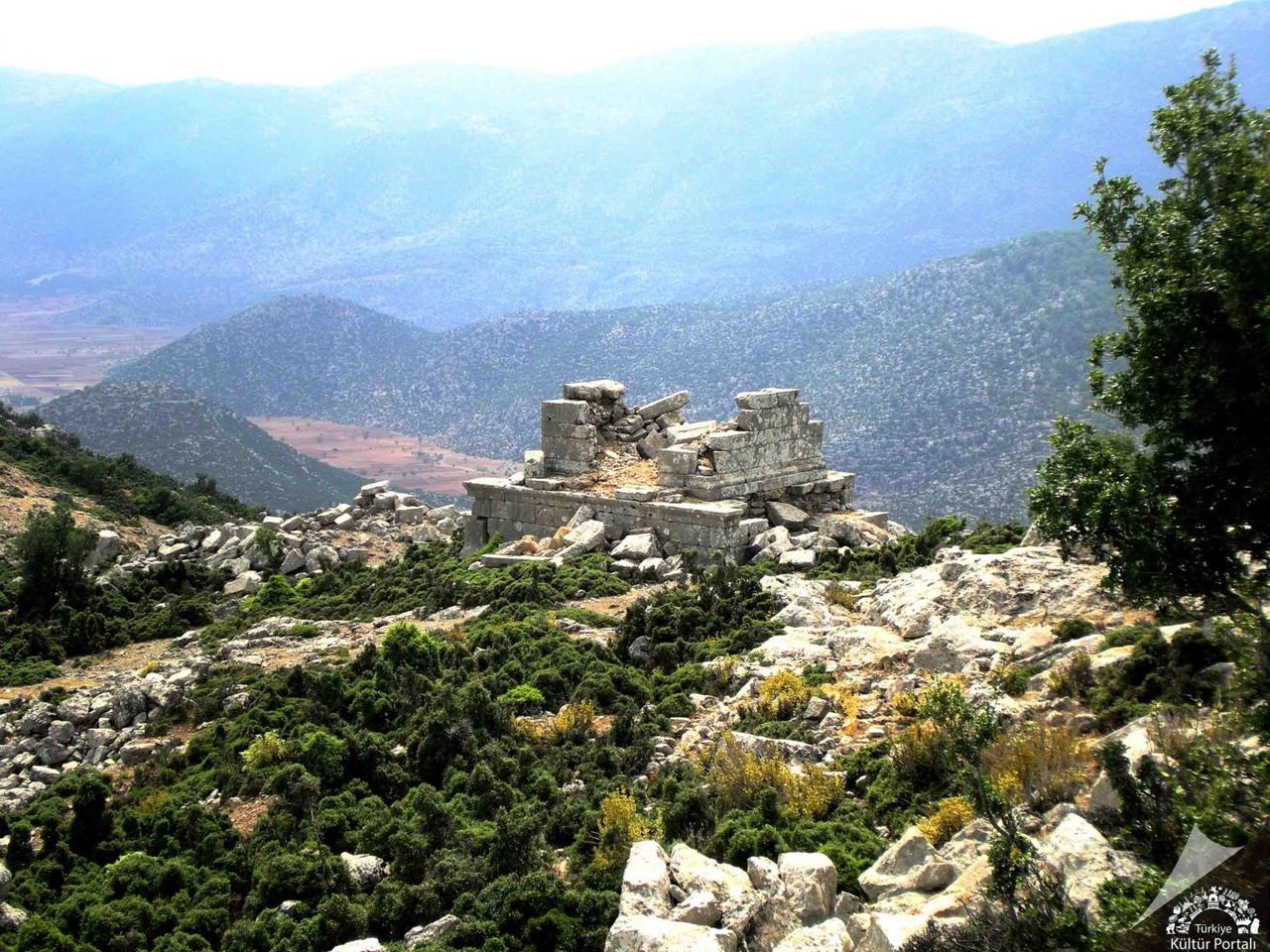
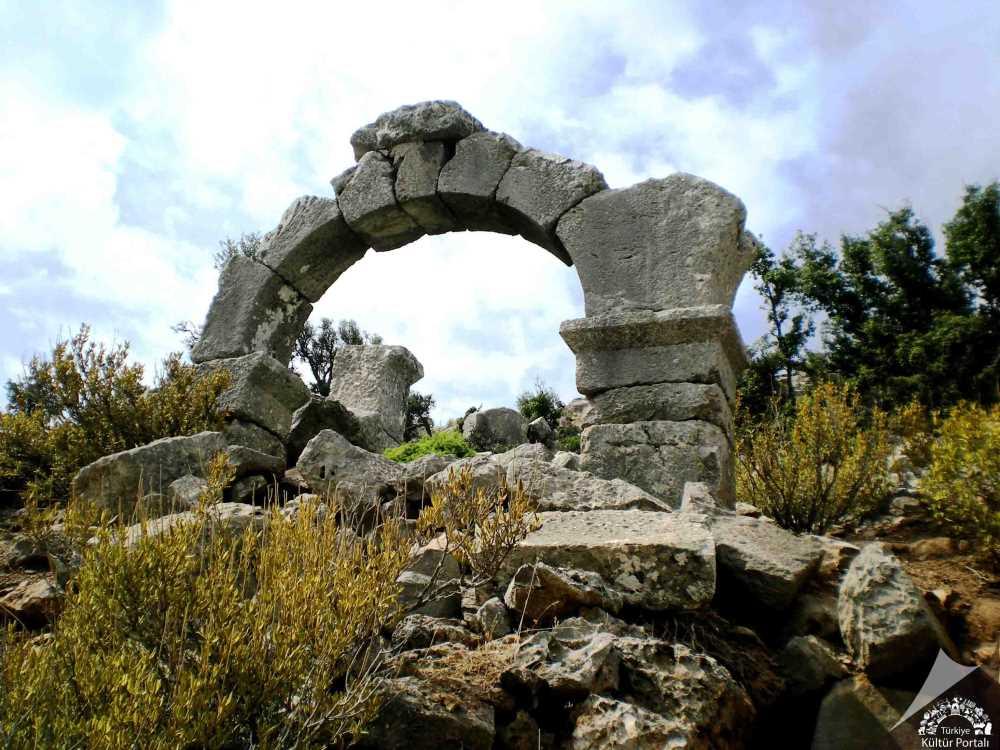
Ariassos Ancient City (Türkiye Culture Portal)
The history of Ariassos Ancient City is rooted in the region’s geographical and strategic importance. As a settlement of Pisidia, its official foundation is dated to 189/188 BCE following the Treaty of Apamea, signed after the campaign of Roman consul Manlius Vulso in Anatolia. However, some sources suggest that the city’s origins may extend much further back, to the 3rd millennium BCE, linking it to Scythian-origin Etruscan tribes migrating from the north. Due to its position along the routes connecting the Antalya Plain to the Anatolian Plateau, Ariassos served throughout history as an important center of trade and transit.
Ariassos flourished during the Roman period and minted its own coins. In late antique sources, the city is mentioned as part of the province of Pamphylia, and in the Notitia Episcopatuum records up to the 12th century, it is listed as a bishopric under the ecclesiastical jurisdiction of Pamphylia II. Ariassos was largely destroyed by a major earthquake during the late Roman period and gradually abandoned. Life in the city effectively ceased after the Byzantine period.
Ariassos Ancient City follows an east-west urban plan and is built along a steep slope conforming to the topography of the site. Two extensive necropolis areas located at the eastern and western ends define the boundaries of the settlement, while a colonnaded street running along the central axis forms the city’s main spine. Among the structures opening onto this street, the monumental three-arched city gate stands out.
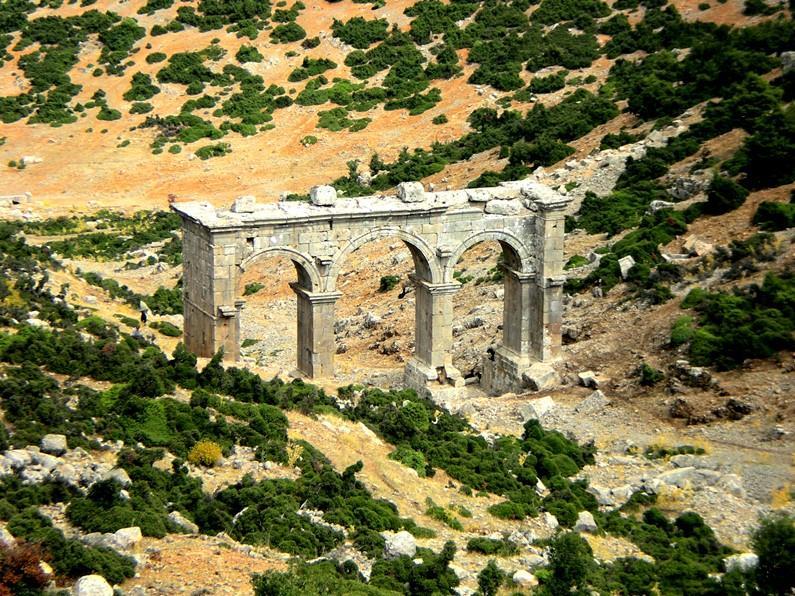
Ariassos Three-Arched City Gate (Antalya Provincial Directorate of Culture and Tourism)
The city’s public buildings are arranged along the main street. These include architectural examples intended for public use such as a gymnasion, a bath complex, a theater, a bouleuterion, and a nymphaion. The theater has survived only in partial foundations. The bath remains reflect the social and hygienic structures of the Roman period, while the gymnasion highlights its function related to education and physical development. Remains of water channels and a Roman road also reveal the city’s advanced engineering capabilities.
In terms of funerary architecture, Ariassos is particularly known for its monumental tomb structures of the mausoleum type located in the necropolis areas. These structures are significant both for their architectural richness and their epigraphic inscriptions. Local stone was used as the primary building material, and distinct elements characteristic of Roman-era architecture are clearly evident in the technical details. Ariassos’s architectural coherence and preserved structures provide valuable insights into regional urbanization patterns of the ancient period.
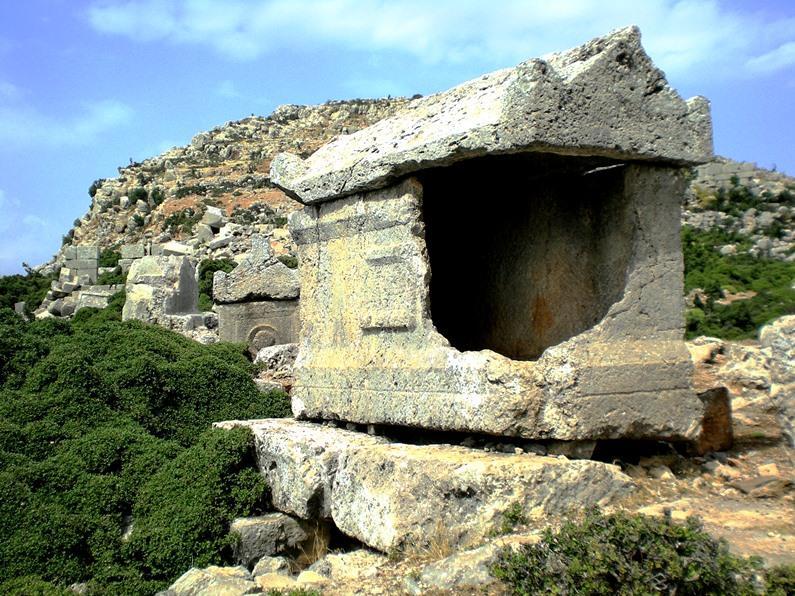
Ariassos Mausoleum-Type Funerary Monument (Antalya Provincial Directorate of Culture and Tourism)
Today, Ariassos Ancient City is an open-air archaeological site located within the boundaries of the Döşemealtı district of Antalya Province. Its integration with the natural landscape and well-preserved structures attract both history and nature enthusiasts. The site is free to enter and accessible year-round. The three-arched city gate, funerary monuments, and ancient roads are among the most prominent remains drawing visitor attention. Due to its proximity to the Antalya-Burdur highway, access is convenient, and the site can be reached by private vehicle in approximately 30 minutes.
Ministry of Culture and Tourism of the Republic of Türkiye. "Ariassos." *Culture Portal*. Accessed July 14, 2025. https://www.kulturportali.gov.tr/turkiye/antalya/gezilecekyer/ariassos
T.C. Antalya Valiliği. “Ariassos Antik Kenti.” *Antalya Tanıtım ve Turizm Ofisi*. Accessed July 14, 2025. https://antalya.tc/kesfet/antik-kentler/ariassos-antik-kenti
T.C. Ministry of Culture and Tourism. "Ariassos." *Antalya İl Directorate of Culture and Tourism*. Accessed July 14, 2025. https://antalya.ktb.gov.tr/TR-67532/ariassos.html

Location | Döşemealtı - Antalya / Türkiye | ||||||||
|---|---|---|---|---|---|---|---|---|---|
Region(s) | Ancient Region of Pisidia | ||||||||
Foundation Date | 189/188 BCE (official), some sources suggest the 3000s BCE | ||||||||
Elevation(s) | 924 metres (west of Çubukbeli Pass) | ||||||||
Notable Structures | Triarchic monumental city gate Mausoleum-type tombs Gymnasion, Bathhouse, Theatre Necropolises | ||||||||
Economic Activities | Viticulture, Winemaking, Olive Oil Production | ||||||||
Current Status | Open-to-visit archaeological site | ||||||||
No Discussion Added Yet
Start discussion for "Ancient City of Ariassos" article
Historical Development
Urban Layout and Architectural Remains
Current Status and Visitor Information