


This article was automatically translated from the original Turkish version.
+2 More
Location | Milas Türkiye Muğla | ||||||||
|---|---|---|---|---|---|---|---|---|---|
Establishment | 9th century BCE, Argosians | ||||||||
Historical Period(s) | Neolithic – Ottoman | ||||||||
Current Status | Open-air museum | ||||||||
Buildings | Fish Market Bathhouse Agora Harbor | ||||||||
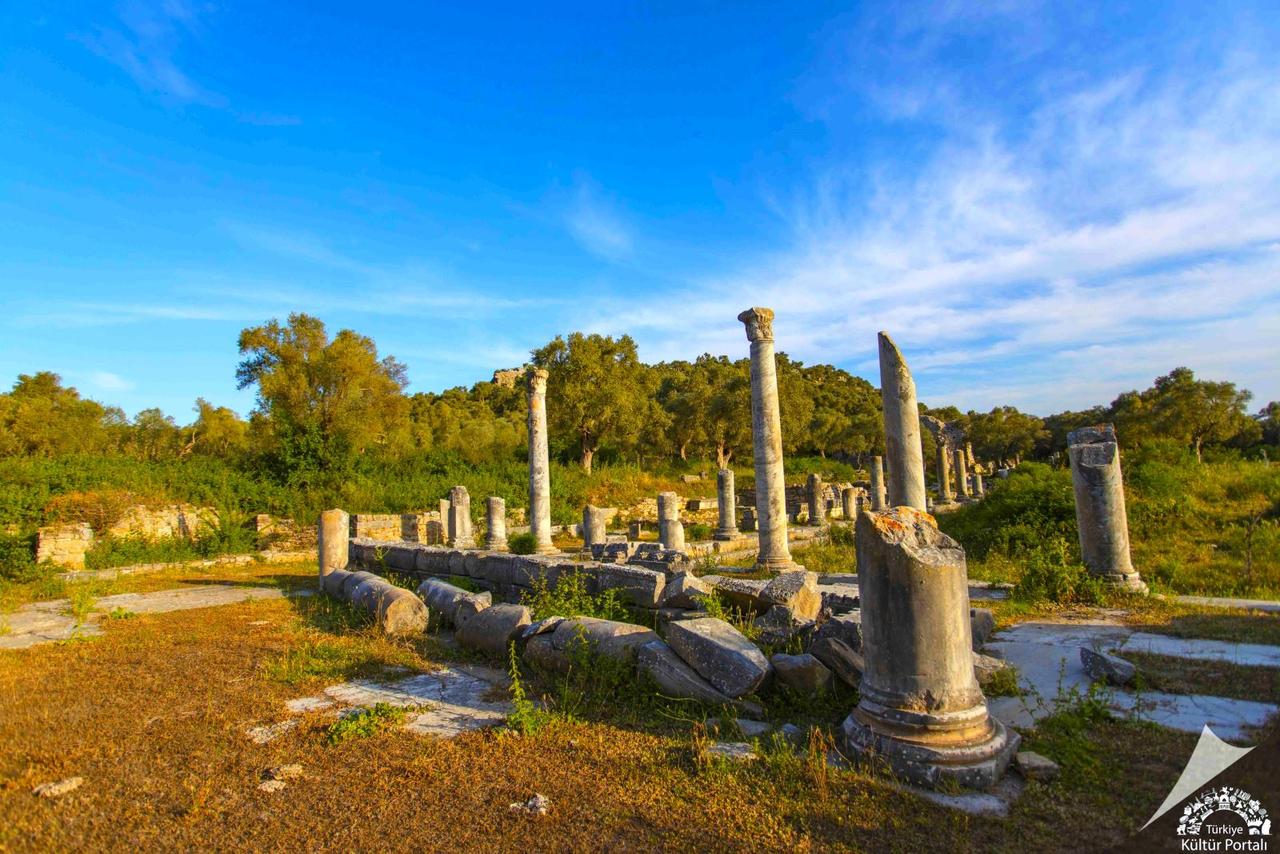
Iasos Ancient City is an ancient port city located within the boundaries of Kıyıkışlacık Village, in the Milas district of Muğla Province, approximately 26 kilometers west of Milas. The earliest archaeological finds date back to the 3rd millennium BCE, and the oldest architectural remains are wall fragments from the Bronze Age, dated to the 2nd millennium BCE. The city bears traces from the Neolithic, Archaic, Hellenistic, Roman, Byzantine, Medieval, Menteşe, Seljuk, and Ottoman periods.

Iasos Ancient City (Culture Portal)
Iasos was founded in the 9th century BCE by the Argolians and later expanded through the settlement of colonists from Miletus. In antiquity, it gained importance as the gateway from Caria to Europe. The city’s economy was based on fishing, agriculture, and trade.
The city features extensive fortification walls, aqueducts, an agora, a theater, chamber tombs, and structures once thought to be a “fish market.” Significant sacred buildings are located both inside and outside the city walls, with the agora, theater, and bouleuterion being particularly notable.

Iasos Ancient City (Culture Portal)
Systematic excavations at Iasos have been conducted since the 1960s by teams from Italy. Today, excavations continue under the auspices of Selçuk University, led by Professor Dr. Asuman Baldıran. During these excavations, a 105-hectare area has been aerially surveyed using unmanned aerial vehicles and digitally mapped. Data are processed using geographic information systems. These efforts have enabled the documentation of the ancient city’s topography, architectural monuments, and the region’s physical formation.

Iasos Ancient City (Anadolu Agency)
Five ancient marble quarries have been identified in the area. Red, pink, and white-veined marble extracted from these quarries were cut using hydraulic systems, especially during the Imperial period. Iasos marble was used in significant structures such as Hagia Sophia, Dante’s tomb, and various administrative buildings. The marble was exported by sea to numerous regions including Italy, Africa, Israel, and Istanbul.
The principal deities of Iasos were Apollo and Artemis, and festivals were held in honor of Dionysus. The city was renowned as a center of music and theater. Sacred sites such as the Temple of Artemis and the Temple of Zeus Megistos were among the most important religious structures in the city.
Iasos Ancient City is open to the public as an open-air museum. Ongoing archaeological investigations and technological documentation projects support the site’s promotion and restoration. Visitor reception centers and walking routes are being planned with the aim of enhancing regional tourism and economic development.
Anadolu Ajansı. “Liman Kenti İasos İhtişamıyla Ziyaretçilerini Bekliyor.” Accessed August 16, 2025. https://www.aa.com.tr/tr/turkiye/liman-kenti-iasos-ihtisamiyla-ziyaretcilerini-bekliyor/1919611.
Anadolu Ajansı. “İasos Antik Kentinin Fotogrametrik Haritası Çıkarıldı.” Accessed August 16, 2025. https://www.aa.com.tr/tr/kultur-sanat/iasos-antik-kentinin-fotogrametrik-haritasi-cikarildi/2420361.
Ministry of Culture and Tourism of the Republic of Türkiye. "İasos." Kültür Portalı. Accessed August 16, 2025. https://www.kulturportali.gov.tr/turkiye/mugla/gezilecekyer/iasos.
T.C. Milas Municipality. “Tarihi Yerler: İasos Antik Kenti.” Milas Belediyesi Resmî Web Sitesi. Accessed August 16, 2025. https://www.milas.bel.tr/HOME/INDEX/MILAS/TARIHI-YERLER/279.
T.C. Muğla Provincial Directorate of Culture and Tourism. "İasos." Official Website of the T.C. Ministry of Culture and Tourism, Muğla Provincial Directorate of Culture and Tourism. Accessed August 16, 2025. https://mugla.ktb.gov.tr/TR-177906/iassos.html.

Location | Milas Türkiye Muğla | ||||||||
|---|---|---|---|---|---|---|---|---|---|
Establishment | 9th century BCE, Argosians | ||||||||
Historical Period(s) | Neolithic – Ottoman | ||||||||
Current Status | Open-air museum | ||||||||
Buildings | Fish Market Bathhouse Agora Harbor | ||||||||
No Discussion Added Yet
Start discussion for "Ancient City of Iasos" article
History and Foundation
Architecture and Structures
Archaeological Excavations and Research
Marble Quarries and Economy
Cultural and Religious Life
Current Status