+1 More

Doğum tarihi | 1975-06-04 | ||||||||
|---|---|---|---|---|---|---|---|---|---|
Babası | Jon Voight | ||||||||
Annesi | Marcheline Bertrand | ||||||||
Çocuk | Knox Vivienne Pax Shiloh Zahara Maddox | ||||||||
Profession(s) | Human Rights Activist Screenwriter Producer Director Actor | ||||||||
Place of Birth | Los Angeles, California, United States | ||||||||
Nationality | American | ||||||||
Name(s) | Angelina Jolie Voight | ||||||||
Notable Film Roles | Fox (Wanted) Jane Smith (Mr. & Mrs. Smith) Maleficent Lara Croft (Tomb Raider) | ||||||||
Angelina Jolie is an American artist known for her roles as an actress, director, and producer in cinema, as well as for her international humanitarian work that has earned her public recognition. Throughout her career, she has taken on roles in both mainstream and dramatic or biographical films, and in later years transitioned behind the camera to engage in directing and producing. In addition, through her work under the auspices of the United Nations, she has become an active figure on a global scale advocating for refugee rights and humanitarian crises.
Angelina Jolie’s personal life has attracted media and public interest, particularly due to her high-profile status. Family relationships, marriages, and experiences of parenthood have been among the most visible aspects of her life. Jolie, who has been married three times, had relationships with actor Jonny Lee Miller and Billy Bob Thornton before entering a long-term relationship with Brad Pitt; this relationship was formalized through marriage in 2014 and later ended.

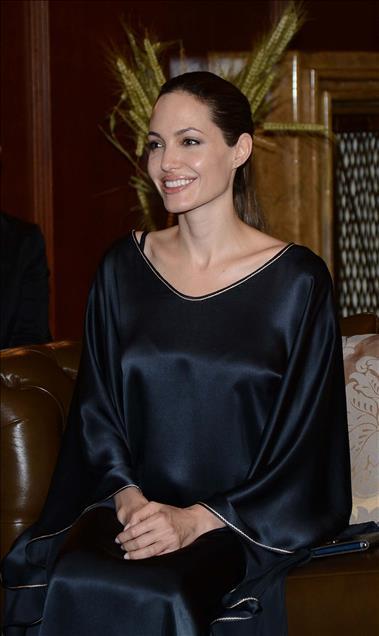
Angelina Jolie (Anadolu Ajansı)
Jolie is a mother of six children, having become a parent both through adoption and biological means. Her adopted children are Maddox, Pax, and Zahara; her biological children are Shiloh and twins Knox and Vivienne. This multilayered family structure, encompassing diverse geographic and cultural backgrounds, reflects her international lifestyle and humanitarian engagement.
In her personal life, Jolie has adopted an approach aimed at balancing public visibility with private boundaries. Over time, she has preferred to keep disclosures about her private life limited; information made public has largely been shaped by official statements and verified sources.
Angelina Jolie Voight was born on June 4, 1975, in Los Angeles, California. Her father is Academy Award-winning actor Jon Voight; her mother is actress and producer Marcheline Bertrand. Raised in a family deeply immersed in the arts, Jolie developed an interest in cinema and performing from an early age. Her childhood and teenage years were shaped by her family’s professional environment, which significantly influenced her decision to pursue acting. Her mother’s artistic background and her father’s acting career provided her with early exposure to performance arts and the foundation to develop her skills in this field.
Angelina Jolie began her education in Los Angeles, where her interest in acting became evident during high school. Being in an environment that supported artistic education strengthened her inclination toward acting. At age eleven, she began training at the Lee Strasberg Theatre Institute, where she gained direct experience with theater and performance arts, participating in various stage productions. She later studied cinema at New York University and continued her work with the Met Theatre Group in Los Angeles. During this period, her modeling work and appearances in music videos supplemented her on-camera experience and played a supportive role in her transition to a film career.
Angelina Jolie’s professional acting career began in the early 1990s with low-budget independent films. Her early cinematic experiences in independent productions allowed her to portray diverse characters and expand her range as an actress. In the mid-1990s, her performances in films drew critical attention, particularly her roles in television productions. Her portrayals in the biographical TV films George Wallace and Gia earned her significant award nominations and wins, marking a turning point in her career. This early phase was decisive in establishing Jolie as an actress known for dramatic roles and strong female characters.
One of the most significant breakthroughs in Angelina Jolie’s film career was her performance in the 1999 film Girl, Interrupted. Her portrayal in this film earned her numerous prestigious awards, including the Academy Award, and established her international recognition. During the same period, her appearances in high-profile films such as The Bone Collector demonstrated that Jolie was not only a critic-acclaimed actress but also a powerful presence in mainstream cinema.

Angelina Jolie (Anadolu Ajansı)
In the early 2000s, the Lara Croft: Tomb Raider series marked a defining commercial milestone in Jolie’s career. Through these films, she became a globally recognized star and was regarded as one of the pioneers of female action leads. Subsequent box-office successes such as Mr. & Mrs. Smith, Wanted, and Salt placed her among Hollywood’s highest-earning actors. Although she focused heavily on action and thriller genres during this period, she did not abandon dramatic roles.
By the 2010s, Jolie shifted her career toward more selective projects. Her performance in Changeling earned her numerous major award nominations, including the Academy Award and BAFTA, reaffirming her standing as a dramatic actress. During the same period, her role in Maleficent allowed her to reach a broad audience in fantasy cinema and sustain her career with genre versatility. This phase emerged as a crucial stage in establishing Jolie not only as a star actress but as an artist with a long-standing and multifaceted cinematic legacy.
From the 2010s onward, Angelina Jolie expanded her career beyond acting to assume an active role in directing and producing. This shift reflects her view of cinema not merely as a storytelling medium but as a means to illuminate historical, social, and humanitarian issues. Her directorial works primarily focus on themes of war, trauma, human rights violations, and individual resistance.
Jolie’s first feature-length directorial effort was In the Land of Blood and Honey, which centered on the destructive impact of war on individuals. In her follow-up film, Unbroken, she adapted the true story of a World War II survivor, merging historical narrative with the theme of personal resilience. Her dual role as director and screenwriter in By the Sea demonstrated her inclination to be actively involved in all stages of the creative process.
Another prominent film in Jolie’s directing career is First They Killed My Father, which focused on historical trauma through the perspective of a child and received international attention. In addition, as a producer, she has taken on responsibilities in the financial and administrative dimensions of various film productions.
Since the early 2000s, Angelina Jolie has played an active role in international humanitarian efforts and developed a formal relationship with the United Nations High Commissioner for Refugees (UNHCR). Following her appointment as a UNHCR Goodwill Ambassador in 2001, she undertook numerous field visits focused on refugee issues, forced displacement, armed conflict, and humanitarian crises. In this capacity, she visited refugee camps and crisis zones across Africa, Asia, the Middle East, and Europe, sharing her observations with the international public and policymakers.

Angelina Jolie (Anadolu Ajansı)
Jolie’s activities within UNHCR gradually acquired a more institutional and diplomatic character. In 2012, she was appointed a UNHCR Special Envoy, focusing particularly on severe humanitarian crises that cause mass displacement. In this role, she engaged directly with government representatives to advocate for refugee rights, international protection, and humanitarian responsibility. Issues such as access to humanitarian aid, civilian protection, and the enforcement of international law came to the forefront of her work.
Angelina Jolie did not limit her humanitarian efforts to field visits; she also expressed her views on global crises through international conferences, United Nations events, and public statements. Central to her work have been the effects of armed conflict on civilians, living conditions in refugee camps, and the obstruction of humanitarian assistance. These activities have established her not only as a cinematic figure but also as a visible actor in international humanitarian diplomacy.
Angelina Jolie’s career has been formally and academically recognized by various institutions not only for her cinematic performances but also for her international humanitarian work and public role. Her portrayals in biographical and dramatic films have been honored by leading international film award bodies, resulting in numerous nominations and wins. In addition, her long-standing humanitarian efforts under the United Nations, particularly her contributions to refugee rights and forced migration, have been acknowledged with honors by international organizations, civil society groups, and governments.
Anadolu Ajansı. “ABD’li oyuncu Angelina Jolie’den ‘Gazze, toplu mezara dönüştü’ paylaşımı.” Anadolu Ajansı, April 20, 2025. Accessed February 2, 2026. https://www.aa.com.tr/tr/dunya/abdli-oyuncu-angelina-jolieden-gazze-toplu-mezara-donustu-paylasimi/3543718
Anadolu Ajansı. “Angelina Jolie Ankara’da.” Anadolu Ajansı, September 14, 2012. Accessed February 2, 2026. https://www.aa.com.tr/tr/pg/foto-galeri/angelina-jolie-ankarada/0/130459
Beyazperde.com. "Angelina Jolie Biyografi." Beyazperde.com. Accessed February 2, 2026. https://www.beyazperde.com/sanatcilar/sanatci-27613/biyografi/
Beyazperde.com. "Angelina Jolie Filmografi." Beyazperde.com. Accessed February 2, 2026. https://www.beyazperde.com/sanatcilar/sanatci-27613/filmografi/
Biography.com Editors. “Angelina Jolie.” *Biography.com*, A&E Networks, Accessed February 2, 2026. https://www.biography.com/actors/angelina-jolie#quotes
IMDb. "Angelina Jolie – Biography." IMDb. Accessed February 2, 2026. https://www.imdb.com/name/nm0001401/bio/?ref_=nm_ov_bio_sm
Ravaglia, Caterina. “Angelina Jolie.” *Academia.edu*, 3 pp. (2009). Accessed February 2, 2026. https://www.academia.edu/17058554/Angelina_Jolie?sm=b&rhid=37638290381
Sinemalar.com. “Angelina Jolie.” *Sinemalar.com*. Accessed February 2, 2026. https://www.sinemalar.com/sanatci/26912/angelina-jolie

Doğum tarihi | 1975-06-04 | ||||||||
|---|---|---|---|---|---|---|---|---|---|
Babası | Jon Voight | ||||||||
Annesi | Marcheline Bertrand | ||||||||
Çocuk | Knox Vivienne Pax Shiloh Zahara Maddox | ||||||||
Profession(s) | Human Rights Activist Screenwriter Producer Director Actor | ||||||||
Place of Birth | Los Angeles, California, United States | ||||||||
Nationality | American | ||||||||
Name(s) | Angelina Jolie Voight | ||||||||
Notable Film Roles | Fox (Wanted) Jane Smith (Mr. & Mrs. Smith) Maleficent Lara Croft (Tomb Raider) | ||||||||
Personal Life
Early Life and Family
Education and Encounter with Art
Beginning of Acting Career
Turning Points in Cinema Career
Acting
Directing and Producing Activities
Directing
Production (Producer / Executive Producer)
Screenwriting
Music
United Nations and Humanitarian Activities
Awards, Honors, and Institutional Recognition
Selected Awards and Official Honors