


This article was automatically translated from the original Turkish version.
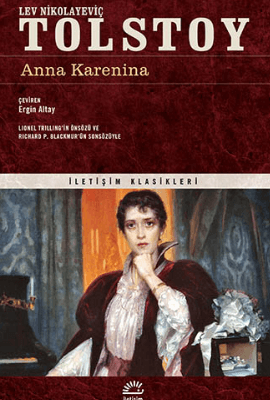
Anna Karenina
Author(s) | Lev Nikolayevich Tolstoy | ||||||||
|---|---|---|---|---|---|---|---|---|---|
Publisher(s) | İletişim Yayınları | ||||||||
Type(s) | Novel | ||||||||
Number of Pages | 1035 pages | ||||||||
Anna Karenina is a novel written by Russian author Lev Nikolayevich Tolstoy and first published in 1877. The work is regarded as one of the classics of world literature for its profound exploration of 19th-century Russian aristocratic society, the inner conflicts of individuals, and the impact of social norms on personal life.
The novel revolves around the lives of two main characters: Anna Karenina and Konstantin Dmitrievich Levin. Anna is married to Aleksey Aleksandrovich Karenin, a high-ranking government official. However, her forbidden love affair with the young cavalry officer Count Vronsky leads her to social ostracism and psychological collapse. Anna’s internal dilemmas and the pressures of societal expectations define the tragic dimension of the novel. Parallel to this, Levin’s story unfolds around themes of marriage, family life, landownership, and existential questions about human existence. The two narrative strands reveal the interaction between individual quests and social structures.
The major themes explored in the novel include:
Anna Karenina is a novel with a classical narrative structure. Written from the perspective of a third-person singular narrator, it employs techniques such as interior monologue and stream of consciousness. The characters’ inner worlds and psychological analyses are rendered in great detail, and the narrative unfolds within a multi-layered structure. Urban and rural life are contrasted through rich descriptions, while social, political, and cultural contexts are powerfully woven into the background.
Tolstoy, Lev Nikolaevich. Anna Karenina. Trans. Ergin Altay. Istanbul: İletişim Yayınları, 2023.

Anna Karenina
Author(s) | Lev Nikolayevich Tolstoy | ||||||||
|---|---|---|---|---|---|---|---|---|---|
Publisher(s) | İletişim Yayınları | ||||||||
Type(s) | Novel | ||||||||
Number of Pages | 1035 pages | ||||||||
No Discussion Added Yet
Start discussion for "Anna Karenina (Book)" article
Plot
Themes
Characters
Structure and Narrative