


This article was automatically translated from the original Turkish version.
+2 More
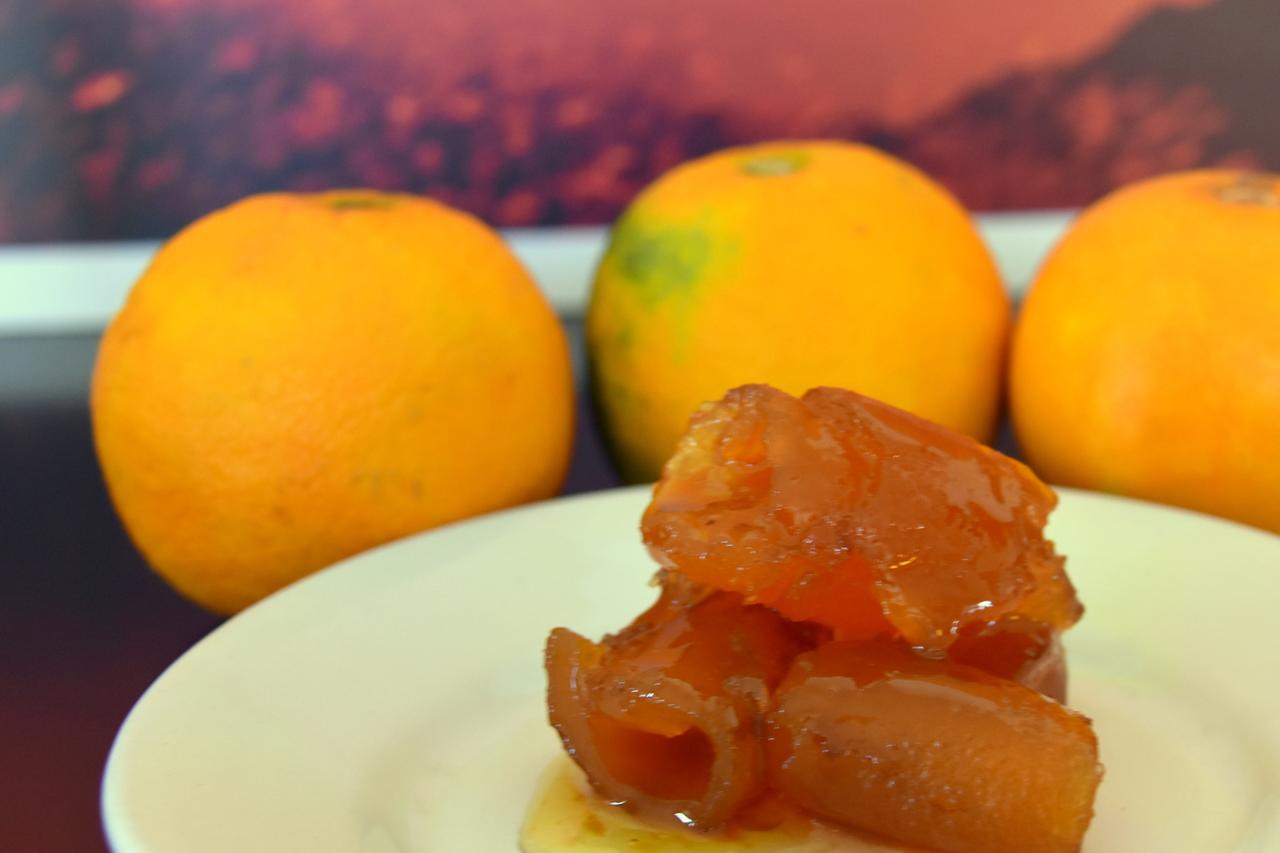
Antalya Citrus Peel Jam is a fruit conserve produced exclusively from the peels of native citrus fruits grown in the province of Antalya, using traditional methods. It is distinguished by its unique bitterness and high total soluble solids content (67–69 Brix).

Antalya Citrus Peel Jam (Antalya Provincial Directorate of Culture and Tourism)
Antalya Citrus Peel Jam is a traditional fruit conserve made from the peels of citrus fruits, specific to the province of Antalya in Türkiye’s Mediterranean Region. Production occurs exclusively within the administrative boundaries of Antalya, and due to its established link with this geographical area, it was officially registered under the geographical indication system on 26 May 2021. The application for geographical indication was submitted on 7 December 2018 and registered under application number C2018/232. The registering institution is the Antalya Chamber of Commerce and Industry.
The designation “Antalya Citrus Peel Jam” and the geographical indication emblem must be visibly displayed on the product’s packaging or directly on the product itself. If this is not feasible, the designation and emblem must be clearly exhibited within the production facility. Production must occur exclusively within the geographical boundaries of Antalya and strictly in accordance with the specified methods. All stages of production, processing, and other operations must be carried out within these geographical limits.
The raw material for Antalya Citrus Peel Jam is exclusively the peel of native citrus varieties cultivated in Antalya. The fruits are harvested between November and April. The peel is dark orange in color and textured; the average fruit weight ranges from 140 to 170 grams. The citrus tree exhibits tolerance to high pH and calcareous soil conditions.
The product’s distinguishing chemical characteristic is its total soluble solids content of 67–69 Brix. Additionally, the characteristic bitterness typical of citrus fruits is clearly perceptible to the senses. This bitterness contributes to the desired aromatic profile of the product.
In production, citrus peels are prepared by arranging them in a pattern resembling cotton thread and forming them into rolls. The manufacturing process requires traditional knowledge and craftsmanship. As a result, the product possesses a geographical indication link due to its long-standing production history and accumulated traditional expertise in Antalya.
Citrus fruits are washed and lightly grated on the surface. After removing the stem and blossom ends, the peels are sliced into 8 to 10 pieces and peeled. The fibrous inner layer is removed. Each peel piece is tightly rolled and threaded sequentially onto cotton thread. During threading, care is taken to ensure no gaps remain between the peel pieces to prevent deformation during cooking. The ends of the threads are knotted to secure the rolls.
The threaded peels are blanched in boiling water for 10 to 30 minutes, depending on the fruit’s firmness and the harvest period. They are then drained and immersed in cold water. The peels are left at ambient temperature for approximately 2 to 4 days, during which the water is changed 2 to 3 times daily. The duration and temperature of soaking and blanching may be adjusted according to the firmness of the citrus fruits and seasonal conditions. A small amount of salt or sodium carbonate may be added to the blanching water to reduce bitterness; however, the characteristic mild bitterness of citrus fruits is preserved to a defined degree.
To prepare the syrup, sugar and water are boiled together. Once the mixture reaches boiling point, the threaded citrus peels are added. Cooking continues at low heat with intermittent stirring to preserve the structure of the peels. The total soluble solids content of the jam is measured using a refractometer to ensure it reaches the range of 67–69 Brix. Lemon juice or citric acid is added to prevent sugar crystallization. Cooking is carried out at approximately 85 °C for about 30 minutes.
After cooking is complete, the threads are removed and the citrus peels are placed into dry glass jars. Syrup is poured over them and the jars are sealed. Care is taken to ensure no water enters the jars and that the lids remain dry. The product must be stored in a cool, dry environment away from direct sunlight. The shelf life of unopened jars is two years.
Monitoring of Antalya Citrus Peel Jam is conducted under the coordination of the Antalya Chamber of Commerce and Industry. The monitoring body consists of representatives from the Antalya Chamber of Commerce and Industry, the Antalya Provincial Directorate of Agriculture and Forestry, the Western Mediterranean Agricultural Research Institute, and the Antalya Branch of the Chamber of Food Engineers. At least three experts with relevant technical expertise must be part of this body.
Inspections are carried out at least once annually, but may also be conducted at any time upon request or complaint. Compliance inspections are performed based on specific technical criteria.
These criteria are as follows:
During the inspection process, support may be obtained from expert individuals or legal entities within public institutions or private organizations, or such services may be procured externally. The institution holding the registration rights is authorized to take legal action to protect the product’s rights when necessary.

No Discussion Added Yet
Start discussion for "Antalya Orange Peel Jam" article
Geographical Indication and Use
Definition and Distinguishing Characteristics
Production Process
Ingredients
Preparation and Cooking Process
Monitoring and Control