This article was automatically translated from the original Turkish version.
Type of Geographical İndication | Origin Name | ||||||||
|---|---|---|---|---|---|---|---|---|---|
Registration Number | 376 | ||||||||
Registration Date | 14.08.2018 | ||||||||
Product / Product Group(s) | Processed and unprocessed fruits vegetables and mushrooms | ||||||||
Province(s) | Gaziantep | ||||||||
Applicant/Registrant(s) | Gaziantep Chamber of Commerce | ||||||||
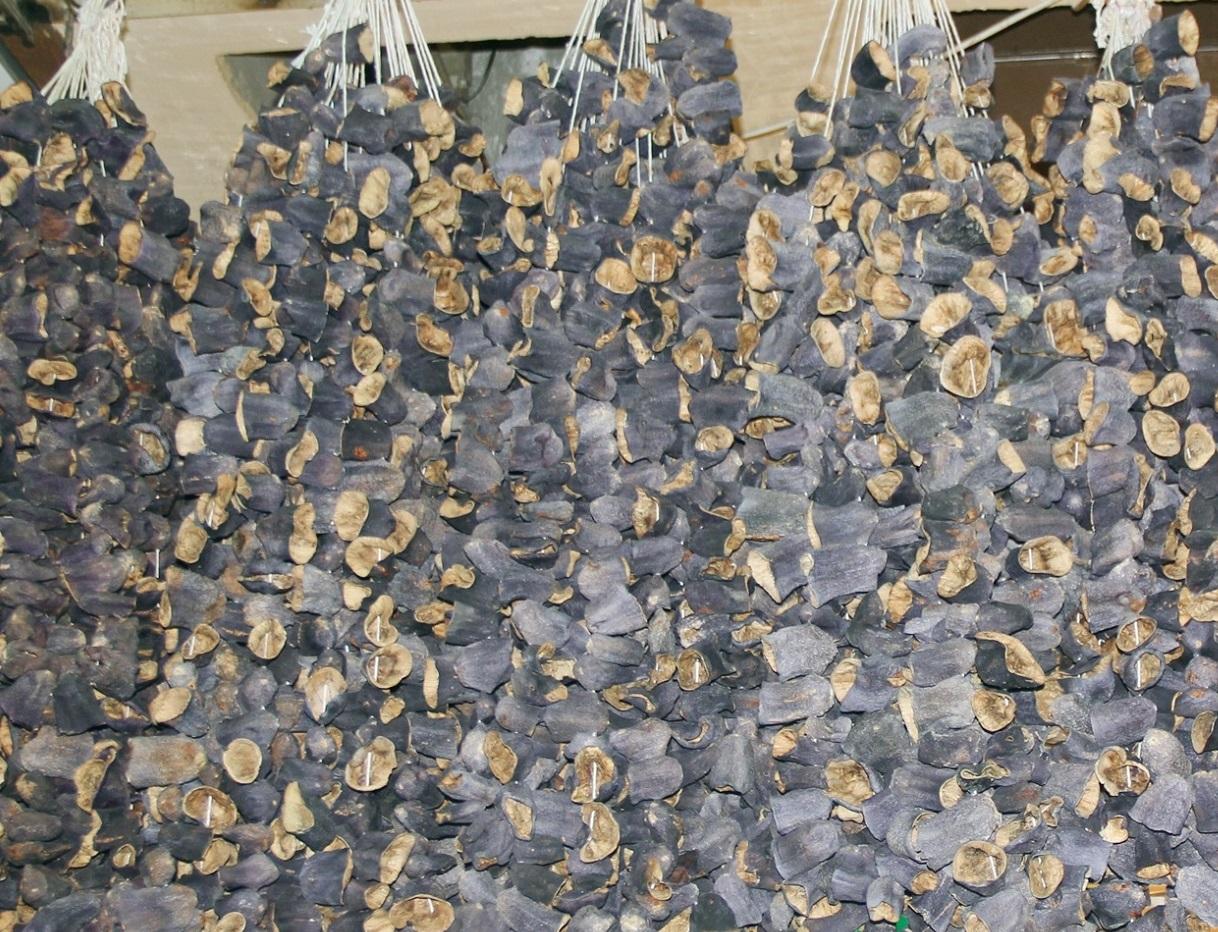
Antep dried eggplant (Gaziantep kuru patlıcanı) is an original example of the region’s tradition of dried vegetables, a deeply rooted practice in Gaziantep cuisine. It was officially registered on 14 August 2018 by the Gaziantep Chamber of Commerce and is protected under the Industrial Property Law No. 6769 as a geographical indication. The product is produced exclusively within a defined geographical area comprising the districts of Oğuzeli, Nizip, Karkamış and Araban in Gaziantep province.
Gaziantep cuisine is regarded as one of the richest regional cuisines in Turkish culinary tradition. Drying is one of the preservation techniques passed down through generations in this culinary heritage. Antep dried eggplant is a vegetable long known and consumed, particularly for use in dolma preparations. The term “balcan dolması” mentioned in the 18th-century culinary manuscript “Yemek Risalesi” by Ali Eşref Dede provides historical documentation of this product. 【1】
Gaziantep dried eggplant is produced using a natural drying method. The region’s climatic conditions, particularly lower temperatures, extend the drying process compared to other areas and result in a softer texture. These eggplants:
These physical and sensory characteristics distinguish the product from dried eggplants produced in other regions.
The harvesting period is during August and September. The eggplants are washed, halved, and hollowed out in preparation for drying. They are strung in groups of fifty on ropes and dried in shaded, well-ventilated elevated areas. Direct exposure to sunlight is avoided to prevent burning and the formation of black spots. The drying period varies between 3 and 7 days depending on weather conditions.
Compliance with the geographical indication criteria is monitored by an expert inspection board established under the coordination of the Gaziantep Chamber of Commerce. During the inspection process:
Inspections are carried out at least once annually; additional inspections may be conducted as needed or upon complaint. The registering institution is responsible for managing legal proceedings.
Turk Patent and Trademark Office. "Antep Kuruluk Patlıcanı (Gaziantep Kuru Patlıcanı) Tescil Belgesi." Coğrafi İşaretler Portalı. Accessed October 21, 2025. https://ci.turkpatent.gov.tr/Files/GeographicalSigns/55b04f65-e0f3-4984-8f1f-39e4a105457d.pdf.
Turk Patent and Trademark Office. "Antep Kuruluk Patlıcanı (Gaziantep Kuru Patlıcanı)." *Geographical Indications Portal.* Accessed October 21, 2025. https://ci.turkpatent.gov.tr/cografi-isaretler/detay/38270.
[1]
Türk Patent ve Marka Kurumu, "Antep Kuruluk Patlıcanı (Gaziantep Kuru Patlıcanı) Tescil Belgesi," Coğrafi İşaretler Portalı, syf. 2, https://ci.turkpatent.gov.tr/Files/GeographicalSigns/55b04f65-e0f3-4984-8f1f-39e4a105457d.pdf.

Type of Geographical İndication | Origin Name | ||||||||
|---|---|---|---|---|---|---|---|---|---|
Registration Number | 376 | ||||||||
Registration Date | 14.08.2018 | ||||||||
Product / Product Group(s) | Processed and unprocessed fruits vegetables and mushrooms | ||||||||
Province(s) | Gaziantep | ||||||||
Applicant/Registrant(s) | Gaziantep Chamber of Commerce | ||||||||
No Discussion Added Yet
Start discussion for "Antep Dried Eggplant (Gaziantep Dried Eggplant)" article
Historical Background
Product Characteristics
Production Process
Monitoring and Protection