This article was automatically translated from the original Turkish version.
+2 More
Registration Number | 1013 | ||||||||
|---|---|---|---|---|---|---|---|---|---|
Registration Date | 26.01.2022 | ||||||||
Application Number | C2020/253 | ||||||||
Application Date | 11.09.2020 | ||||||||
Name of the Geographical Indication | Arapgir Manusa Dokuması | ||||||||
Product / Product Group(s) | Weaving / Weavings | ||||||||
Type of Geographical Indication | Mahreç Mark | ||||||||
Applicant/Registrant(s) | Arapgir Municipality | ||||||||
Address of the Registrant | Köseoğlu Mah. Hükümet Cad. No:7 Arapgir MALATYA | ||||||||
Geographical Boundary | Arapgir District Malatya Province | ||||||||
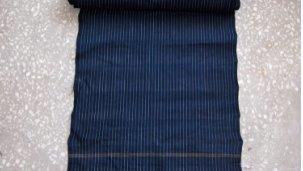
Arapgir Manusa Weaving is a shuttle-woven handloom textile produced in the Arapgir district of Malatya, using wool and cotton yarns woven on jacquard looms with patterned and embroidered motifs. For the patterns, 20-count yarn is preferred, while 40-count yarn is used for the warp; the width and thickness of the fabric vary depending on the final product. This weaving is widely used in the production of pillows, quilt covers, shirts, trousers and other items, and is manufactured in various colors, primarily navy blue and red, featuring motifs such as kemha, arap dudağı, and kuşgözü.
Both wool and cotton yarns are used in the production of this weaving. Specifically, 20-count yarn is preferred for patterns and 40-count yarn for the warp, whether wool or cotton. The yarn counts determine both the visual richness and durability of the fabric. The width and thickness measurements of the woven textiles are not fixed but vary according to the intended final product.
Arapgir Manusa Weaving is a versatile textile type suitable for the production of diverse items. Major products made from this weaving include pillows, quilt covers, sheets, table sets, patterned shirts, pajamas, headscarves, trousers, belts, and various local garments. Fabrics known as çiçekli kumuş are also among its applications. The color palette is extensive; while navy blue and red are the most preferred, production also occurs in orange, green, blue, brown, and black tones.
One of the most distinctive features of this weaving is its rich repertoire of patterns. The motifs used in Arapgir Manusa Weaving include: kemha, arap dudağı, red floral, navy floral, simsimi, small checkered, yılan eğrisi, sandıklı, kuşgözü, badem, badem dal çiçek, muş çiçek, altıparmak, and beş parmak. These patterns reflect both the aesthetic value and cultural identity of the textile.
The production of Arapgir Manusa Weaving employs region-specific kuyu looms. The term “kuyu” derives from the production method in which the weaver sits in a sunken area. These looms measure 250 cm in length and 160 cm in width. The kuyu section is constructed approximately 50–60 cm deep and 70–80 cm wide to allow the weaver comfortable working conditions.
The main components of the loom include: the main frame, upper and lower mabers, cross rods, kuş, gücü (kücü) and frame, tefe (tüfe) comb, legs, mitit (cımbar), and kumaş maberi (selmin). Other tools and equipment used in production include shuttles, spindles, winders, gücü and comb picks, warps, warp pullers, and hand pullers.
Arapgir Manusa Weaving is produced on jacquard handlooms. A defining characteristic of these looms is that the desired pattern is determined by perforated cards, which are wound onto a cylinder. The presence of a warp-separating box allows each individual warp thread to be controlled separately during weaving. The needles carrying the gücü threads remain stationary when they align with the perforations; those that do not align slide and drop. Through a pedal system, selected gücü threads are pulled downward, enabling the weaving of complex patterns. In production, besides basic weave types such as bezyağı, dimi, saten, and krep, the lanse weaving technique is also applied, in which patterns are woven into the fabric using special yarns.
The tradition of Arapgir Manusa Weaving extends back to the 19th century and holds a significant place in the weaving culture of Arapgir district. The specialized craftsmanship required by the geographical production method and its cultural continuity have established a unique association between the product and the Arapgir district. For this reason, all stages of production of Arapgir Manusa Weaving must be carried out within the boundaries of Arapgir district, Malatya province.
The production of Arapgir Manusa Weaving is monitored according to established procedures and standards. Inspections are conducted at least once annually under the coordination of Arapgir Municipality, by a three-member monitoring body composed of experts from the Arapgir Municipality Directorate of Culture and Social Affairs, the Arapgir Tourism Development Cooperative, and the Arapgir District Public Education Directorate. Additional inspections may be carried out at any time upon request or complaint.
The inspection process covers the suitability of the yarns used, the looms and other tools, compliance with weaving techniques, and the correct use of the “Arapgir Manusa Weaving” label and official emblem. The monitoring body may receive support or procure services from public or private institutions or their qualified personnel. The registering institution is responsible for carrying out legal procedures.
Turk Patent. "Arapgir Manusa Dokuması." *Coğrafi İşaretler Portalı*. Accessed July 13, 2025. https://ci.turkpatent.gov.tr/cografi-isaretler/detay/2544.
Turk Patent. *Arapgir Manusa Dokuması Coğrafi İşaret Sicil Belgesi*. Registration No. 1013; Application No. C2020/253; Application Date: September 11, 2020; Registration Date: January 26, 2022. Istanbul: Turk Patent, 2022. Accessed July 13, 2025. https://ci.turkpatent.gov.tr/Files/GeographicalSigns/6d561bfc-22a7-4c14-9d90-29f5e4a40ff4.pdf.

Registration Number | 1013 | ||||||||
|---|---|---|---|---|---|---|---|---|---|
Registration Date | 26.01.2022 | ||||||||
Application Number | C2020/253 | ||||||||
Application Date | 11.09.2020 | ||||||||
Name of the Geographical Indication | Arapgir Manusa Dokuması | ||||||||
Product / Product Group(s) | Weaving / Weavings | ||||||||
Type of Geographical Indication | Mahreç Mark | ||||||||
Applicant/Registrant(s) | Arapgir Municipality | ||||||||
Address of the Registrant | Köseoğlu Mah. Hükümet Cad. No:7 Arapgir MALATYA | ||||||||
Geographical Boundary | Arapgir District Malatya Province | ||||||||
No Discussion Added Yet
Start discussion for "Arapgir Manusa Weave" article
Raw Materials and Yarn Characteristics
Weaving Characteristics and Product Variety
Pattern Variety
Production Method
Geographical Origin and Production Area
Monitoring and Control