


This article was automatically translated from the original Turkish version.
+2 More
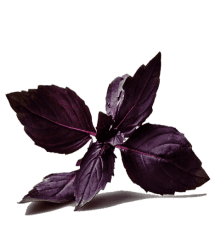
Arapgir Mor Reyhanı
Product / Product Group(s) | Spices sauces and salt for food seasonings | ||||||||
|---|---|---|---|---|---|---|---|---|---|
Applicant/Registrant(s) | Arapgir Municipality | ||||||||
Registration Date | 08.12.2017 | ||||||||
File Number | C2017/079 | ||||||||
Registration Number | 266 | ||||||||
Arapgir Purple Basil is a plant species belonging to the Lamiaceae family, cultivated within the boundaries of the Arapgir district of Malatya Province in Türkiye. The product was officially registered under the designation “Geographical Indication” by the Turkish Patent and Trademark Office on 8 December 2017. This registration was carried out under Law No. 6769 on Industrial Property.
The leaves of Arapgir Purple Basil are soft in texture. Their dimensions range from 5 to 10 cm in length and 3 to 6 cm in width, and they exhibit a deep purple color. The calyx lobes of the flowers are purple, burgundy, and dark green; the stem measures 8 to 15 cm in length and 1 to 1.5 cm in diameter. Stem colors vary between light and dark brown tones.
The plant is entirely purple and represents a local genotype. When cultivated in other regions, its purple color and aromatic properties are observed to diminish or disappear. The plant has been analyzed using GC-MS techniques for its volatile compounds, revealing the presence of 130 distinct compounds. The most abundant compounds include 1,8-cineole (4.00–19.65%), linalool (20.00–65.90%), and methylcinnamate (4.20–11.35%). Another distinctive feature of the product is the absence of estragole (estragole).
Analyses of essential oils after drying identified 170 different compounds. The most prominent among these are linalool (7.15–24.88%), methylcinnamate (5.24–33.15%), and eugenol (1.70–6.37%).

Arapgir Purple Basil (Turkish Journal of Agriculture and Forestry)
Seeds are sown in seedbeds in March. After the seedlings have developed sufficiently, they are transplanted to the field. Germination occurs within 7 to 10 days at a temperature of 20°C. Sowing is typically carried out after the last frosts. Local seeds are used in cultivation. Row spacing is managed through hoeing, while inter-row areas are tended manually. During the vegetative period, 3 to 4 harvests of leaves and shoots are possible.
This plant thrives in moist soil and should be irrigated every 4 to 8 days. Excessive irrigation may lead to root rot, while insufficient watering increases the risk of drying. Irrigation is particularly important after each harvest. Farmyard manure is recommended for fertilization, with an application rate of 2.5 to 3 tons per hectare of well-composted manure advised.
Harvested basil is dried in shade or partial shade. Special nets may be used in greenhouses. Drying under direct sunlight is not permitted. The dried product meets the quality standards specified in the Turkish Food Codex Spice Regulation.
Diseases and pests such as leaf spots and aphids are common. Mechanical control methods are generally applied; in necessary cases, fungicides of fungal origin may also be used.

Arapgir Purple Basil (Turkish Journal of Agriculture and Forestry)
The geographical boundary is limited to the Arapgir district of Malatya Province. Monitoring activities are coordinated by the Arapgir Municipality in collaboration with the Department of Food Engineering at İnönü University, the Malatya Apricot Research Institute, the Arapgir District Directorate of Agriculture, and the Arapgir Chamber of Agriculture.
Arapgir Belediyesi. (n.d.). *Arapgir Mor Reyhanı*. Accessed May 27, 2025. https://www.arapgir.bel.tr/icerikdetay.aspx?icerikid=13432
Ministry of Agriculture and Forestry. (2017). *The Success Story of Arapgir Mor Reyhanı*. Accessed May 27, 2025. http://www.turktarim.gov.tr/Haber/373/arapgir-mor-reyhaninin-basari-oykusu
Turk Patent and Trademark Office. (2017). *Arapgir Mor Reyhanı – Coğrafi İşaret Sicil Belgesi No: 266*. Accessed May 27, 2025. https://ci.turkpatent.gov.tr/cografi-isaretler/detay/38308

Arapgir Mor Reyhanı
Product / Product Group(s) | Spices sauces and salt for food seasonings | ||||||||
|---|---|---|---|---|---|---|---|---|---|
Applicant/Registrant(s) | Arapgir Municipality | ||||||||
Registration Date | 08.12.2017 | ||||||||
File Number | C2017/079 | ||||||||
Registration Number | 266 | ||||||||
No Discussion Added Yet
Start discussion for "Arapgir Mor Reyhanı" article
Product Description and Distinctive Characteristics
Production Method
Irrigation and Fertilization
Drying
Disease and Pest Control
Geographical Boundary and Monitoring