This article was automatically translated from the original Turkish version.
+2 More
Registration Number | 96 | ||||||||
|---|---|---|---|---|---|---|---|---|---|
Application Date | 24.08.2006 | ||||||||
Application Number | C2006/023 | ||||||||
Publication Date | 15.11.2007 | ||||||||
Type(s) | Origin | ||||||||
Applicant | Arapgir Municipality | ||||||||
Applicant’s Address | Hükümet Street No:2 Arapgir/Malatya | ||||||||
Product Name | Grape | ||||||||
Geographical Indication | Arapgir Old Grape | ||||||||
Usage Format | Labeling | ||||||||
Geographical Boundary | Villages under the district of Arapgir Malatya Province | ||||||||
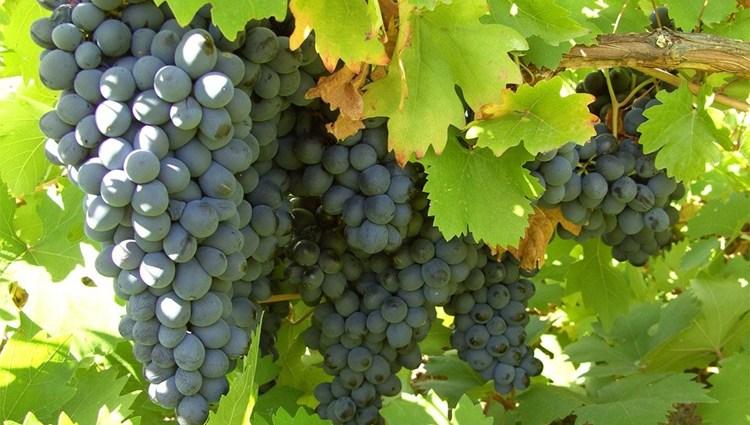
Arapgir Köhnü Üzümü is a medium-sized, black, round-grained grape variety cultivated within the boundaries of Arapgir district in Malatya Province, Türkiye. It has medium-thick skin, and its berries typically contain 2–3 conical seeds. This grape forms dense, small clusters and is valued both as a table grape and for winemaking. The continental climate of the region, characterized by high elevation and limited rainfall, significantly influences the development of its aroma, firmness, and compact structure.
The root and shoot system of the Arapgir Köhnü Üzümü vine can be examined in two main components. The plant transports water and minerals from the roots to above-ground organs through vascular tissues. A significant portion of the substances produced by photosynthesis in the leaves is stored in the roots. All above-ground organs that develop and rise, turning yellow, constitute the shoot system. This system includes the trunk, arms, branches, eyes, buds, and shoots. Shoots bear leaves, tendrils, axillary buds, and after flowering, clusters of fruit. Fertilization follows flowering, leading to the development of the ovary into fruit. Grape berries originate from individual flowers within the inflorescence and gradually attain their final size and shape over time.
Before planting seedlings, machinery is used to open trenches, and trellis posts are placed at the base of the trench, with roots covered by soil. After planting, annual soil cultivation is carried out regularly, with weed control maintained within an area of 1–2 square meters per post. A sloping training system is preferred. For the first few years after planting, posts are covered with soil to encourage the formation of shallow, lateral, and basal roots and to protect them from winter and summer temperature extremes. This process typically lasts 2–3 years. In the region, both spur and free goblet training systems are applied. Missing posts are replenished using layering techniques. During summer pruning, only excess shoots are removed when shoots reach a length of 20–30 cm. Soil cultivation is performed 1–2 times per year using hoeing or discing. Grapes ripen in September. Table grapes are harvested in multiple passes, while those intended for winemaking are harvested in a single pass.
Arapgir Köhnü Üzümü is valued both as a table grape and for winemaking. The berries are of medium size, black in color, and round in shape, with medium-thick skin. Typically, each berry contains 2–3 conical seeds. Clusters are dense and small. The juice content measures 17.1%, and the soluble solids content (Brix) is 21.2%. Analyses conducted over multiple years have confirmed that these characteristics remain consistent and that the product maintains specific quality criteria. Similar quality values are recorded annually in vineyards grown under comparable climatic conditions.
The cultivation of Arapgir Köhnü Üzümü is closely tied to the region’s climate and soil conditions, and production is confined within the boundaries of Arapgir district. Ecological factors, the plant’s genetic structure, the grower’s experience, and the methods employed are decisive in production. Viticulture has been practiced in Arapgir for many years. The Arapgir Köhnü Üzümü is locally known as “Köhnü Üzümü” and holds a significant place in agricultural production. Arapgir district lies at an elevation of 1,250–1,300 meters and experiences a continental climate with cold, snowy winters and hot, dry summers. The average annual rainfall in the vineyard areas is 321.1 mm, the average temperature is 12.6°C, the minimum temperature reaches −17.5°C, and the maximum temperature rises to 39.6°C. The average relative humidity is 55.7%. Temperature variations, humidity levels, and duration of sunlight exposure in the region are key factors influencing the grape’s aroma and quality characteristics. The Arapgir Köhnü Üzümü has thick skin, firm flesh, and dense clusters. The high concentration of pigments in the berry skin makes it suitable for both table consumption and winemaking. It is also evaluated for drying purposes. These characteristics are closely linked to the unique climatic and cultivation conditions of the region.
Monitoring is conducted at least once annually by the Arapgir District Directorate of Agriculture and Forestry, covering all stages of production and market release. These inspections examine vineyard locations, production techniques, product quality, and processing and packaging procedures. Additionally, compliance with geographical boundaries and adherence to the distinctive characteristics defined by the origin name are verified.
Turk Patent and Trademark Office. "Arapgir Köhnü Üzümü Coğrafi İşaret Tescil Belgesi." Ankara: Turk Patent and Trademark Office. Accessed July 13, 2025. https://ci.turkpatent.gov.tr/Files/GeographicalSigns/96.pdf.
Turkish Patent and Trademark Office. "Arapgir Köhnü Üzümü." Geographical Indications. Accessed July 13, 2025. https://ci.turkpatent.gov.tr/cografi-isaretler/detay/37976.

Registration Number | 96 | ||||||||
|---|---|---|---|---|---|---|---|---|---|
Application Date | 24.08.2006 | ||||||||
Application Number | C2006/023 | ||||||||
Publication Date | 15.11.2007 | ||||||||
Type(s) | Origin | ||||||||
Applicant | Arapgir Municipality | ||||||||
Applicant’s Address | Hükümet Street No:2 Arapgir/Malatya | ||||||||
Product Name | Grape | ||||||||
Geographical Indication | Arapgir Old Grape | ||||||||
Usage Format | Labeling | ||||||||
Geographical Boundary | Villages under the district of Arapgir Malatya Province | ||||||||
No Discussion Added Yet
Start discussion for "Arapgir Old Vine Grape" article
Production Method
Prominent Characteristics of the Product
Link Between the Product and Its Geographical Origin
Monitoring