

This article was automatically translated from the original Turkish version.
Developer(s) | ESA (European Space Agency) | ||||||||
|---|---|---|---|---|---|---|---|---|---|
Producer(s) | ArianeGroup | ||||||||
First Launch | 4 June 1996 | ||||||||
Last Launch | 5 July 2023 | ||||||||
Total Launches | 117 | ||||||||
Successful Launches | 112 | ||||||||
Height(s) | 53 Metres | ||||||||
Diameter | 5.4 Metres (Main Body) | ||||||||
Launch Weight | ~777 tonnes | ||||||||
Payload Capacity (GTO) | 10865 kg | ||||||||
Payload Capacity (LEO) | 20000 kg | ||||||||
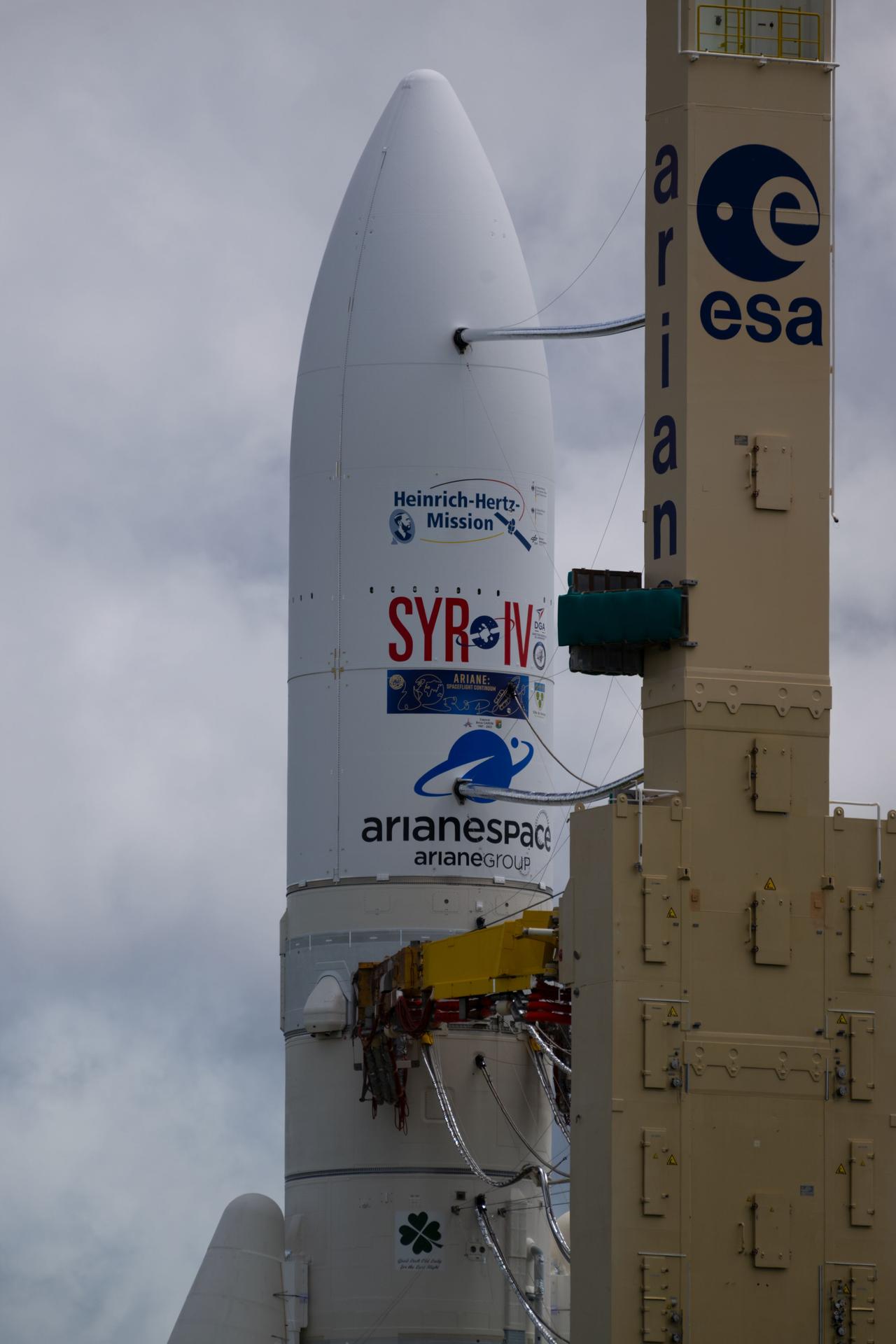
Ariane 5 is a heavy-lift launch vehicle system developed under the leadership of the European Space Agency (ESA) and operated by Arianespace. The rocket has been specifically optimized for geostationary transfer orbit (GTO) missions and has been used for satellite launches, scientific missions, and uncrewed space missions. Ariane 5 represents the fifth generation of the Ariane rocket family.
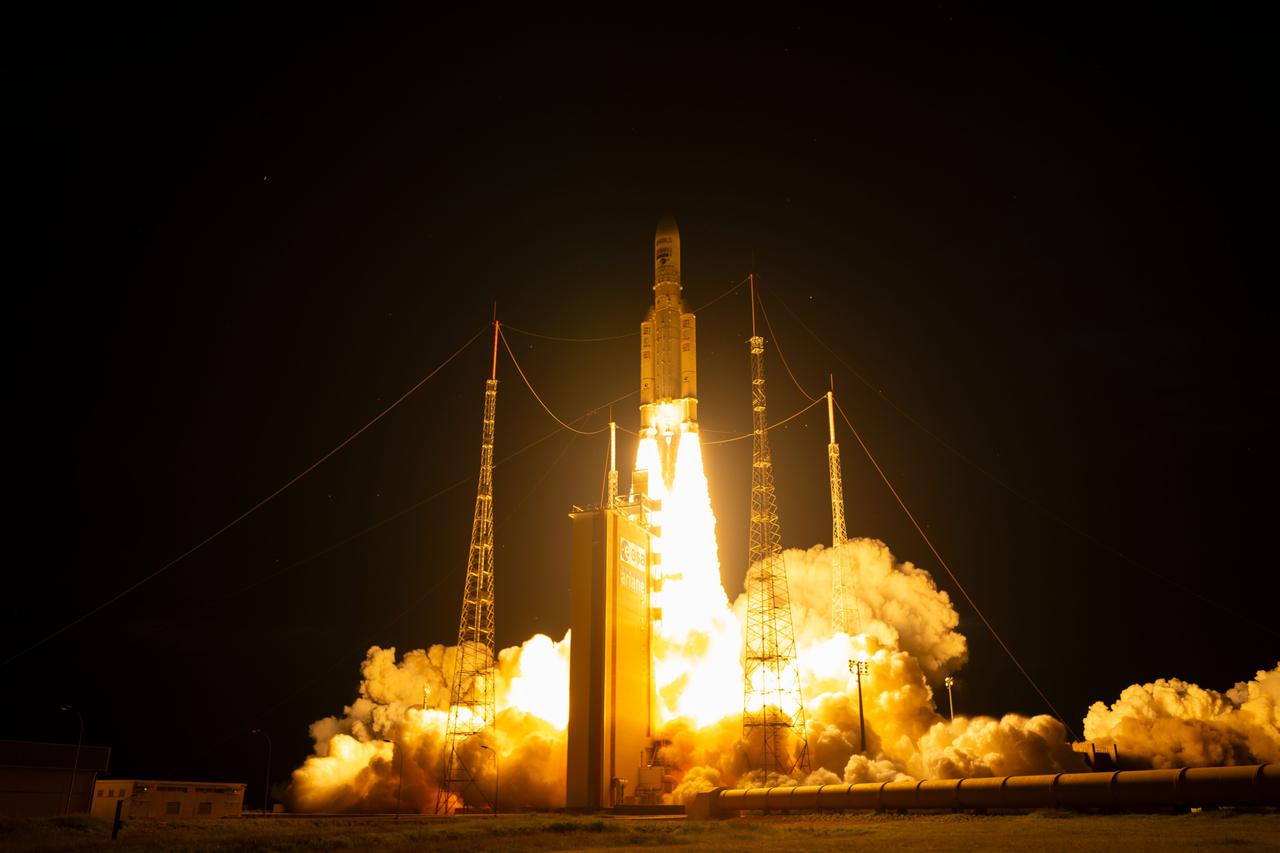
Ariane 5 during launch from the Guiana Space Centre in French Guiana. (ESA)
The development of Ariane 5 began in 1985, with the primary objective at the time being to create a platform capable of supporting ESA’s Hermes crewed spacecraft project. Although the Hermes program was later canceled, development of Ariane 5 continued, and the rocket emerged as a leading system for heavy payload delivery.
The rocket’s design was carried out by the French space agency CNES (Centre National d'Études Spatiales), while production and integration activities were distributed among various industrial companies across Europe. This approach gave the project a multinational character.
Ariane 5 has primarily operated in two main variants: Ariane 5G (Generic) and later upgraded versions, Ariane 5 ECA and ES. Below are the technical specifications for the Ariane 5 ECA model:
The Ariane 5 rocket has been primarily used for launching commercial communications satellites into GTO. It has also played significant roles in scientific missions. Notable missions include:
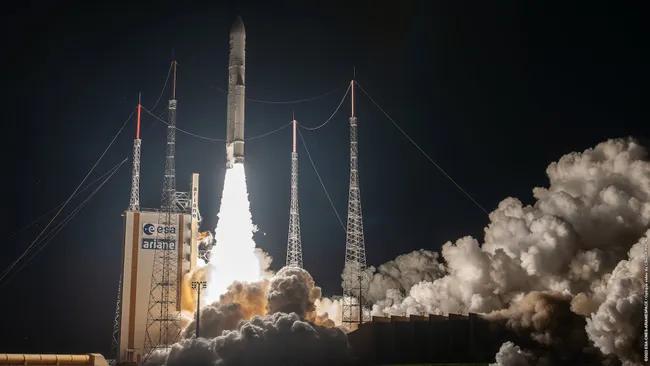
Final Launch of the Ariane 5 Rocket. (ESA)
Ariane 5’s first flight occurred on 4 June 1996 but ended in failure. Subsequent design modifications significantly improved the system’s reliability. In particular, the Ariane 5 ECA variant achieved a high success rate throughout its operational life.
The total number of flights exceeded 100, and the rocket’s flight reliability presents a statistically strong success rate compared to other launch vehicles in its class.
Integration of Ariane 5 was managed by Arianespace, while the production process was shared among various suppliers across Europe. The rocket was launched from the Guiana Space Centre (CSG) in French Guiana. This location is preferred for GTO missions due to its proximity to the equator, which provides a thrust advantage and improves fuel efficiency.
The operational lifespan of Ariane 5 was limited in light of increasing competition, rising production costs, and technological advancements. ESA and Arianespace developed the Ariane 6 system to replace Ariane 5. Ariane 6 is designed to be more cost-effective, offer flexible configurations, and accommodate a broader range of missions.
The final launch of Ariane 5 took place on 5 July 2023 and was successfully completed. Thus, Ariane 5 concluded approximately 27 years of operational service, marking the end of a significant era in the history of space transportation.
Ariane 5: 25 Years. (ESA)
Ariane 5 is a critical launch vehicle that represented Europe’s independent space launch capability. When examined in terms of its development process, technical infrastructure, application areas, and mission performance, the rocket holds historical significance in the context of space missions. With the introduction of Ariane 6, European space transportation systems are entering a new era.
European Space Agency (ESA). “Ariane 5 Roll-Out to the Launch Pad (3).” ESA Multimedia, July 2023. https://www.esa.int/ESA_Multimedia/Images/2023/07/Ariane_5_roll-out_to_the_launch_pad3. Accessed June 21, 2025.
European Space Agency (ESA). “Ariane 5 VA261 Liftoff (5).” ESA Multimedia, July 5, 2023. https://www.esa.int/ESA_Multimedia/Images/2023/07/Ariane_5_VA261_liftoff5. Accessed June 21, 2025.
European Space Agency (ESA). “Ariane 5 VA261 Liftoff (9).” ESA Multimedia, July 5, 2023. https://www.esa.int/ESA_Multimedia/Images/2023/07/Ariane_5_VA261_liftoff9. Accessed June 21, 2025.
European Space Agency (ESA). “Ariane 5.” *ESA.int*. https://www.esa.int/Enabling_Support/Space_Transportation/Launch_vehicles/Ariane_5. Accessed June 21, 2025.
Howell, Elizabeth. “Ariane 5 Rocket Launches for the Final Time, Ending an Era (Photos).” *Space.com*, July 5, 2023. https://www.space.com/ariane-5-final-launch-photos. Accessed June 21, 2025.

Developer(s) | ESA (European Space Agency) | ||||||||
|---|---|---|---|---|---|---|---|---|---|
Producer(s) | ArianeGroup | ||||||||
First Launch | 4 June 1996 | ||||||||
Last Launch | 5 July 2023 | ||||||||
Total Launches | 117 | ||||||||
Successful Launches | 112 | ||||||||
Height(s) | 53 Metres | ||||||||
Diameter | 5.4 Metres (Main Body) | ||||||||
Launch Weight | ~777 tonnes | ||||||||
Payload Capacity (GTO) | 10865 kg | ||||||||
Payload Capacity (LEO) | 20000 kg | ||||||||
Development Process and Design Philosophy
Technical Specifications
Mission Profiles and Applications
Performance and Reliability
Production and Operational Structure
Retirement and Successor System