+1 More

Birth | 15 September 1905, Istanbul | ||||||||
|---|---|---|---|---|---|---|---|---|---|
Death | 18 January 1975, Istanbul | ||||||||
Profession(s) | Archaeologist Academic | ||||||||
Specialization | Classical Archaeology | ||||||||
Founding Role | Istanbul University Chair of Classical Archaeology | ||||||||
Title(s) | Full Professor | ||||||||
Important Excavations | Side, Perge, Thrace Tumuli | ||||||||
Memberships | TTK, GEEAYK, AAI, Bulgarian Academy of Sciences | ||||||||
Number of Publications | 21 books, 152 articles, 31 reviews | ||||||||
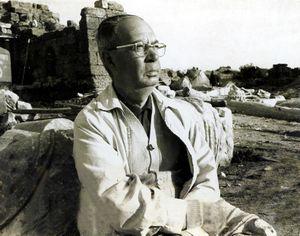
Arif Müfid Mansel was born in Istanbul on 15 September 1905. He completed his education in Istanbul and France and went to Germany in 1925 where he earned his doctorate in classical archaeology at the University of Berlin. In 1930 he returned to Türkiye and began working at the Istanbul Archaeology Museums, subsequently taking on academic positions. He established the chair of classical archaeology at Istanbul University and made significant contributions to classical archaeology through excavations at Side, Perge and Thrace. He was appointed full professor in 1958 and authored numerous academic publications and fulfilled various scientific roles. He died in Istanbul in 1975.
Arif Müfid Mansel was born in 1905 in Sultanahmet, Istanbul. His mother was Fatma Zehra Hanım, daughter of Grand Vizier Tevfik Pasha. After attending the German School in Istanbul, he graduated from the French Lycée Saint-Benoît in 1925. That same year he went to Germany and studied classical archaeology at the University of Berlin, earning his doctorate in 1929 with a thesis supervised by Ferdinand Noack. Mansel, who was fluent in Latin, Greek, French, German and English, received special training in language and music from an early age.
In 1930 Mansel returned to Türkiye and joined the staff of the Istanbul Archaeology Museums. From 1931 to 1946 he worked as an assistant to Halil Edhem Eldem and Aziz Ogan. He completed his military service in 1935 with the rank of lieutenant. In the same year, at Atatürk’s suggestion, he contributed to the book “The Main Outlines of Turkish History.” In 1936 he began excavations in the Thrace region. In 1938, artifacts from his excavations were presented to Atatürk at Dolmabahçe Palace. That same year he assumed active roles at the Turkish Historical Society and published articles in the journal Belleten.
In 1936 Mansel began teaching Ancient History at Istanbul University. In 1942 a decision was made to appoint him to teach at the Institute of Archaeology. In 1943 he launched his professorship with the thesis “Kubbeli Mezarlar” and became a full professor in 1944. In 1946 he became the founder of the Archaeology Chair. In 1951 he was elected dean by the Istanbul University Senate and was also appointed to the High Council for Immovable Historical Monuments and Sites. He served as dean again in 1954 and oversaw the establishment of the Archaeological Research Station in Antalya. He was appointed full professor in 1958.
Mansel initiated systematic excavations in Lüleburgaz, Kırklareli, Vize and Yalova. For thirty years he directed the excavations at Side and Perge on behalf of the Turkish Historical Society. His archaeological research focused on multi-storey buildings, sarcophagi, domed tombs and architectural problems. He made significant contributions to architecture and building typology through publications such as “Stockwerkbau der Griechen und Römer” and “Trakya-Kırklareli Kubbeli Mezarları.” He authored textbooks on Ancient History, the Aegean, Greece, Iran and Egypt. He published 21 books, 152 articles and 31 critical essays.
Mansel was the first to propose the appointment of a full professorship at Istanbul University’s Faculty of Letters. He is remembered for his contributions to the Archaeology Chair. He became a member of numerous academies and institutions in Türkiye and Europe and was elected second president of the International Society for Byzantine Studies. He never married; he was briefly engaged to his student Mükerrem Usman. In 1973 he presided over the Tenth International Congress of Classical Archaeology. On 18 January 1975 he died after lunch, while resting on a chaise longue for his siesta.
Hatice Tuğba Akdoğar Akbulut, "Arif Müfid Mansel (1905–1975)", Atatürk Ansiklopedisi, Accessed July 8, 2025. https://ataturkansiklopedisi.gov.tr/detay/871/Arif-M%C3%BCfid-Mansel-(1905-1975)

Birth | 15 September 1905, Istanbul | ||||||||
|---|---|---|---|---|---|---|---|---|---|
Death | 18 January 1975, Istanbul | ||||||||
Profession(s) | Archaeologist Academic | ||||||||
Specialization | Classical Archaeology | ||||||||
Founding Role | Istanbul University Chair of Classical Archaeology | ||||||||
Title(s) | Full Professor | ||||||||
Important Excavations | Side, Perge, Thrace Tumuli | ||||||||
Memberships | TTK, GEEAYK, AAI, Bulgarian Academy of Sciences | ||||||||
Number of Publications | 21 books, 152 articles, 31 reviews | ||||||||
Early Life and Education
Museum Work and Early Scientific Activities
Academic Career and Classical Archaeology Research
Excavations, Publications and Scientific Committees
Final Years and Death