


This article was automatically translated from the original Turkish version.

Politeia is a multifaceted concept in Aristotle’s political philosophy, denoting both “constitution” and “form of government.” Derived from the Ancient Greek term “polis” (city-state), politeia defines a society’s political organization, the relationship between rulers and ruled, and the structure of citizenship. For Aristotle, politeia is not merely a model of governance but the political structure of a society organized according to the principles of virtue, balance, and law.
In his work Politics, Aristotle classifies forms of government into two groups: “correct” and “deviant”:
According to Aristotle, politeia is the most practicable of all regimes. He evaluates the stability of governments by whether those in power prioritize the public good. Politeia is a constitutional order in which the people participate in governance in accordance with the common good and based on class balance.
The center of politeia is the middle class. According to Aristotle, neither the rich nor the poor alone can establish a sound political order. The rich tend toward arrogance in governance, while the poor, due to lack of education, are prone to despotism. The middle class, however, is neither accustomed to submission nor prone to arrogance; it is moderate, balanced, and free from extremes in property ownership.
In defining politeia as the ideal form of government, Aristotle proposes a model in which governance is carried out by the middle class, free from the excesses of both the wealthy and the poor. This middle class must consist of individuals who share property, are free from envy, seek stability, and are open to change.
Politeia does not require everyone to be virtuous—that would be unrealistic. However, those in power must be moderate in their property holdings, bound by law, and committed to the public good. Thus, politeia is a regime that avoids excess, is subject to oversight, grounded in law, and based on the middle class.
Aristotle positions politeia as a synthesis between democracy and oligarchy. It incorporates broad participation, as in democracy, along with elements of balance, as in oligarchy. This results in a system functioning as a mixed constitution. According to Hasan Acar’s analysis, politeia establishes a balance between the unlimited freedom of democracy and the elitism of oligarchy.
In politeia, the rule of law, not individuals, is fundamental. Governance must be conducted without regard to material interests, and rulers must remain under constant oversight. Aristotle argues that a legitimate and sustainable order can be established when the people participate both in lawmaking and in the judiciary.
According to Aristotle, a citizen (polites) is not merely someone who votes but someone who has the right to make laws, serve in judgment, and participate in public administration. However, this definition of citizenship is limited: women, slaves, and metics are not considered citizens. Politeia is grounded in an active conception of citizenship but cannot be understood independently of the social structure of its time.
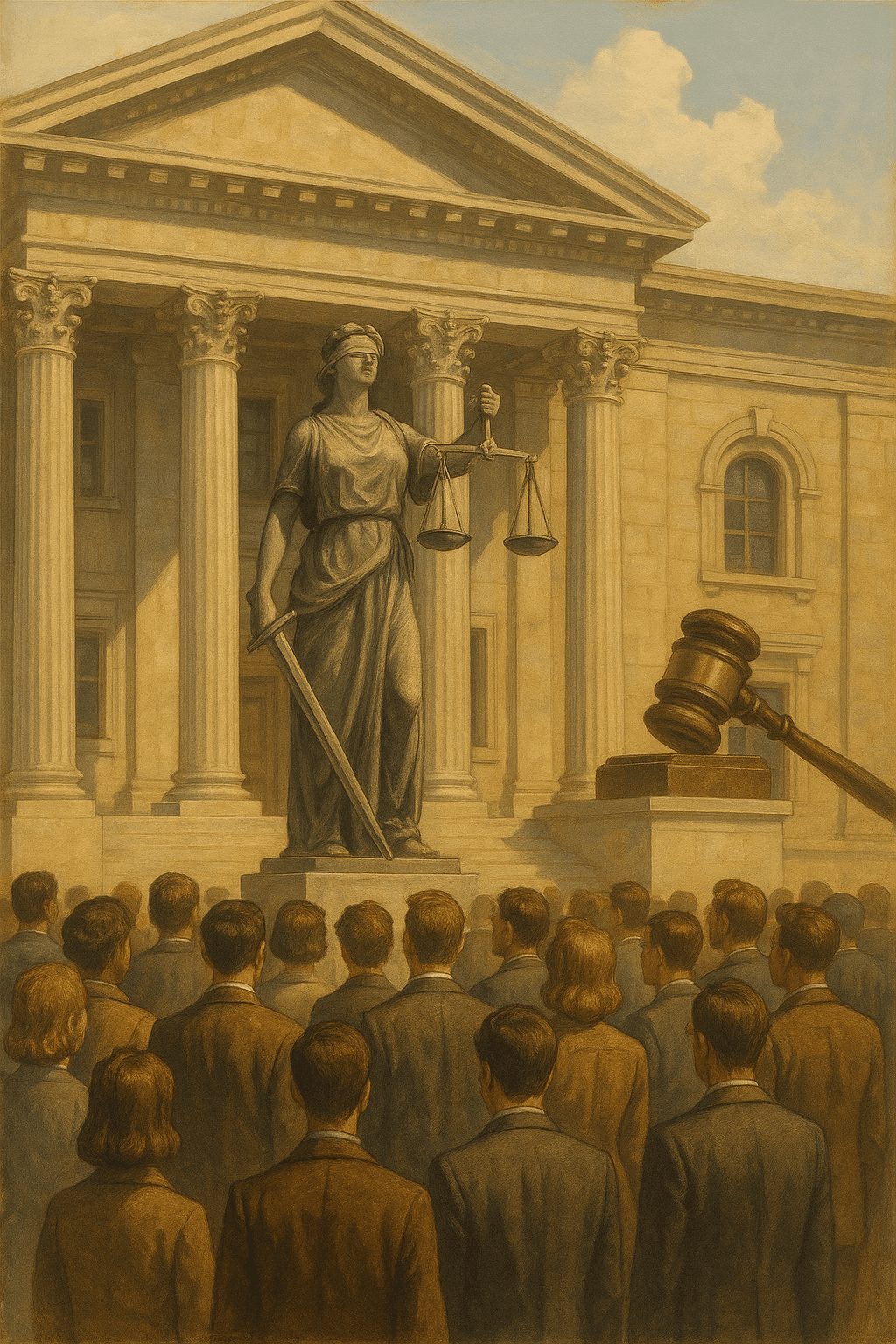
(Generated by artificial intelligence.)
For Aristotle, politeia is a kind of “ideal type”—not commonly encountered but theoretically feasible. It is not a form of government that has “never been seen anywhere,” but one that has occasionally appeared in practice. This distinguishes it from Plato’s ideal state, as politeia is grounded in reality.
Aristotle views politeia not merely as a theoretical construct but as a practically applicable constitutional model. Where laws and social classes are properly organized within existing city-states, politeia can be implemented. Veli Urhan (2016) emphasizes that, in this regard, politeia represents the constitutional arrangement most suited to the political realities of its time.
The model of politeia serves as an important reference point in contemporary political thought as:
Aristotle’s model offers a balanced alternative to both oligarchy and majoritarian despotism. Contemporary debates on “mixed constitutions,” “moderate democracy,” or “middle-class based political stability” can be understood as continuations of this model.
Accessed November 26, 2025.
Accessed November 26, 2025.
Demir, Abdullah. Aristoteles’in Siyaset Felsefesinde Polis-İnsan İlişkisi. İstanbul Üniversitesi Sosyal Bilimler Enstitüsü, 2020. Accessed July 26, 2025.
Kar, Erman. "Cumhuriyet Düşüncesinin Felsefi Temeli Olarak Aristoteles’in Politeia Öğretisi." Gaziantep Üniversitesi Sosyal Bilimler Dergisi 2023 (Özel Sayı) Accessed July 26, 2025.
Urhan, Veli. "Aristoteles’in Siyaset Felsefesinde Anayasal Yönetim." Kaygı: Uludağ Üniversitesi Fen-Edebiyat Fakültesi Felsefe Dergisi 27 (Güz 2016): 211–223. Accessed July 26, 2025.
Place and Definition of the Concept
Key Features of Politeia
a. Middle-Class Based Governance
b. Emphasis on Virtue and the Public Good
c. Mixed Regime (Mixed Constitution)
d. Rule of Law and Oversight
Politeia and Citizenship
Practical Applicability and Criticisms
Modern Interpretation and Significance