

This article was automatically translated from the original Turkish version.
+1 More
Region(s) | Ordu Region | ||||||||
|---|---|---|---|---|---|---|---|---|---|
Cooking Method(s) | Steaming (Cooking on a Medium-Hot Stone Plate) | ||||||||
Serving Method | Served Hot with Corn Bread | ||||||||
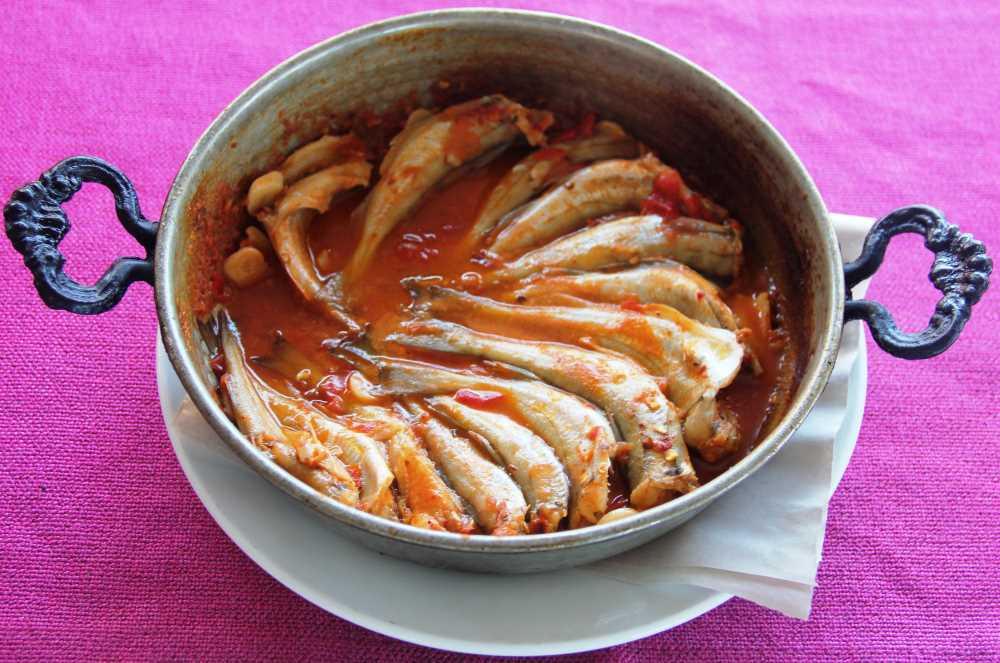
Mezgit buğulama is a traditional fish dish from Ordu cuisine, distinguished by its lightness and flavor. The mezgit fish, abundant along the Black Sea coast, is cooked using the steaming technique with vegetables and simple ingredients. Its quick preparation makes it a favored dish for everyday meals and modest feasts. Mezgit buğulama offers a simple and healthy cooking method that highlights the natural qualities of the fish.
After cleaning and washing the mezgit fish, they are salted and left to drain on a colander for some time. The fish are arranged in a wide tray, and water is added over them. The tomato is grated or mashed into a purée and added to the tray. The peppers are sliced and scattered over the fish. After cooking over medium heat for 5–10 minutes, vegetable oil and butter are added. The tray is covered, placed over low heat, and cooked for another 15–20 minutes. Once cooking is complete, it is served hot.
Mezgit buğulama is prepared in Ordu using fresh mezgit fish caught during its season. This dish, served hot during winter meals, stands out for being both nutritious and light. It is typically served alongside cornbread or pickles. In Ordu cuisine, it is one of the most commonly consumed fish dishes due to its practicality and suitability for daily meals.
Ordu Büyükşehir Belediyesi. "Ordu’nun Yeme İçme Kültürü." p. 69. Accessed July 9, 2025.
Ordu İl Kültür ve Turizm Müdürlüğü. "Ordu Mutfak Kültürü." p. 30. Accessed July 9, 2025.
T.C. Kültür ve Turizm Bakanlığı Kültür Portalı. "Mezgit Buğulama - Ordu." Date Updated: May 23, 2019. Accessed July 9, 2025.

Region(s) | Ordu Region | ||||||||
|---|---|---|---|---|---|---|---|---|---|
Cooking Method(s) | Steaming (Cooking on a Medium-Hot Stone Plate) | ||||||||
Serving Method | Served Hot with Corn Bread | ||||||||
No Discussion Added Yet
Start discussion for "Army Mezgit Fogging" article
Ingredients
Preparation and Cooking Process
Serving and Cultural Context