


This article was automatically translated from the original Turkish version.
+2 More
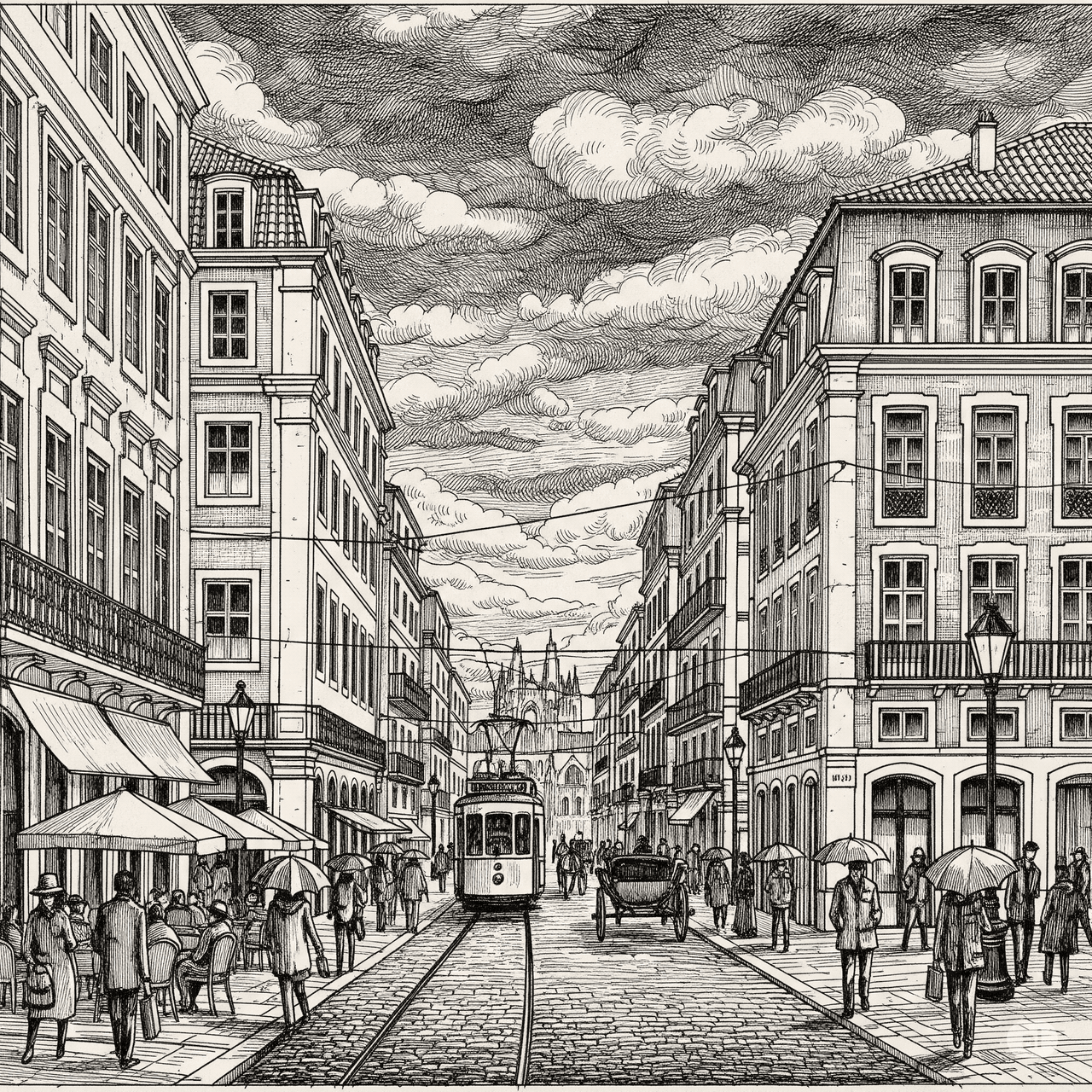
Ink Drawing Art (Generated with Artificial Intelligence)
Basic Materials | Ink, Brush, Dip Pen, Technical Pen, Paper | ||||||||
|---|---|---|---|---|---|---|---|---|---|
Common Techniques | Line Drawing (Hatching and Cross-Hatching), Ink Wash, Stippling | ||||||||
Ink Types | Ceramic Ink (Waterproof), Watercolor Inks (Mixable), Fountain Pen Inks | ||||||||
Inktober Founder | Jake Parker | ||||||||
Ink drawing is a longstanding artistic technique involving the application of a liquid containing pigment or dye—typically using a pen, brush, or other specialized tools—onto surfaces such as paper, parchment, or fabric. Recognized as one of the earliest forms of visual expression in human history, this method has been used across diverse cultures for both artistic and practical purposes. Ink drawing encompasses a wide range of applications, from the calligraphic and pictorial traditions of China and Japan to scientific illustrations in Europe, distinguished by the sharpness, contrast, and permanence of its lines. Ink can be applied directly or diluted with water, allowing artists to achieve both crisp outlines and soft tonal gradations. This versatility makes ink suitable for both graphic and pictorial expression.
Although digital drawing and design tools have become widespread today, working with analog materials such as ink remains a fundamental method of training and practice for artists. Works created with ink play a crucial role in developing hand-eye coordination, line control, and compositional understanding. At the same time, artists can achieve unique effects through the unpredictable outcomes and material interactions inherent in traditional techniques—effects that cannot be fully replicated in digital environments.
The history of ink drawing extends thousands of years. Ink used in China since the 3rd century BCE became a fundamental medium for calligraphy and painting. In Chinese and Japanese art, brush and ink were regarded not merely as aesthetic tools but as philosophical disciplines. The thickness, dilution, and interaction of ink with paper were employed to reflect the artist’s state of mind and technical mastery. In the Western world, during the Middle Ages, ink played a vital role in decorating manuscripts and producing religious texts and miniatures. Iron-gall ink was preferred during this period for its durability and deep black tone. During the Renaissance, ink drawings were intensively used by artists such as Leonardo da Vinci and Albrecht Dürer to document scientific observations and artistic sketches. In this era, ink became a crucial medium at the intersection of art and science.
In the 19th and 20th centuries, ink drawing became widespread in book illustrations, newspaper cartoons, and technical drawings. With the advancement of printing technologies, ink drawing emerged as one of the primary methods for producing reproducible graphics.
Today, ink continues to be widely used across various disciplines. Beyond traditional art forms, contemporary artists explore ink in experimental ways, producing abstract compositions, conceptual works, and mixed-media pieces.
In architecture and industrial design, ink remains a preferred medium for concept sketches. Its sharp lines and high contrast enable rapid and effective communication of ideas. Graphic novels, manga, and comic book culture represent one of the strongest contemporary domains of ink drawing. The Japanese manga industry combines traditional and digital ink techniques to produce works reaching millions of readers. Moreover, ink has become a prominent aesthetic tool in modern calligraphy and typography design. Designers and artists often combine ink with its digitized forms to create hybrid works that unite tradition and modernity. The quality of the result in ink drawing largely depends on the properties of the materials used. The triad of ink, drawing tool, and paper constitutes the foundation of this technique.
For artists, the choice of ink is important in terms of permanence, color intensity, and lightfastness. One of the most commonly used types is sumi ink. Its resistance to water and light makes it ideal for permanent works and pieces on which additional painting techniques can be applied. Sumi ink becomes irreversible once dry and ensures long-term durability. In addition, water-based alternatives such as watercolor inks are available. Their transparent quality and vibrant colors make them preferred for illustrations, calligraphy, and decorative works. Some ink types produce special effects such as gloss or metallic sheen. Lightfastness is a critical consideration, especially for archival works.
Ink can be applied to surfaces using various tools. Dip pens, with their interchangeable nibs, allow for a range of line thicknesses. This variety enables fine details and bold contours to be combined within a single composition. Brushes are primarily used for tonal gradations and covering large areas. In the “ink wash” technique, where ink is diluted with water to create shadows and atmospheric effects, brushes are indispensable. Today, technical pens, fountain pens, and ink-based markers are also frequently used by artists and designers. These modern tools are especially favored in architectural drawings, graphic design, and industrial design sketches.
The structure of paper directly affects the quality of ink works. Smooth, high-weight papers prevent ink from bleeding and allow for precise application. Thin papers may cause ink to bleed through to the reverse side, compromising the integrity of the drawing. In ink wash techniques, where water causes paper to warp, watercolor paper or more robust surfaces are preferred to minimize distortion. Acid-free, archival-quality papers are essential for ensuring the long-term preservation of artworks without deterioration.

Ink Drawing - 1 (Generated by Artificial Intelligence)
Ink is a versatile medium offering artists a broad expressive range. Core techniques in this field focus on line work, tonal rendering, and texture creation. The diversity of techniques employed directly influences both the aesthetic and narrative power of the artwork.
The most fundamental method in ink drawing is line drawing. The thickness, direction, and density of lines can be varied using different pen nibs, dip pen tips, or brush strokes. This variation imparts movement and character to the drawing. Techniques such as hatching, cross-hatching, and stippling—systematic applications of lines—are frequently used to create shading and depth. These methods are effective tools for suggesting volume, light and shadow, and spatial relationships on a two-dimensional surface.
Ink wash is a technique based on diluting ink with water to achieve varying tonal values. The grayscale created by diluting black ink produces atmospheric effects and smooth transitions within the artwork. Applied with a brush, this technique generates effects similar to watercolor; however, the permanence and contrast of ink lend it a distinctive character. It is frequently used in landscape and portrait studies to create depth, balance of light, and dramatic impact.
Many artists begin their ink application by first creating a preliminary pencil sketch. This approach reduces the margin for error in complex compositions and allows the artist to focus on line control. After tracing over the pencil sketch with ink, the underlying pencil marks are erased to produce the final drawing. This method is widely used in illustration art and detailed pattern work. The success of an ink drawing often depends on the strength and clarity of the underlying sketch.
Inktober is a global event held annually in October that encourages artists to produce regular ink drawings. Originally initiated in 2009 by illustrator Jake Parker as a personal discipline exercise, the event has grown into a major movement with the participation of thousands of artists worldwide. Its primary aim is to help artists develop drawing habits, foster creativity, and share their work with broader audiences.
Participation in Inktober is simple: artists create an ink drawing each day and share it online. Jake Parker, the event’s founder, publishes a daily list of themes each year to assist artists who may struggle with ideas. However, adherence to this list is not mandatory; the central goal is to encourage consistent creative practice rather than strict adherence to rules.
Inktober helps artists reestablish connections with traditional materials such as ink, especially in an era dominated by digital art. The event provides participants with the opportunity for regular practice, enhancing their understanding of patterns, developing muscle memory, and improving drawing skills. The continuous creative process encourages artists to experiment with different techniques and refine their personal styles. Furthermore, through global participation on social media, artists gain the chance to become part of an international community and engage in mutual exchange.
Ink drawing is not merely a technical practice but also a discipline distinguished by its aesthetic and narrative power. The strong contrast between the dense black of ink and the white surface of paper creates a dramatic effect for the viewer. The sharpness and clarity of lines reinforce a sense of directness and clarity in the artwork, while softened tonal gradations and ink wash techniques add atmospheric depth and emotional intensity.

Ink Drawing - 2 (Generated by Artificial Intelligence)
The types of lines used in ink drawing are a crucial element in shaping the spirit and narrative of the work. Fine, controlled lines evoke a sense of technical precision and scientific rigor, while spontaneous, free brushstrokes emphasize emotional expression and dynamic energy. Thus, ink is equally effective in scientific illustrations as it is in abstract or experimental artistic works.
In terms of narrative, ink drawings have historically served across cultures to convey information, document events, and tell visual stories. From medieval manuscript miniatures to East Asian calligraphy, and from modern graphic novels to illustrative art, the broad scope of its use underscores ink’s enduring significance across time and cultures.
Today, ink continues to offer artists a minimalist yet powerful means of expression. Even in an age dominated by digital techniques, ink drawings retain unique value due to their distinctive aesthetics. The directness of lines, the limited capacity for correction, and the permanence of the medium make the artist’s decision-making process visible, transforming ink artworks into authentic and intimate instruments of storytelling.
Hu, Manran. “A Study of the Development History and Stylistic Features of Chinese Ink Painting.” *Pacific International Journal* 6 (2023): 71–76. https://doi.org/10.55014/pij.v6i1.310.
Inktober. "FAQ." Accessed August 18, 2025. https://inktober.com/faq.
Koževņikova, Jeļena. “Evolution of Ink Drawing in History of Art.” *Arts and Music in Cultural Discourse. Proceedings of the International Scientific and Practical Conference* (2015): 118–125. https://doi.org/10.17770/amcd2015.1358.
Metropolitan Museum of Art. “Ink.” *The Met. Drawings and Prints – Materials and Techniques.* Accessed August 18, 2025. https://www.metmuseum.org/about-the-met/collection-areas/drawings-and-prints/materials-and-techniques/drawing/ink.
Roy, Ankita, and Delwyn Remedios. “Integrating Inktober and Simulated Art Therapy for Online Teaching and Learning ‘Basics of Illustration’.” *Grafist 24-25 Istanbul Visual Communication Design Education Events.* (2021): 402-423. https://www.researchgate.net/publication/376681765_Integrating_Inktober_and_Simulated_Art_Therapy_for_Online_Teaching_and_Learning_%27Basics_of_Illustration%27
Taschin, Andrea, Paolo Bartolini, Jordanka Tasseva, Jana Striova, Raffaella Fontana, Cristiano Riminesi, and Renato Torre. “Drawing Materials Studied by THz Spectroscopy.” arXiv, 2017. Accessed August 18, 2025. https://arxiv.org/abs/1703.01770.

Ink Drawing Art (Generated with Artificial Intelligence)
Basic Materials | Ink, Brush, Dip Pen, Technical Pen, Paper | ||||||||
|---|---|---|---|---|---|---|---|---|---|
Common Techniques | Line Drawing (Hatching and Cross-Hatching), Ink Wash, Stippling | ||||||||
Ink Types | Ceramic Ink (Waterproof), Watercolor Inks (Mixable), Fountain Pen Inks | ||||||||
Inktober Founder | Jake Parker | ||||||||
No Discussion Added Yet
Start discussion for "Art of Drawing with Ink" article
Historical Development
Contemporary Applications in Art
Types of Ink
Drawing Tools
Paper Selection
Basic Ink Drawing Techniques
Line Work (Linework)
Ink Wash
Working Over a Sketch
Inktober: A Global Ink Drawing Movement
Participation and Rules
Impact on Artists
Aesthetic and Narrative Dimensions of Ink Drawing