

This article was automatically translated from the original Turkish version.
+1 More
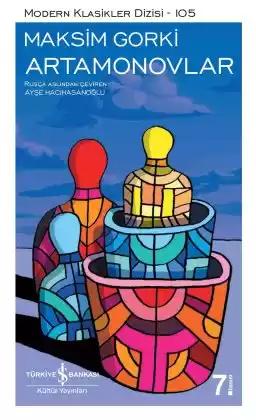
Author(s) | Maxim Gorky (Aleksey Maksimovich Peshkov) | ||||||||
|---|---|---|---|---|---|---|---|---|---|
Translator(s) | Ayşe Hacıhasanoğlu | ||||||||
Publisher(s) | İş Bankası Kültür Yayınları | ||||||||
Number of Pages | 352 | ||||||||
Year of Publication | 2017 | ||||||||
First Edition | 1925 | ||||||||
Genre | Modern Classics Novel | ||||||||
Original Title | Delo Artamonovykh | ||||||||
The Artamonovs (Original title: Delo Artamonovykh), is a novel written by Russian and Soviet writer Maxim Gorky. First published in 1925 by the "Kniga" publishing house in Berlin, the work belongs to the family saga genre. Roman uses the story of three generations of the Artamonov family spanning the period from the 1861 abolition of serfdom to the October Revolution of 1917 to explore the birth rise and fall of Russian capitalism.
The novel begins with Ilya Artamonov, a former serf who establishes a linen factory after gaining his freedom. Ilya achieves social status through his own enterprise and seeks to build a legacy for his family. The narrative follows the transformation of this factory and the family across three generations. The hardworking and authoritative values of the first generation begin to erode and morally corrupt under the weight of ownership in the second generation particularly under Pyotr. The third generation represented by the grandson Ilya completely rejects the family inheritance viewing the factory as an instrument of exploitation and joining the revolutionary movement. The novel concludes with the family’s dissolution following the 1917 Revolution.
The Artamonovs is built around the characters of three generations each representing a different facet of Russian society and a distinct historical phase:
Fırıncıoğulları, Sevra. "Maksim Gorki’nin Artamatovlar Eserinde Rusya’da Sanayileşme." *Dünya İnsan Bilimleri Dergisi* 2025.1 (2025): 93-107. Accessed October 31, 2025. https://dergipark.org.tr/en/pub/insan/issue/90292/1597918.
Gorki, Maksim. *Artamonovlar*. Trans. Ayşe Hacıhasanoğlu. Istanbul: Türkiye İş Bankası Kültür Yayınları, 2017. Accessed October 26, 2025. https://www.iskultur.com.tr/artamonovlar.aspx.
Gorki, Maksim. Artamonovlar. Trans. Ayşe Hacıhasanoğlu. İstanbul: Türkiye İş Bankası Kültür Yayınları, 2017.
Gorki, Maksim. Delo Artamonovykh. Berlin: Verlag "Kniga", 1925.
Gürsoy, Yasemin. "Maksim Gorki’nin Artamonovlar Örneğiyle Bir Tür Olarak Aile Romanı." *Iğdır Üniversitesi Sosyal Bilimler Dergisi* 20 (October 2019): 91–108. Accessed October 31, 2025. https://dergipark.org.tr/en/pub/igdirsosbilder/issue/66826/1045112.

Author(s) | Maxim Gorky (Aleksey Maksimovich Peshkov) | ||||||||
|---|---|---|---|---|---|---|---|---|---|
Translator(s) | Ayşe Hacıhasanoğlu | ||||||||
Publisher(s) | İş Bankası Kültür Yayınları | ||||||||
Number of Pages | 352 | ||||||||
Year of Publication | 2017 | ||||||||
First Edition | 1925 | ||||||||
Genre | Modern Classics Novel | ||||||||
Original Title | Delo Artamonovykh | ||||||||
Plot Summary
Characters
Themes