


Murat Çobanoğlu was born in 1940 in Koçköyü, a village in the Arpaçay district of Kars, to a farming family, and became a folk poet and folk tale storyteller. He is ethnically of the Karapapak Turks, known locally as Terekeme. His father, Aşık Festival, was one of the apprentices of Aşık Gülistan, and under his father’s influence, Murat turned to the tradition of aşıklık. He mastered music through the master-apprentice relationship. His father, Gülistan Çobanlar, was one of the narrative minstrels trained by Âşık Şenlik, one of the leading poets of the 19th century. Aşık Gülistan, who had been an apprentice of Âşık Şenlik for about two years, later became Murat’s own master. Murat began accompanying his father to weddings and initially recited the stories he had learned from him. He learned to play the saz at the age of 13 or 14. As he progressed in his career, he began composing his own verses and telling his own stories.
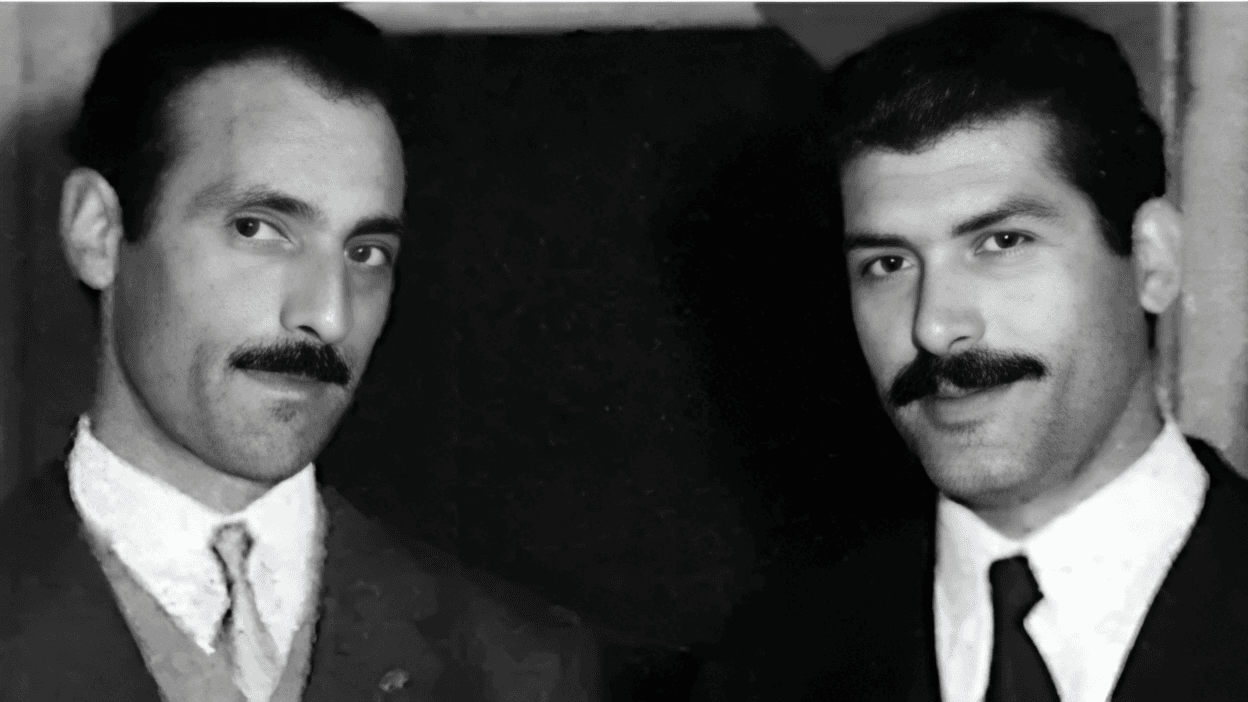
Şeref Taşlıova and Murat Çobanoğlu (right) - BBC
In the following years, Murat Çobanoğlu began regularly participating in the Konya Minstrels Festival starting in 1966. From 1967 onward, he attended this festival together with his friend Şeref Taşlıova, close and performed on stage with his friend Aşık Şeref and Aşık Reyhani, engaging in poetic duels and storytelling performances. After these appearances, Murat Çobanoğlu gained fame, and by 1970 his reputation had spread as far as Germany, where he became widely known for his ballad and storytelling piece "Kiziroğlu Mustafa Bey türküsü ve serencamı".
In 1971, Murat Çobanoğlu opened the Çobanoğlu Ozanları Kahvesi in Kars, which became a central hub for local minstrels. In 1972, he was named “Minstrel of the Year” by the Turkish Journalists Union in its “Altın Saz” competition. He won the same title a second time in the “2nd Altın Saz” competition organized by the Music-San Foundation.
Invited to perform in many countries including abroad, Çobanoğlu traveled to Germany, England, and other nations in 1987 to promote Turkish folk literature. In 1991, he joined the Sivas Folk Music Choir as an artist and left a lasting mark on the field of folk music through numerous recordings and albums. He passed away in Ankara in 2005 and was buried in Kars. Since his death, the Kars Municipality has annually organized the Murat Çobanoğlu Minstrels Festival.
Murat Çobanoğlu belonged to the school of Aşık Şenlik and was trained within this tradition. His father and master, Aşık Gülistan, had been a direct apprentice of Aşık Şenlik. Thus, Murat descended from Aşık Şenlik’s lineage, accepted his artistic principles, and continued his school.
Having grown up within the Terekeme circle that included Aşık Şenlik, he became a master of the tradition of singing ballads and telling stories. His poetry exhibits features of the Terekeme dialect. While he performed many traditional pieces, he also composed original poems and verses. His works include social critique, social satire, moral advice, nature, social themes, homeland love, taşlama, valor, and accuracy important as recurring elements.

No Discussion Added Yet
Start discussion for "Aşık Murat Çobanoğlu" article
Childhood and Early Life
Artistic Career and Contributions
Musical Philosophy