
+2 More

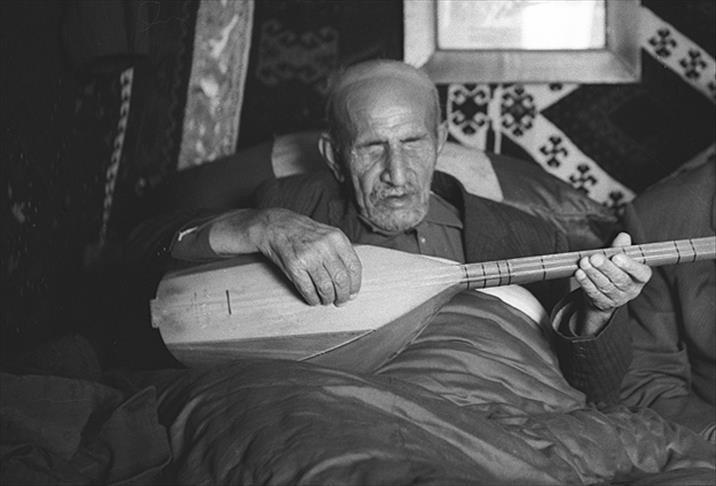
Âşık Veysel, full name Âşık Veysel Şatıroğlu, is regarded as one of the most important representatives of 20th-century Anatolian âşıklık tradition, blending traditional folk poetry with a modern sensibility and leaving enduring contributions to Turkish culture as a folk minstrel. Despite his visual impairment, the works produced by Âşık Veysel have been recognized for bridging intellectual circles and folk culture. The artist addressed themes of humanity and society through oral narration and his saz.
Aşık Veysel Şatıroğlu - Uzun İnce Bir Yoldayım (Kendi Sesinden) (TRT Dinle)
Âşık Veysel was born in 1894 in the village of Sivrialan, within the Şarkışla district of Sivas. He belonged to a family known locally as the Şatıroğulları, of the Afşar tribe. His father was Ahmet Efendi, a farmer nicknamed "Karaca", and his mother was Gülizar Hanım. His birth occurred when his mother, while going to milk sheep at the Ayıpınar meadow, went into labor on the road.【1】 His name was inspired by the family’s affection for Veysel Karanî.
The turning point in Şatıroğlu’s life occurred in 1901, when he was seven years old and contracted smallpox in Sivas. The disease caused a pustule to form in his left eye, resulting in the loss of vision in that eye. It is also noted that vision loss began in his right eye. He completely lost sight in his right eye when a stick held by his father accidentally struck it.【2】 As a result of this physical loss, his formal education was abruptly terminated before it could begin.
After losing his sight, his father sought to reconnect him with life by gifting him a saz and encouraging him to memorize poems from folk minstrels, thus laying the foundation for his musical life.

Âşık Veysel (T.C. Sivas Valiliği)
He received his first saz lessons from Molla Hüseyin and later developed his skills by learning masterpieces from Çamışıhlı Ali Ağa, a friend of his father.【3】
The Sivas Folk Poets Festival organized in 1931 by Ahmet Kutsi Tecer marked a turning point in his artistic career. Until then, Şatıroğlu had performed only traditional masterpieces; after the festival, he began composing his own poetry. Rejecting traditional elements such as "drinking wine" or "poetic duels", he introduced a didactic approach that transformed the folk poetry tradition.
Âşık Veysel’s personal life was shaped by numerous losses. In 1919, he married Esma Hanım, but lost both of their children at a young age. The marriage ended in separation. Several years later, after losing both his mother and father, Şatıroğlu married Gülizar Hanım and had seven children with her.【4】

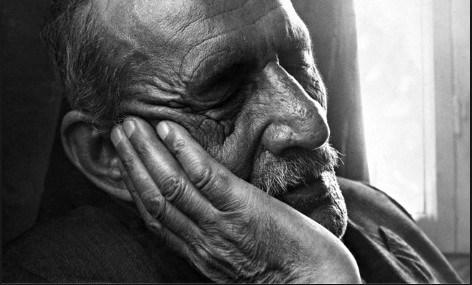
Âşık Veysel Şatıroğlu (T.C. Sivas Valiliği)
Unable to receive formal schooling, Şatıroğlu contributed to the Turkish education system through music following the establishment of the Village Institutes. At the invitation of Ahmet Kutsi Tecer, he taught saz at the Village Institutes in Arifiye, Hasanoğlan, Çifteler, Kastamonu, Yıldızeli, and Akpınar, helping students connect with folk culture.
In 1933, on the 10th anniversary of the Republic, Şatıroğlu, like other folk minstrels under the guidance of Ahmet Kutsi Tecer, composed a poem dedicated to the Republic and Atatürk. His first poem, beginning with the line "Atatürk'tür Türkiye'nin İhyası", generated significant local反响, prompting the district governor to request its transmission to Ankara. Driven by a desire to recite the poem directly to Atatürk, Âşık Veysel set out on a journey with his friend İbrahim Tutiş. However, he never met Atatürk, a circumstance that remained one of the greatest disappointments of his life.
In 1965, the Grand National Assembly of Türkiye honored him with a monthly pension in recognition of his contributions to our national language and unity.
Aşık Veysel - Kara Toprak (1969) (TRT Arşiv)
Âşık Veysel viewed his art as a means of self-improvement, transforming his suffering into creative expression. His poetry emphasizes love of nature, patriotism, unity and solidarity, hard work, mutual aid, and Sufi depth.【5】 In his poem "Kara Toprak", he describes the earth as a faithful beloved, exploring the bond between human and nature within a Sufi framework.

Âşık Veysel saz çalarken (T.C. Sivas Valiliği)
Âşık Veysel pioneered a new path in Turkish music by uniting folk culture with modern aesthetics, serving as a bridge between the public and intellectual circles.【6】 His influence extended beyond folk music, inspiring artists across diverse genres including pop, rock, and classical music. Artists such as Barış Manço, Cem Karaca, Tarkan, Fazıl Say, Selda Bağcan, Haluk Levent, and Pentagram have interpreted his works. In December 2022, a presidential decree declared the year 2023, marking the 50th anniversary of his death, as the "Year of Âşık Veysel" in Türkiye. Internationally, American virtuoso Joe Satriani dedicated a composition to him, and UNESCO proclaimed 2023 the "Year of Âşık Veysel" worldwide.
Âşık Veysel died on 21 March 1973 in his home in the village of Sivrialan due to lung cancer. His funeral, attended by thousands of admirers, took place on the hill where he was born. His former residence now serves as a museum and is commemorated annually with ceremonies on the anniversary of his death.

Sivas'ta bulunan Âşık Veysel Müzesi'ndeki heykel (T.C. Sivas Valiliği)
Aşık Veysel Şatıroğlu - Dost Dost Diye Nicesine Sarıldım (Kendi Sesinden) (TRT Dinle)
Other works include "Gel Birlik Kavline Girelim Kardeş", "Aldanma Cahilin Kuru Lafına", "Kulak Ver Sözüme Dinle Vatandaş", "Okul", "Göz Gezdirdim Dört Köşeyi Aradım", "Derdimi Dökersem Derin Dereye", and "Bizim Eller Yaylasına Yürümüş".
Aşık Veysel Vakfı. "Âşık Veysel'in Hayatı." (2025). Accessed March 16, 2026. https://asikveyselvakfi.org.tr/hayati
Dağtaşoğlu, Ahmet Emre. "Sözlü Kültür ve Âşık Veysel." *Trakya Üniversitesi Sosyal Bilimler Dergisi* 17, no. 2 (2015): 171–194. Accessed March 16, 2026. https://dergipark.org.tr/en/pub/trakyasobed/article/326060
Doğan, Faruk and Azar, Birol. “Âşık Veysel’in Şiirlerinde Nasihat.” *Journal of History School*, no. 54 (2021): 3460-3486. Accessed March 16, 2026. https://johschool.com/index.jsp?mod=tammetin&makaleadi=&makaleurl=feb0e1e3-6687-49f9-8fde-2ac50e361d4e.pdf&key=51601
Oy, Aydın. "Âşık Veysel." *TDV İslâm Ansiklopedisi*. (1991). Accessed March 16, 2026. https://islamansiklopedisi.org.tr/asik-veysel
Sivas Valiliği. "Âşık Veysel." Accessed March 16, 2026. https://www.sivas.gov.tr/asik-veysel
T.C. Kültür ve Turizm Bakanlığı. "Âşık Veysel Şatıroğlu." Accessed March 16, 2026. https://www.ktb.gov.tr/EN-117857/asik-veysel-satiroglu.html
TRT Arşiv. "Âşık Veysel (1969)." YouTube. 2018. Accessed March 16, 2026. https://www.youtube.com/watch?v=BwAjsvfRbTY
TRT Dinle. “Aşık Veysel Şatıroğlu - Dost Dost Diye Nicesine Sarıldım (Kendi Sesinden).” YouTube. 2024. Accessed March 18, 2026. https://www.youtube.com/watch?v=99IUEUGUGfk
TRT Dinle. “Aşık Veysel Şatıroğlu - Uzun İnce Bir Yoldayım (Kendi Sesinden).” YouTube. (2024). Accessed March 18, 2026. https://www.youtube.com/watch?v=_ykio03RSRc
Turan, Metin. "Âşık Veysel." Çukurova Üniversitesi Türkoloji Araştırmaları Merkezi. Accessed March 16, 2026. https://turkoloji.cu.edu.tr/HALK%20EDEBIYATI/38.php
Türkyılmaz, Dilek. "Âşık Veysel’in Şiirinde Veysel ve Sazı." *Millî Folklor* 19, no. 146 (2025): 54–65. Accessed March 16, 2026. https://dergipark.org.tr/en/download/article-file/4505719
Öztürk, Erdem Can. "Âşık Veysel'in Şiirlerinde İrfan ve Tasavvuf." Hikmet-Akademik Edebiyat Dergisi, Âşık Veysel Hatırasına Gelenek ve Edebiyat Özel Sayısı (2023): 168-190. Accessed March 16, 2026. https://dergipark.org.tr/tr/download/article-file/3061163
[1]
Metin Turan, "Âşık Veysel". Çukurova Üniversitesi Türkoloji Araştırmaları Merkezi. (2004). Access: 16 March 2026 https://turkoloji.cu.edu.tr/HALK%20EDEBIYATI/38.php
[2]
"Âşık Veysel'in Hayatı". Aşık Veysel Vakfı. (2025). Access: 16 March 2026 https://asikveyselvakfi.org.tr/asik-veyselin-hayati/
[3]
"Aşık Veysel Şatıroğlu". Türkiye Cumhuriyeti Kültür ve Turizm Bakanlığı. Access: 16 March 2026 https://www.ktb.gov.tr/EN-117857/asik-veysel-satiroglu.html
[4]
"Âşık Veysel'in Hayatı". Aşık Veysel Vakfı. (2025). Access: 16 March 2026 https://asikveyselvakfi.org.tr/asik-veyselin-hayati/
[5]
Dilek Türkyılmaz. “Âşık Veysel’in Şiirinde Veysel Ve Sazı”. Milli Folklor. vol. 19, no. 146. p.54 (2025). Access: 16 March 2026 https://izlik.org/JA23RE33AC
[6]
Ahmet Emre Dağtaşoğlu. "Sözlü Kültür ve Âşık Veysel". Trakya Üniversitesi Sosyal Bilimler Dergisi 17 (2). p.190. (2015). Access: 16 March 2026 https://izlik.org/JA85HP38YB

Birth and Family
Illness and Loss of Vision
Formation of Musical Identity and Artistic Career
Master-Apprentice Relationship
Break from Tradition and Originality
Life Story
Education and Pedagogical Activities
Journey to Ankara and Desire to Meet Atatürk
Philosophy, Themes, and Major Works
Most Famous Poems
Influence on Turkish Music and Artists Inspired
Death and Legacy
Bibliography and Major Works
Published Books
Notable Poems and Epics
Other Poems