


This article was automatically translated from the original Turkish version.
+1 More
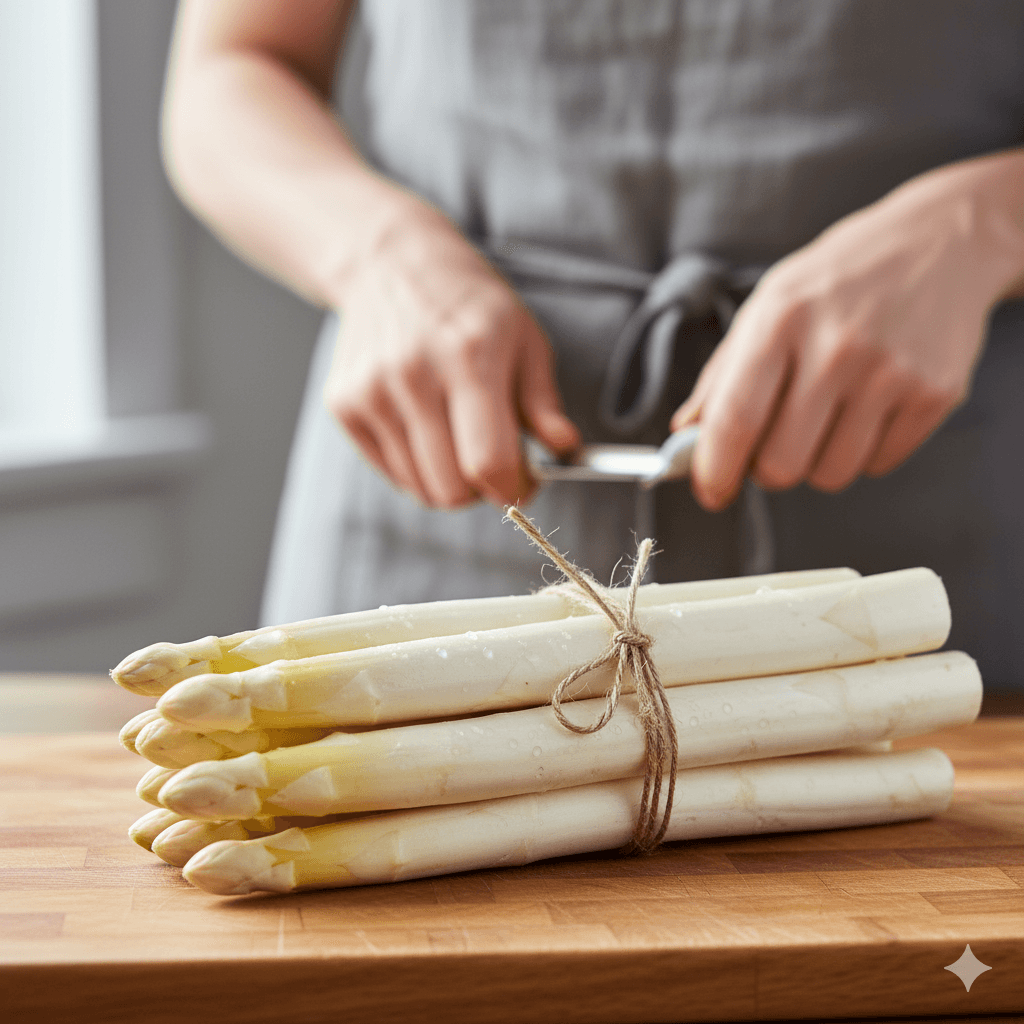
Asperges du Blayais (Generated with Artificial Intelligence)
Type(s) | Protected Geographical Indication (PGI) | ||||||||
|---|---|---|---|---|---|---|---|---|---|
Product Type | Food (Combined Nomenclature Code 0709 20) | ||||||||
Country | France | ||||||||
Status | Registered | ||||||||
Registration Number | PGI-FR-01254 | ||||||||
Application Date | 19/08/2014 | ||||||||
Registration Date | 08/12/2015 | ||||||||
Asperges du Blayais is a variety of asparagus produced in specific communes of the Gironde and Charente-Maritime departments in southwestern France, granted European Protected Geographical Indication (PGI) status in 2015. The PGI certification ensures that at least one stage of production, processing or preparation takes place within the defined geographical area (the Blayais region). The product is defined by its specific morphological characteristics, sensory profile and the unique "terroir" in which it is grown.
Asperges du Blayais is classified into two types based on the color of the tip, not the stem:
In both types, the remainder of the shoot (stem) is always white, though it may occasionally display a slight pink tint.
In terms of sensory profile, Asperges du Blayais has a soft and sweet flavor. The tips are described as having a "melt-in-the-mouth" texture, while the stems exhibit very little stringiness.
The production area encompasses the geographical region known as Blayais, located on the right bank of the Gironde estuary and extending slightly inland. The surrounding landscape features a distinctive natural environment composed of clay hills—often used for vine cultivation—and sandy plains—used for asparagus farming.
Soil Composition: The sensory qualities of the asparagus—thin skin, tenderness and sweetness—are largely attributed to the soil composition known as "Périgord sands". The soils used for asparagus cultivation contain on average more than 75% sand. The term "black" used to describe these soils indicates high organic matter content. Additionally, these soils have a very fine texture, warm rapidly, are naturally well-drained and possess a moderate structure.
Climate: The regional climate is strongly influenced by the Atlantic Ocean and the nearby Gironde estuary. Weather conditions are characterized by mild temperatures from March onward and consistent rainfall between March and June. This climatic pattern supports rapid growth during the asparagus season, enables early harvesting and helps limit the vegetable’s natural bitterness.
Varietal Selection: Specific asparagus varieties are carefully selected for Asperges du Blayais PGI harvests. These include Andreas, Avalim, Cumulus, Darbella, Dariana, Darlise, Emma, Eposs, Grolim, Gynlim, Herkolim, Obelisk, Orane, Ramada, Rambo, Rapsody, Ravel, Thielim, Vilmorin 26, Vilmorin 31 and Vitalim. New varieties may be added to this list provided they meet the product’s quality standards.
Cultivation Techniques: Current cultivation practices include systematic "hilling" to preserve the white color of the shoots. This practice can be enhanced by "mulching" the hills with plastic sheeting to optimize climatic advantages such as rapid soil warming. Harvesting is carried out daily by hand between April and June.
Strict standards for appearance, sizing and freshness are applied to guarantee the quality of Asperges du Blayais:
Thanks to these production standards, Asperges du Blayais is marketed not only throughout France but also in markets across Europe, China and Japan.
"EUGI00000015965 (Asperges du Blayais (PGI)) Record." E-Ambrosia Geographical Indications Register. Accessed October 24, 2025. https://ec.europa.eu/agriculture/eambrosia/geographical-indications-register/details/EUGI00000015965.
European Commission. "Asperges du Blayais PGI." Accessed October 24, 2025. https://agriculture.ec.europa.eu/farming/geographical-indications-and-quality-schemes/geographical-indications-food-and-drink/asperges-du-blayais-pgi_en.

Asperges du Blayais (Generated with Artificial Intelligence)
Type(s) | Protected Geographical Indication (PGI) | ||||||||
|---|---|---|---|---|---|---|---|---|---|
Product Type | Food (Combined Nomenclature Code 0709 20) | ||||||||
Country | France | ||||||||
Status | Registered | ||||||||
Registration Number | PGI-FR-01254 | ||||||||
Application Date | 19/08/2014 | ||||||||
Registration Date | 08/12/2015 | ||||||||
No Discussion Added Yet
Start discussion for "Asperges du Blayais" article
Morphological and Sensory Characteristics
Production Area: Geographical Location and Terroir
Production Methodology
Quality Standards and Post-Harvest Handling