This article was automatically translated from the original Turkish version.
+2 More
Location | İzmit Türkiye Kocaeli | ||||||||
|---|---|---|---|---|---|---|---|---|---|
Construction Date(s) | 19th century (restored 1889–1890) | ||||||||
Founder(s) | Mutasarrıf of İzmit Hasan Pasha | ||||||||
Building Material | Kâgir (masonry) | ||||||||
Conversion Date | 2012 (opened as a museum) | ||||||||
Affiliated Institution | Ministry of Culture and Tourism of the Republic of Türkiye | ||||||||
The Atatürk Reserve and Ethnography Museum is a multifunctional museum established in the İzmit district of Kocaeli to preserve a military structure from the Ottoman period and to exhibit the region’s ethnographic heritage. The building was constructed in the 19th century as the Reserve Office and over time served various functions before being converted into a museum in the 21st century to house a cultural memory. The museum’s collection brings together military history, the early years of the Republic, and traditional elements of life specific to the Kocaeli region.
The building housing the Atatürk Reserve and Ethnography Museum was commissioned in the second half of the 19th century by Hasan Pasha, the Mutasarrıf of İzmit during the reign of Sultan Abdülaziz. Constructed as the Reserve Office, it was designed to serve the Redif organization, one of the Ottoman State’s military structures in the provinces. It attained its present form following renovations and additions between 1889 and 1890.
During the Republic era, the building continued to be used for military purposes and functioned as a military court building under the 15th Corps Command until 1999. After the 1999 Marmara Earthquake, the building was vacated and restored by the Ministry of Culture and Tourism. It was opened to the public in 2012 under the name “Atatürk and Reserve Museum.” Following a renovation project initiated in 2020, it adopted its current name, “Atatürk Reserve and Ethnography Museum,” in 2022.

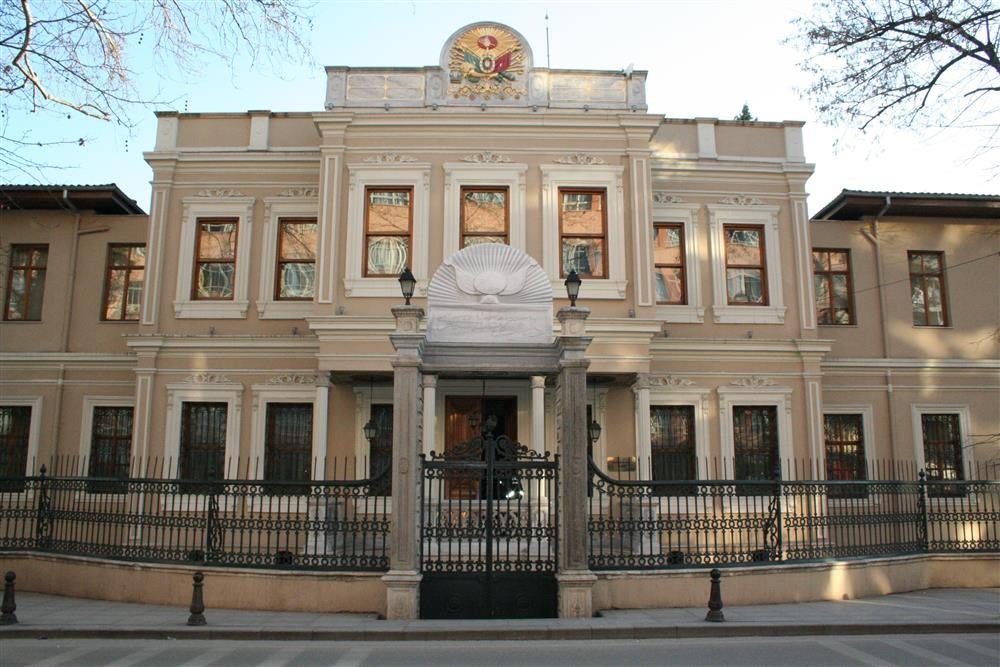
Atatürk Reserve and Ethnography Museum (Republic of Türkiye Kocaeli Governorship)
The building is rectangular in plan, oriented east-west, and constructed of stone. The façade is symmetrically arranged, with a four-column portico at the center and a projecting section above it emphasizing the entrance. Above the entrance is the Ottoman coat of arms. The façade features rectangular windows arranged in two rows. The side wings were added during the Republic era.
The building exhibits characteristics of the Empire style. Architectural details such as the façade composition, cornice profiles, columns with composite capitals, and wooden ceiling decorations reflect this style. Original ceiling medallions and some wooden elements have been preserved within the interior. The building is surrounded by a wall, and the north façade is semi-circular in form.

Atatürk Reserve and Ethnography Museum (Government of Kocaeli, Republic of Türkiye)
The museum’s collection is organized under two main themes: materials relating to the Redif organization and Atatürk’s 1923 visit to İzmit, alongside ethnographic artifacts from Kocaeli and its surroundings.
In the Redif section, a silicone statue representing a Redif soldier, military uniforms and weapons from the period, and various documents and objects are displayed. Additionally, a silicone figure dressed in military uniform represents Atatürk during his visit to İzmit.
The ethnography section features regional products such as traditional carpet weaving samples, Hereke carpets, Kandıra cloth, Karamürsel baskets, Kandıra chests, and Nüzhetiye cloth dolls. It also includes various household items from the Ottoman period, men’s and women’s clothing, and a gravestone dated 1493. Information and photographs of local resistance figures from the National Struggle period, including Kara Fatma, İpsiz Recep, and Yahya Kaptan, are also included in the collection.

Atatürk Reserve and Ethnography Museum (Republic of Türkiye Kocaeli Governorate)
Culture and Heritage General Directorate. "Atatürk Redif and Ethnography Museum." *Official Website of the Ministry of Culture and Tourism of the Republic of Turkey*. Accessed June 21, 2025. http://www.kulturvarliklari.gov.tr/yazdir?E565DD5E37C72CFF2B8F31F060619732.
Kültür Varlıkları ve Müzeler Genel Müdürlüğü. "Kocaeli Atatürk Redif ve Etnografya Müzesi Tanıtım Dosyası (PDF)." Accessed June 21, 2025. https://kvmgm.ktb.gov.tr/Eklenti/123596,kocaeliataturkredifveetnografyamuzesi270524pdf.pdf?0.
T.C.Kocaeli Valiliği. "Atatürk Redif and Ethnography Museum." *T.C. Kocaeli Governorship Official Website*. Accessed June 21, 2025. http://www.kocaeli.gov.tr/ataturk-redif-ve-etnografya-muzesi.

Location | İzmit Türkiye Kocaeli | ||||||||
|---|---|---|---|---|---|---|---|---|---|
Construction Date(s) | 19th century (restored 1889–1890) | ||||||||
Founder(s) | Mutasarrıf of İzmit Hasan Pasha | ||||||||
Building Material | Kâgir (masonry) | ||||||||
Conversion Date | 2012 (opened as a museum) | ||||||||
Affiliated Institution | Ministry of Culture and Tourism of the Republic of Türkiye | ||||||||
No Discussion Added Yet
Start discussion for "Atatürk, Reserve and Ethnography Museum" article
History
Architectural Features
Exhibited Artifacts