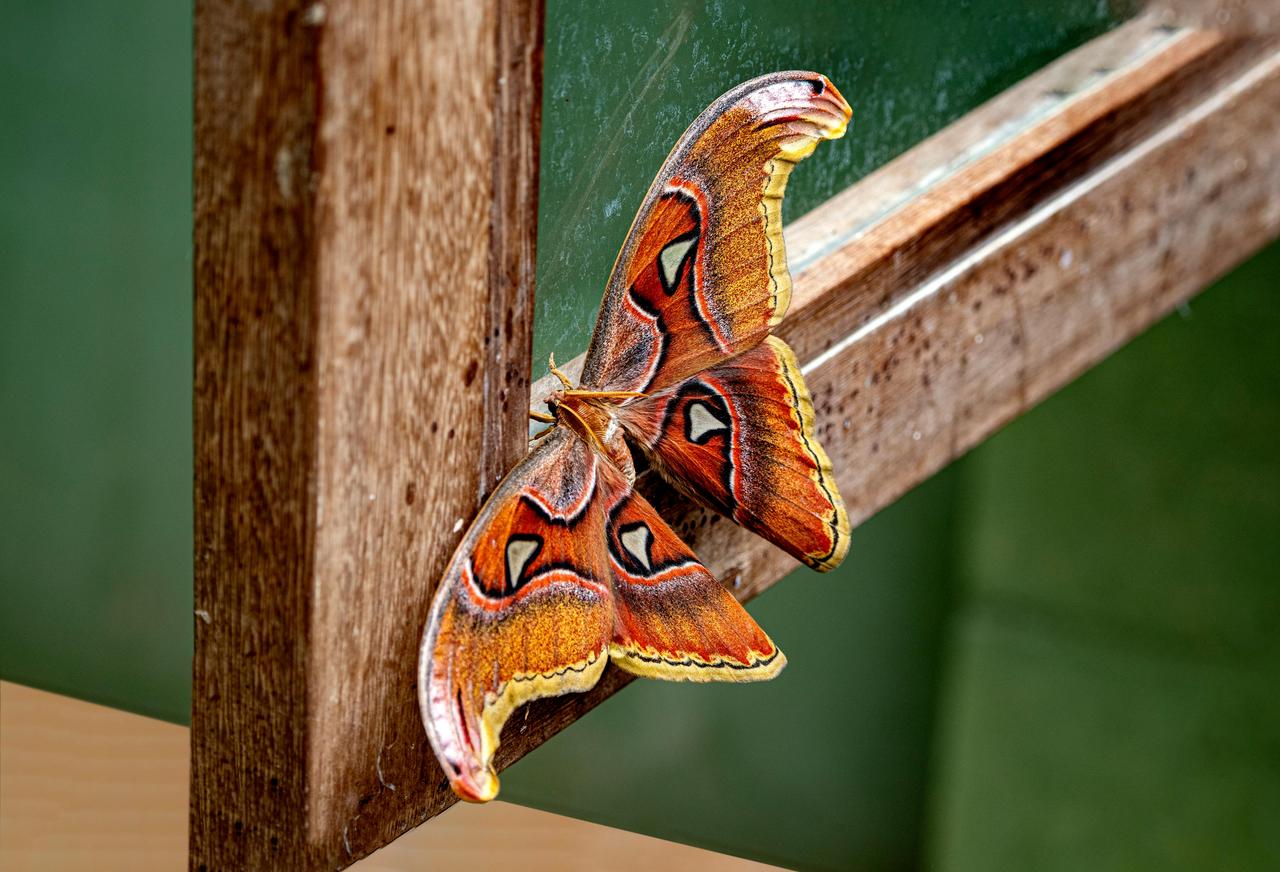


This article was automatically translated from the original Turkish version.
Habitat | Tropical and subtropical rainforests | ||||||||
|---|---|---|---|---|---|---|---|---|---|
Active Time Period | Active during twilight and dawn hours, crepuscular | ||||||||
Economic Use | Fagara silk production and pet trade | ||||||||
Defense Mechanism | Irritant secretion and wing-flapping to scare | ||||||||
Antenna Structure | Feather-like bilateral comb structure | ||||||||
Life Cycle | Egg, larva, pupa, and adult stages | ||||||||
Mouth Structure | Nonfunctional or completely absent in adults | ||||||||
Feeding Behavior | Leaf-eating folivore in the caterpillar stage | ||||||||
Color Palette | Dark orange, brown, white, and black patterns | ||||||||
Wing Design | Snake-head and bird-beak-like protective mimics | ||||||||
Body Length | Between 30 and 40 millimeters | ||||||||
Wingspan | Between 210 and 250 millimeters | ||||||||
Geographical Distribution | Southeast Asia, India, China, and Indonesia | ||||||||
Scientific Classification | Order Lepidoptera and family Saturniidae | ||||||||
Atlas moth (Attacus atlas) is a species of butterflies and moths belonging to the family Saturniidae (giant silk moths) within the order Lepidoptera. It is classified as one of the largest moth species in the world by wing surface area and wingspan. This species is primarily distributed across tropical and subtropical ecosystems of Southeast Asia and is the subject of scientific study due to its morphological adaptations, life cycle dynamics, and pronounced sexual dimorphism.
Sexual dimorphism is evident in the anatomy of this species; females attain significantly larger sizes than males. Measurements under laboratory conditions indicate that females have a body length of 39 to 40 millimeters and a wingspan of 240 to 250 millimeters, while males have a body length of 30 to 36 millimeters and a wingspan of approximately 210 to 230 millimeters. The dorsal body color of the moth is typically reddish or orange-brown. The base of the wings is dark orange, soft brown, or reddish-brown, adorned with pigment patterns in white, black, brown, and pink. At the center of each wing are triangular, white, and semi-transparent (hyaline) regions. The colors and patterns of adult individuals arise from thousands of microscopic scales covering the wing surface. Adult Atlas moths lack functional or fully developed mouthparts and possess no feeding organs. Males have large, feathery antennae with comb-like projections on both sides, which enable them to detect environmental chemical cues.
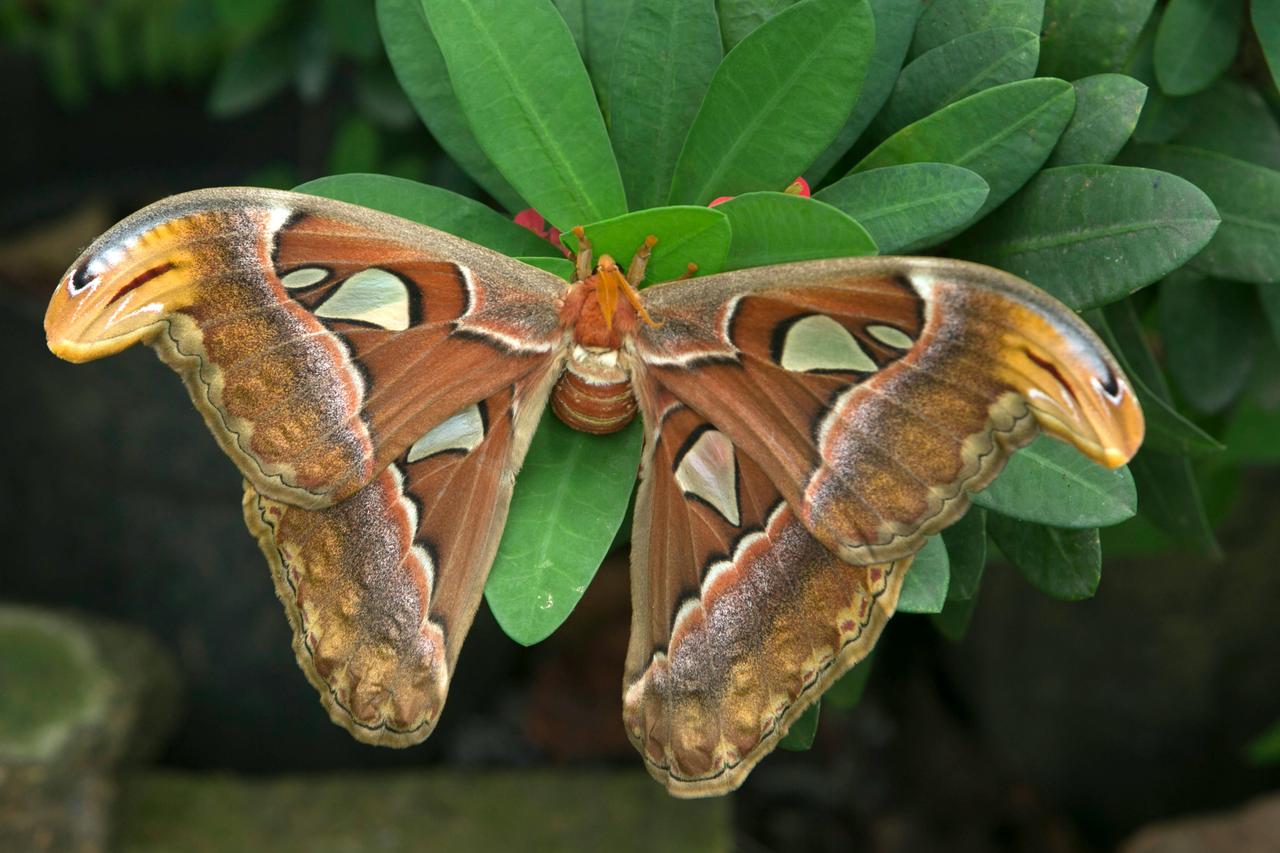
Atlas moth (Attacus atlas) (pexels)
Attacus atlas has a broad geographical distribution across Asia. Its primary populations have been identified in India, Bangladesh, Bhutan, Nepal, southern China, Laos, Cambodia, Vietnam, Taiwan, the Philippines, and Indonesia. The species’ primary habitat consists of tropical and subtropical rainforests with minimal seasonal variation, closed canopies, and extensive stands of broadleaf evergreen trees, where average air temperatures hover around 25°C. These moths can be found at elevations ranging from sea level up to 1500 to 2000 meters. Individuals typically complete their development and reach adulthood on a single host tree where they were born.
The species undergoes complete metamorphosis, with a life cycle comprising egg, larva (caterpillar), pupa (cocoon), and adult stages. Adult moths have a very short lifespan of about one week, dedicated solely to reproduction. Females tend to mate only once in their lifetime (monandry) and, after mating, lay eggs in scattered clusters of 134 to 169 on the leaves of host plants. Upon hatching, the pale green larvae, covered in a waxy secretion, pass through five to six larval stages (instars) as they grow. Fully developed larvae spin a silken cocoon, concealed among host leaves and colored to match environmental conditions, before entering the pupal stage. After a pupal period lasting one to one and a half months, the emerging adults require eight to ten hours for their wings to expand and harden before flight. Since adult Atlas moths lack functional mouthparts, they cannot feed and rely entirely on fat reserves accumulated during the larval stage to sustain life.
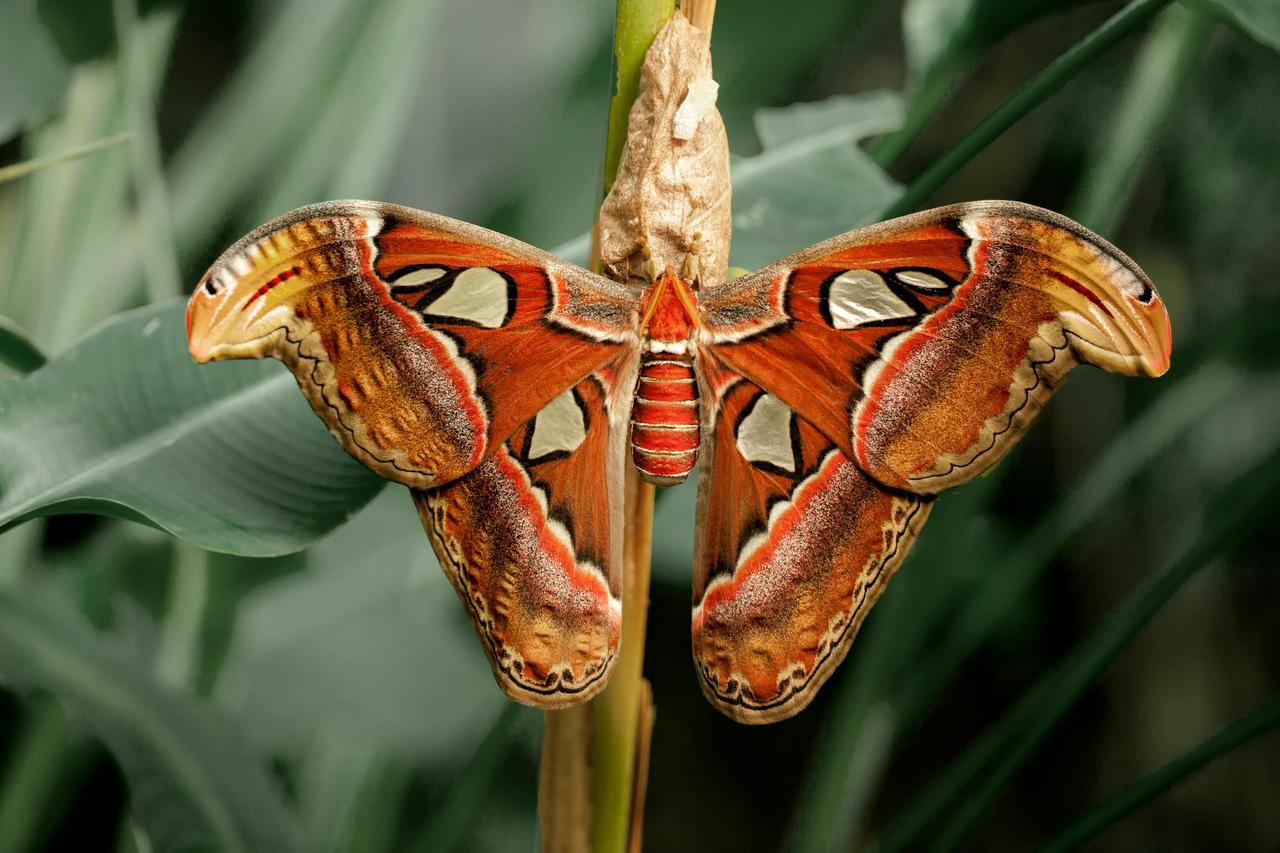
Atlas moth (Attacus atlas) (pexels)
Feeding behavior is observed only during the larval stage. Larvae are folivorous organisms that consume the leaves of various host plants, including mango, guava, betel nut, and tea trees. Defense mechanisms vary across life stages. The white waxy secretion covering the larval body provides camouflage by mimicking bird droppings or a fungus-infected dead organism; under physical threat, larvae can also secrete deterrent neurochemicals through openings in their bodies. In adults, the primary defense strategy is visual mimicry. The curved, yellow-to-dark-orange patterns at the wingtips have evolved to resemble the head of a snake or cobra, aiming to deter visual predators such as birds or lizards. Additionally, the translucent areas on the wings create a “false eye” illusion, diverting predator attacks away from the vulnerable body and head toward the less critical wing region.
Within ecosystems, Atlas moth larvae function as leaf defoliators, allowing sunlight to reach the forest floor and thereby indirectly supporting understory plant growth. Throughout all life stages, they serve as a resource for parasitoids and predators. Although they hold no major economic significance, the brown-colored cocoons spun by the large larvae are used in the textile industry for the production of "fagara silk". Due to their docile nature and striking adaptations, they are popular exhibits in insect trade, zoological education, and museums. Although their voracious feeding habits could theoretically classify them as potential pests of tea and kina plants, they do not constitute a major agricultural pest due to the widespread use of conventional agricultural chemicals.
Accessed November 26, 2025. https://www.aa.com.tr/tr/kultur/ahlatta-acilan-kurslarla-geleneksel-tas-isciligi-yasatiliyor/3116279.
California Academy of Sciences. "Atlas Moth." Accessed May 3, 2026.
Pexels. "Atlas Güvesi Yakın Çekim Fotoğrafçılığı." Photograph: jidnyasa. Accessed May 3, 2026. https://www.pexels.com/tr-tr/fotograf/atlas-guvesi-yakin-cekim-fotografciligi-920596/
Pexels. "Doğa Pencereler Camlar Pencere." Photograph: jidnyasa. Accessed May 3, 2026. https://www.pexels.com/tr-tr/fotograf/doga-pencereler-camlar-pencere-17774126/
Pexels. "Yeşil Yapraklar Üzerinde Atlas Güvesinin Yakın Çekim Fotoğrafı." Photograph: jidnyasa. Accessed May 3, 2026. https://www.pexels.com/tr-tr/fotograf/yesil-yapraklar-uzerinde-atlas-guvesinin-yakin-cekim-fotografi-36179713/
Sesli Betimleme Derneği. "Atlas Güvesi." Accessed May 3, 2026. https://sebeder.org/Atlas_Guvesi-2587.html
Tajchman, Peyton. "Attacus atlas." Animal Diversity Web. Accessed May 3, 2026. https://animaldiversity.org/accounts/Attacus_atlas/

Habitat | Tropical and subtropical rainforests | ||||||||
|---|---|---|---|---|---|---|---|---|---|
Active Time Period | Active during twilight and dawn hours, crepuscular | ||||||||
Economic Use | Fagara silk production and pet trade | ||||||||
Defense Mechanism | Irritant secretion and wing-flapping to scare | ||||||||
Antenna Structure | Feather-like bilateral comb structure | ||||||||
Life Cycle | Egg, larva, pupa, and adult stages | ||||||||
Mouth Structure | Nonfunctional or completely absent in adults | ||||||||
Feeding Behavior | Leaf-eating folivore in the caterpillar stage | ||||||||
Color Palette | Dark orange, brown, white, and black patterns | ||||||||
Wing Design | Snake-head and bird-beak-like protective mimics | ||||||||
Body Length | Between 30 and 40 millimeters | ||||||||
Wingspan | Between 210 and 250 millimeters | ||||||||
Geographical Distribution | Southeast Asia, India, China, and Indonesia | ||||||||
Scientific Classification | Order Lepidoptera and family Saturniidae | ||||||||
No Discussion Added Yet
Start discussion for "Atlas Moth (Attacus atlas)" article
Physical Characteristics
Geographical Distribution and Habitat
Life Cycle and Reproduction
Feeding and Defense Mechanisms
Ecological and Economic Importance