This article was automatically translated from the original Turkish version.
+1 More
Type of Geographical İndication | Place of Origin | ||||||||
|---|---|---|---|---|---|---|---|---|---|
Application Date | 09.12.2020 | ||||||||
Registration Number | 900 | ||||||||
Registration Date | 22.09.2021 | ||||||||
Product / Product Group(s) | and mushrooms vegetables Processed and unprocessed fruits | ||||||||
Province(s) | Ankara | ||||||||
Applicant/Registrant(s) | Ayaş Chamber of Agriculture | ||||||||
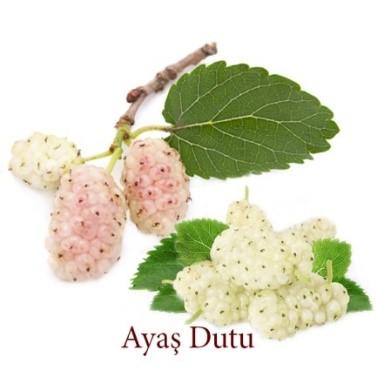
Ayaş mulberry is a fruit native to the geographic area of the Ayaş district of Ankara Province, belonging to the species Morus alba, and can be consumed both fresh and dried. Registered under its place of origin on 22 September 2021, this product has been granted geographical indication protection following an application by the Ayaş Chamber of Agriculture. Ayaş mulberry acquires its unique physical, chemical and aromatic characteristics through cultivation techniques adapted to the region’s climatic and topographic conditions.
Ayaş mulberry is notable for its large and plump structure. The fruit length ranges between 25–30 mm and is recognized by its brown seed and light-colored skin. Fresh fruit contains 85–87% water, with carbohydrate levels ranging from 9.8 to 18 g and protein content between 1.2 and 1.44 g. Malic acid content varies between 1.1% and 1.9%. These components determine the fruit’s nutritional and aromatic profile.
Physicochemical analyses show that the water-soluble dry matter content ranges from 17.5% to 22.0%, and the pH value falls between 6.10 and 6.40. Color measurements using the Hunter system indicate L values between 51.85 and 69.22, a values between -1.25 and -2, and b values between 10.96 and 17.02. These data scientifically define the visual and sensory characteristics of Ayaş mulberry.
The aromatic profile of Ayaş mulberry is shaped by the presence of more than 40 volatile compounds. Esters of butanoic acid, ethyl esters of hexanoic acid, nonanal and dodecanoic acid contribute to its distinctive aroma and flavor. The proportions of these compounds may vary depending on cultivation conditions and harvest timing.
The production process of Ayaş mulberry is shaped by the region’s climatic characteristics and traditional agricultural knowledge. This process encompasses a series of stages from seedling planting to harvest, drying and storage, all conducted to preserve the product’s distinctive qualities.
Seedlings are typically planted in March–April. Due to the wide canopy structure of mulberry trees, a distance of 7–8 meters is maintained between trees during planting. This spacing ensures uniform sunlight distribution and adequate air circulation, thereby reducing disease risk. During orchard establishment, soil drainage capacity and pH value are considered; mulberry trees prefer slightly alkaline and well-drained soils.
Ayaş mulberry can be propagated through various methods. Seed propagation increases genetic diversity but may result in inconsistency in fruit characteristics. Grafting onto qualified rootstocks ensures the preservation of desired fruit traits. Cuttings allow new seedlings to be generated by rooting specific branches. Layering involves burying young branches in soil to induce root development and multiplication.
Mulberry trees require regular maintenance throughout the year. Irrigation is carried out in a controlled manner, especially during dry periods. Watering once a week or every 15 days is sufficient to meet the plant’s water needs. Over-irrigation must be avoided as it can lead to root rot. Pruning is applied to increase yield and maintain tree shape. Pruning balances light exposure, reduces disease risk and enhances fruit quality.
The harvesting season begins in June–July. Fruits are collected by hand as they ripen or are shaken onto cloths spread beneath the trees. This process is carried out carefully to prevent fruit damage. Ayaş mulberry can be harvested 7–10 times during the season, demonstrating the product’s prolonged productivity.
Drying is performed using traditional methods under direct sunlight. Fruits are spread on clean cloths and exposed to sunlight. Hygienic conditions are strictly maintained; drying areas are regularly inspected to protect against dust, insects and other external contaminants. Once dried mulberries reach a moisture content of 7–8%, they are packaged in appropriate containers. Stored in this manner, the product can retain its quality for at least two years without degradation.
The production and marketing of Ayaş mulberry are controlled through monitoring mechanisms coordinated by the Ayaş Chamber of Agriculture. Institutions such as the Ayaş Municipality, Ankara University and the District Directorate of Agriculture participate in this process. Monitoring criteria include registration of production areas, physical and chemical analyses, compliance with packaging standards and correct use of the geographical indication logo.
T.C. Kültür ve Turizm Bakanlığı. "Ayaş Dutu." Accessed August 16, 2025. https://www.kulturportali.gov.tr/turkiye/ankara/nealinir/ayas-dutu
Turk Patent and Trademark Office. "Ayaş Dutu Coğrafi İşaret Tescil Belgesi." Accessed August 16, 2025. https://ci.turkpatent.gov.tr/Files/GeographicalSigns/1b07ab3e-ac62-48d9-ac6e-c0829493082a.pdf
Turkish Patent and Trademark Office. "Ayaş Dutu Coğrafi İşaret Tescil Belgesi." Accessed August 16, 2025. https://ci.turkpatent.gov.tr/cografi-isaretler/detay/3083

Type of Geographical İndication | Place of Origin | ||||||||
|---|---|---|---|---|---|---|---|---|---|
Application Date | 09.12.2020 | ||||||||
Registration Number | 900 | ||||||||
Registration Date | 22.09.2021 | ||||||||
Product / Product Group(s) | and mushrooms vegetables Processed and unprocessed fruits | ||||||||
Province(s) | Ankara | ||||||||
Applicant/Registrant(s) | Ayaş Chamber of Agriculture | ||||||||
Distinctive Characteristics
Aromatic Profile
Production Method
Seedling Planting and Orchard Establishment
Propagation Techniques
Cultivation Practices
Harvesting Process
Drying and Storage
Monitoring and Protection