This article was automatically translated from the original Turkish version.
+2 More
Architectural Style(s) | Osmanlı Barok | ||||||||
|---|---|---|---|---|---|---|---|---|---|
Location | Aydın Köprülü Mahallesi | ||||||||
Building Type | Külliye (Cami Medrese Sebil Çeşme) | ||||||||
Patron | Müderris Cihanoğlu Abdülaziz Efendi | ||||||||
Construction Year | 1756 | ||||||||
Located in the Köprülü neighborhood of Aydın, Cihanoğlu Camii was constructed in the mid-18th century and is regarded as one of the original examples of Ottoman Baroque architecture in the region.

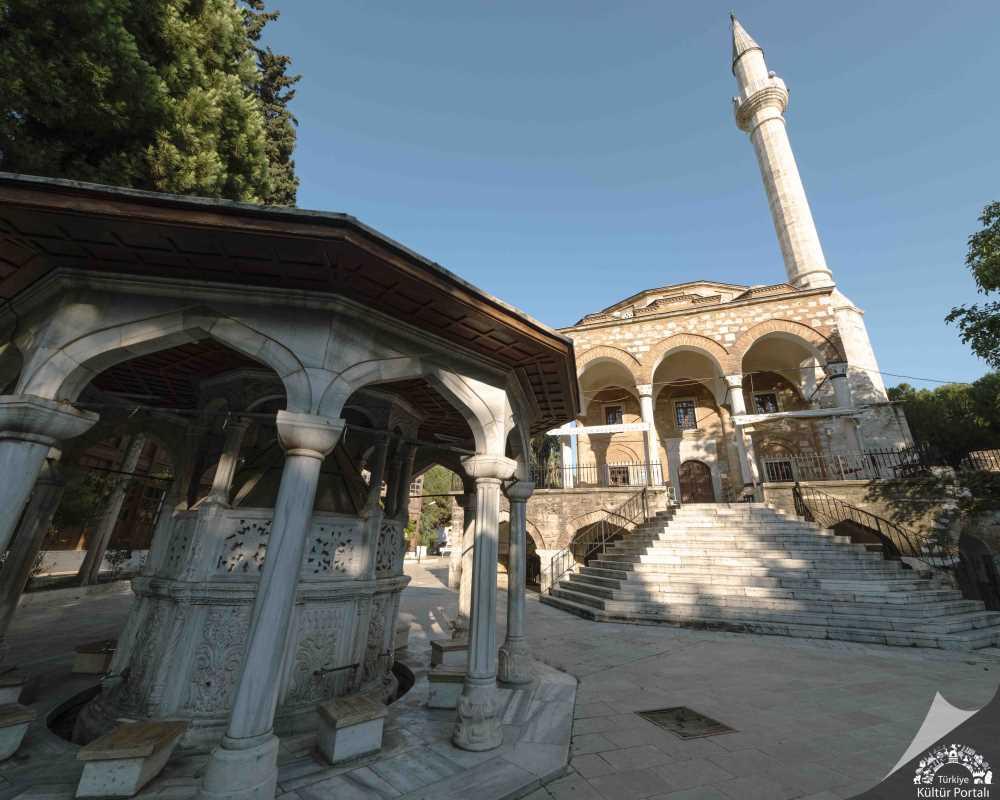
Cihanoğlu Camii (Kültür Portalı)
The mosque was built in 1170 AH (1756–57 CE) by Müderris Abdülaziz Efendi of the Cihanoğulları family, a prominent lineage in the Aydın-Koçarlı-Nazilli region. An inscription in thuluth script above the entrance clearly identifies the founder and construction date. During the First World War the building was used as a warehouse and suffered significant damage during the Greek occupation. It underwent major restoration works in 1950, 1967 and most recently in 2010 to attain its present form.

Cihanoğlu Camii (Kültür Portalı)
Cihanoğlu Camii features a square plan measuring 9.50 by 9.50 metres and is constructed of a mixture of rubble stone and brick in alternating bond. The structure is situated on a high platform built over sloping terrain, with its lower level designed as a vaulted basement that once served as a marketplace or storage area. Access to the mosque is via a 15-step staircase. The main prayer hall consists of three sections covered by domes and supported by four circular columns. The minaret, located in the northwestern corner, is built of cut limestone and has a polygonal shaft. The primary worship space is crowned by a low dome resting on a dodecagonal drum visible from the exterior.
Cihanoğlu Camii is considered one of the most prominent examples of Baroque style in 18th-century Ottoman provincial architecture. The stucco decorations in the interior draw more attention than the architectural design itself, featuring Baroque-style “C” and “S” scrolls, floral motifs and medallions. Alongside traditional patterns, rare animal figures are also present in the ornamentation. The mihrab is enriched with corner columns and dense stucco reliefs, although the original minbar has not survived. The prayer hall is illuminated by three rows of windows, with the upper windows featuring round arches and the lower ones rectangular in form.

Cihanoğlu Camii (Kültür Portalı)
The mosque forms part of a külliye complex that includes a medrese, şadırvan, türbe-sebil and a public fountain. The medrese cells, which encircle the northern and eastern sides of the courtyard, were converted into a student dormitory following renovations in 1954. The şadırvan in the courtyard reflects a synthesis of classical and Baroque elements through its fluted and twisted columns. The türbe-sebil, located south of the mosque, is a domed structure with a decagonal drum and is notable for its metal grilles on the façade. One of the most intriguing elements of the külliye is the pointed barrel-vaulted arcade, which exhibits Gothic stylistic influences in its architectural details and proportions.
Aydın İl Directorate of Culture and Tourism. "Cihanoğlu Camii." T.C. Kültür veTurizm Bakanlığı. Accessed February 5, 2026. https://aydin.ktb.gov.tr/TR-64452/cihanoglu-camii.html
Culture Portal. "Cihanoğlu Camii – Aydın." Ministry of Culture and Tourism of the Republic of Türkiye. Accessed February 5, 2026. https://www.kulturportali.gov.tr/turkiye/aydin/gezilecekyer/cihanoglu
Tanman, M. Baha. "Cihanoğlu Külliyesi." *Türkiye Diyanet Vakfı İslâm Ansiklopedisi*. Accessed February 5, 2026. https://islamansiklopedisi.org.tr/cihanoglu-kulliyesi

Architectural Style(s) | Osmanlı Barok | ||||||||
|---|---|---|---|---|---|---|---|---|---|
Location | Aydın Köprülü Mahallesi | ||||||||
Building Type | Külliye (Cami Medrese Sebil Çeşme) | ||||||||
Patron | Müderris Cihanoğlu Abdülaziz Efendi | ||||||||
Construction Year | 1756 | ||||||||
No Discussion Added Yet
Start discussion for "Aydın Cihanoğlu Camii" article
History and Waqf Records
Architectural Structure and Exterior Features
Interior Space and Decorative Features
Külliye Elements and Surrounding Structures